Splendid isolation?
Russia’s Baltic exclave of Kaliningrad is preparing itself for any eventuality, even a possible EU blockade
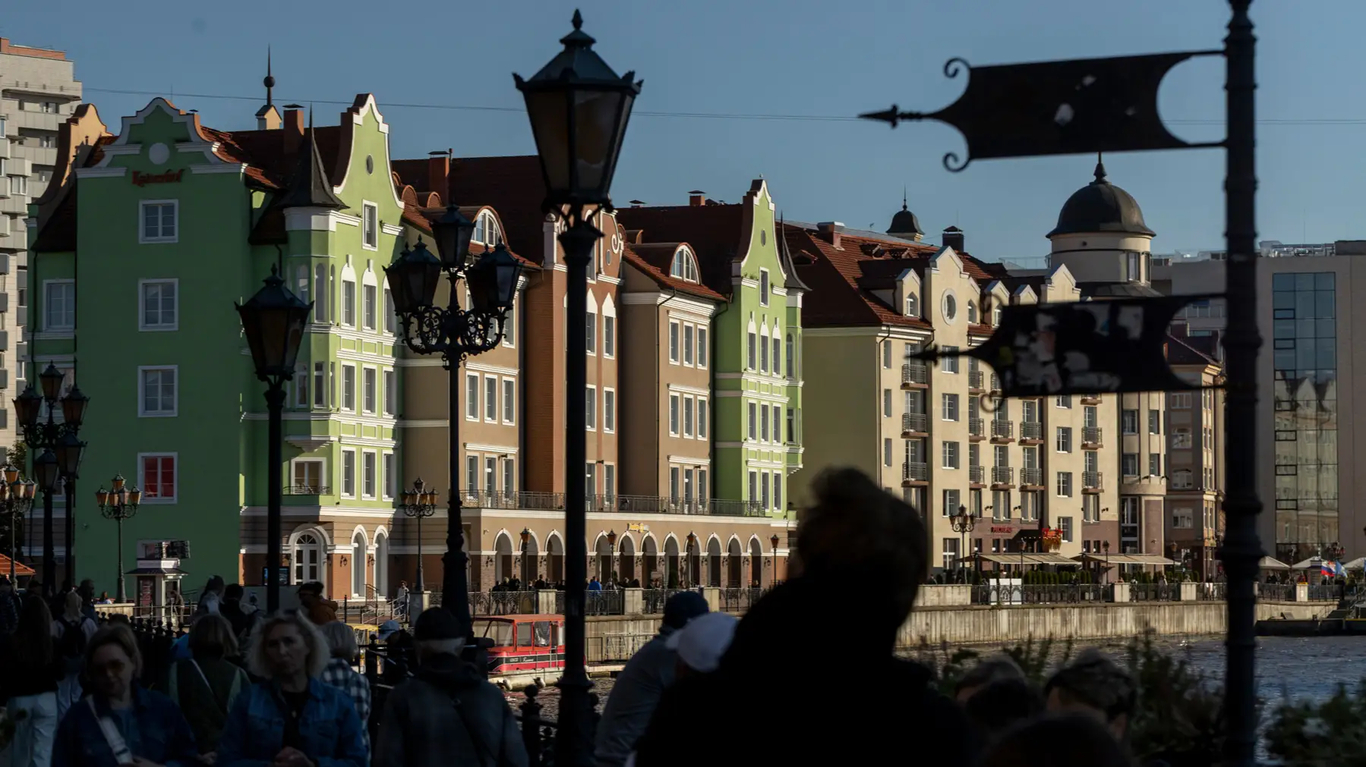
Russia’s strategically valuable exclave of Kaliningrad, nestled on the Baltic Sea between Poland and Lithuania, has found itself increasingly cut off from Russia proper since the EU sanctioned Moscow over its invasion of Ukraine. This has led the region to ship in most of its supplies directly from the Russian mainland, and is also forcing it to plan ahead for an uncertain future.
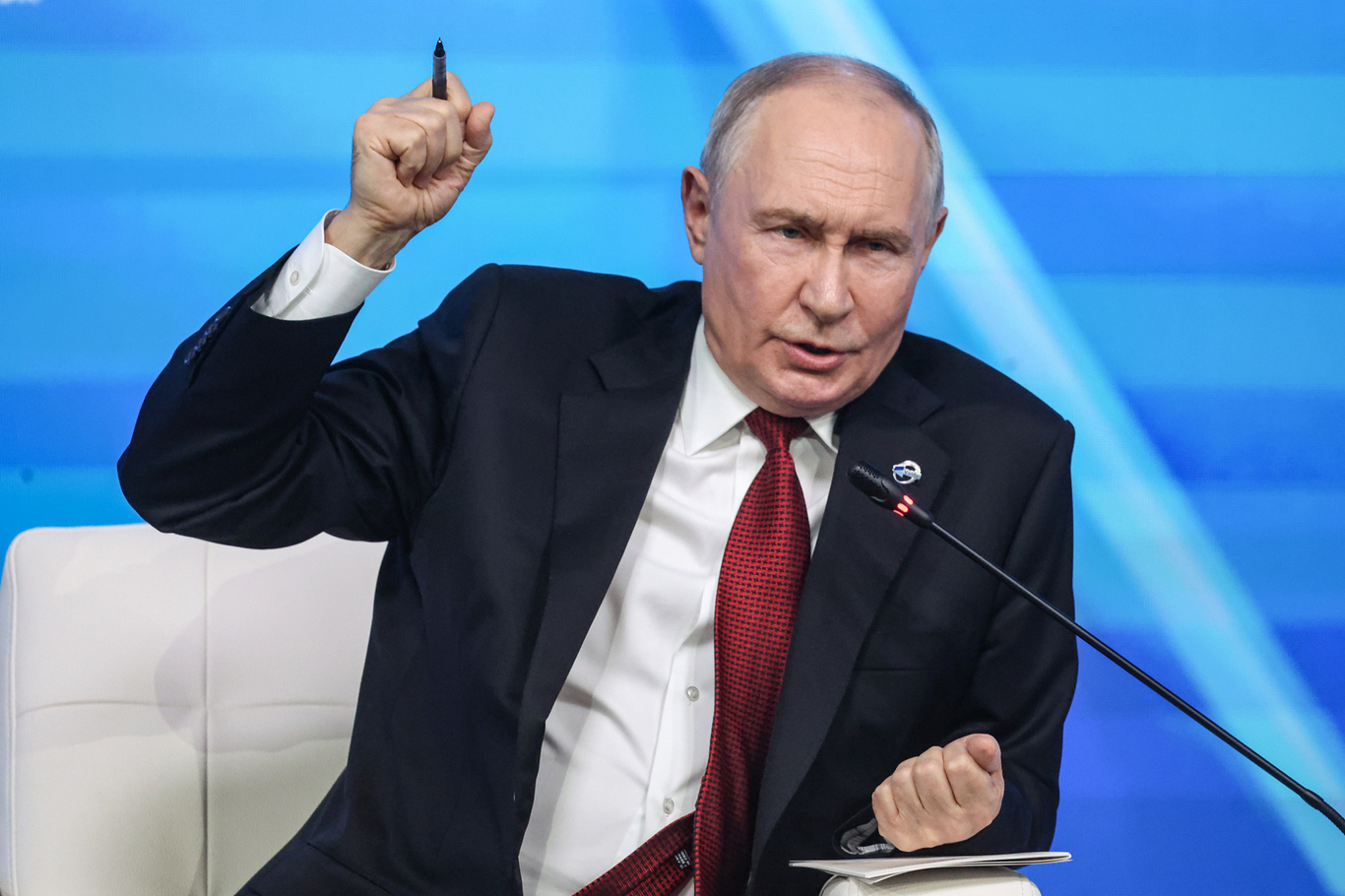
Though NATO rejects Russian accusations that it’s plotting to isolate Kaliningrad, which until 1945 was an exclave of Germany known to the world as East Prussia, Vladimir Putin recently warned the world that Moscow would defend the region with every weapon in its arsenal should it ever come under attack.
Just days before Putin issued his thinly veiled threat to the West while addressing Russia’s Valdai Discussion Club earlier this month, Russia’s embassies in Belgium and Ireland both issued statements accusing NATO of planning to blockade the region.
“There should be no mistake,” the Russian Embassy in Dublin said, “Russia would be ready to use all its arsenal, including nuclear weapons, to defend its territory if NATO countries try to isolate the Kaliningrad region from the rest of the country.”
Russian Foreign Ministry spokesperson Maria Zakharova then accused Europe of embarking “on a path of total militarisation” and “training to implement offensive scenarios” against Russia, including a “potential blockade” of the Kaliningrad region. “If Europe attacks Russia, it will be a completely different sort of war — a very short war,” Zakharova warned ominously.
But of course Putin insisted that Moscow wasn’t the one making threats. “We aren’t trying to scare anyone,” he told the Valdai Club. “It’s a response to an attempt to intimidate us.”
In a statement responding to the accusations, NATO condemned the Kremlin’s “irresponsible nuclear rhetoric” and stressed that it was a defensive alliance, none of whose activities or exercises “pose a risk to any part of Russia”.
Reiterating the alliance’s support for Ukraine and calling Russia’s use of hybrid tactics “a sign of desperation”, the statement also stressed that NATO had “what it takes to defend every inch of allied territory” and was “able to counter any threat”.
Though the Russian authorities fear Kaliningrad’s isolation primarily from a military standpoint, cutting off or restricting cargo routes into the region would also have significant economic consequences, given that its population is entirely reliant on the flow of raw materials and goods in and out of its territory via neighbouring Poland and Lithuania.
2022 and all that
Before Russia’s full-scale invasion of Ukraine in 2022, the railway was Kaliningrad’s main freight channel. According to Russian port operator Rosmorport, approximately 10.5 million tonnes, or 69%, of the region’s total cargo flow was transported by rail in 2021.
By 2025, that figure had fallen to 3.4 million tonnes, and the railway’s share dropped to 36%, meaning rail freight volumes fell by about two-thirds between 2021 and 2025. Rosmorport is currently predicting a further drop to just 2.7 million tonnes in 2026.
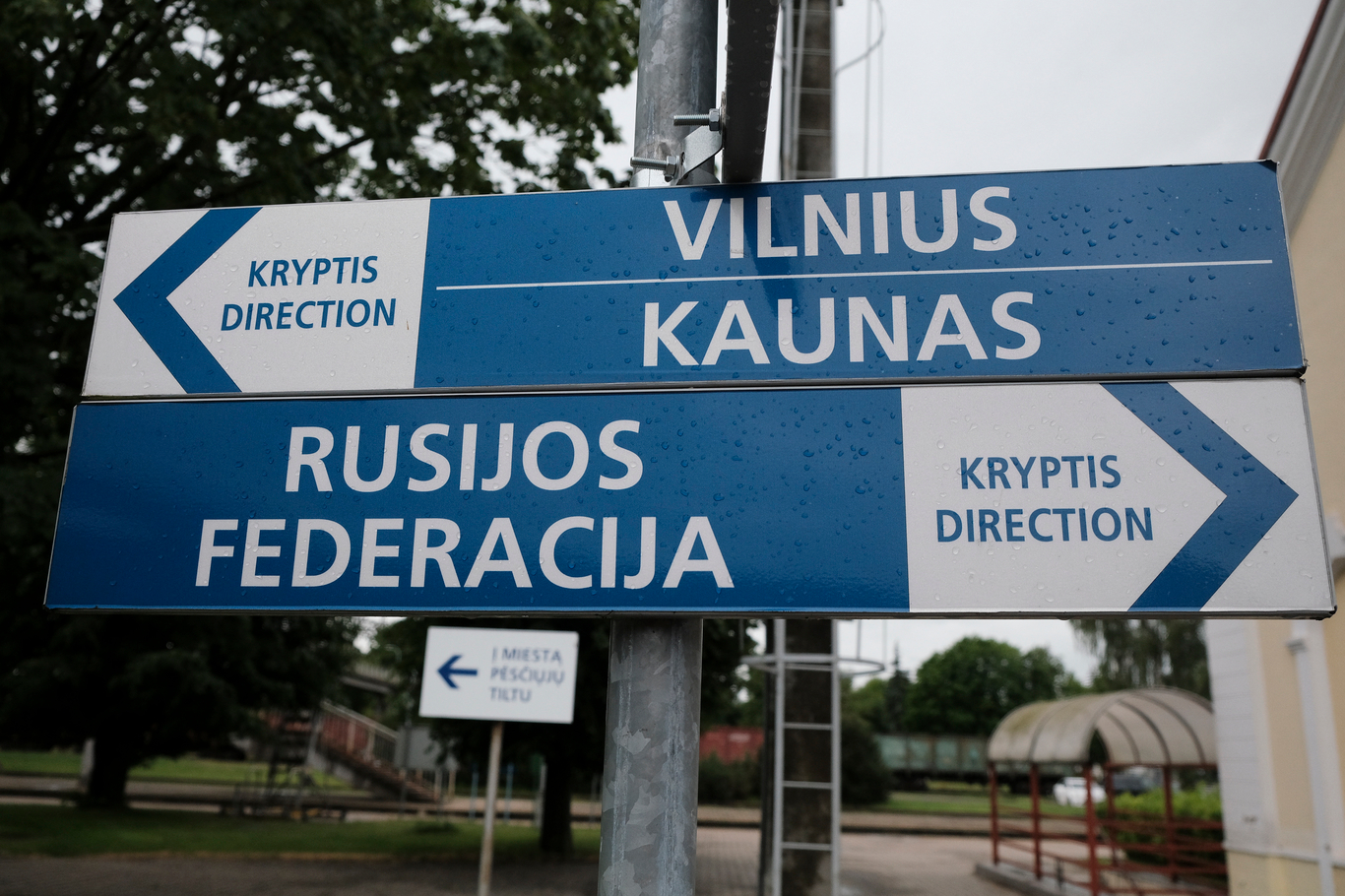
Due to Kaliningrad’s status as an internationally recognised exclave of Russia, the transit through the EU of otherwise sanctioned fuel and construction materials required to meet the region’s basic needs is still allowed, something neighbouring Lithuania is responsible for monitoring. However, the road or rail transit of military and dual-use goods through the EU is strictly prohibited.

The permitted transit volume is calculated based on historical averages of the last three years. In 2022, for example, a limit of 3.1 million tonnes of sanctioned goods was set, though only 1.8 million tonnes were actually transported. In 2023, that figure was lowered to 2.89 million tonnes: 2.47 million tonnes of which went to Kaliningrad, while the remaining allowance of 420,000 tonnes applied to goods being transported from Kaliningrad to Russia proper.
According to statistics from LTG Cargo, the freight transport subsidiary of Lithuanian Railways, in 2023, Russia was permitted to transport the following cargo to Kaliningrad via Lithuania: coal and coal products (710,000 tonnes); iron and steel (520,000 tonnes); timber, cement, fertilisers, luxury and other goods (420,000 tonnes); crude oil and petroleum products (78,000 tonnes); and building materials, chemicals, and industrial products (50,000 tonnes).
The permitted transit volume in the opposite direction — from Kaliningrad to the rest of Russia via Lithuania — was significantly lower, and consisted mainly of timber, cement, and fertilisers, though smaller volumes of construction materials, fuel, and chemicals, among other things, are also allowed.
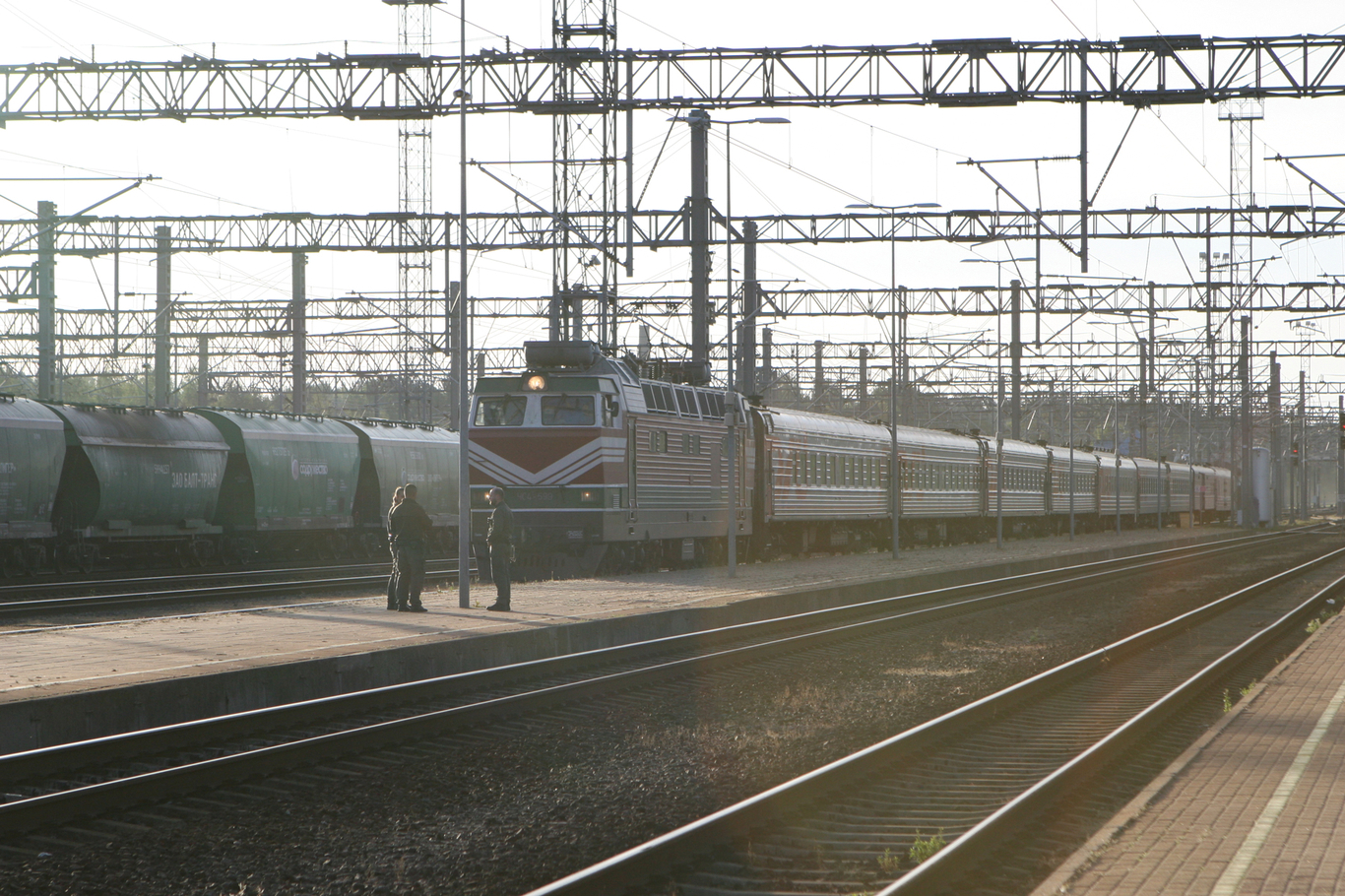
Nevertheless, quota utilisation is generally low, with less than half of both the region’s import and export allowances used in 2023, according to Kaliningrad Railways. The regional authorities have called on companies to make better use of the available rail quotas, but many prefer to transport goods by boat, as such routes are subsidised by the state.
Since 2024, the authorities have primarily reserved cargo space on ferries connecting the Kaliningrad region port of Baltiysk to Ust-Luga near St. Petersburg for sanctioned goods that cannot be transported through Lithuania, while non-sanctioned cargo is supposed to be transported overland whenever possible.
Structurally sound
The structure of rail transit through Lithuania to the Kaliningrad region also changed after the full-scale war began. According to LTG Cargo data, in 2024, transport of timber, wood chips, and paper bound for Kaliningrad dropped 88% compared to 2021; solid mineral fuel dropped by 85%, ferrous metals by 77%, oil and petroleum products by 56%, and chemical and mineral fertilisers by 39%.
At the same time, the volume of containers transported to Kaliningrad increased by 6%, plant products increased by 24%, and mineral products by 26%. There was also a significant 3.8-fold increase in shipments of food products, and the volume of cargo classified as “other” by LTG Cargo increased by 765%.
The flow in the other direction decreased. In 2024, 971,000 tonnes of cargo were transported out of the Kaliningrad region via Lithuania — 44% less than in 2021. The biggest decrease was in the transportation of plant products — 98%. The volume of “other goods” shrank by 88%, container shipping by 46%, food products by 31%, and timber, wood chips, and paper by 20%.
However, the decrease in rail transit should not be equated with lost cargo volume for Kaliningrad. Starting in 2022, Russia began rerouting some shipments to the sea. As a result, in the years that followed, maritime transport transformed from an additional route into the region’s main freight channel.
Sea change
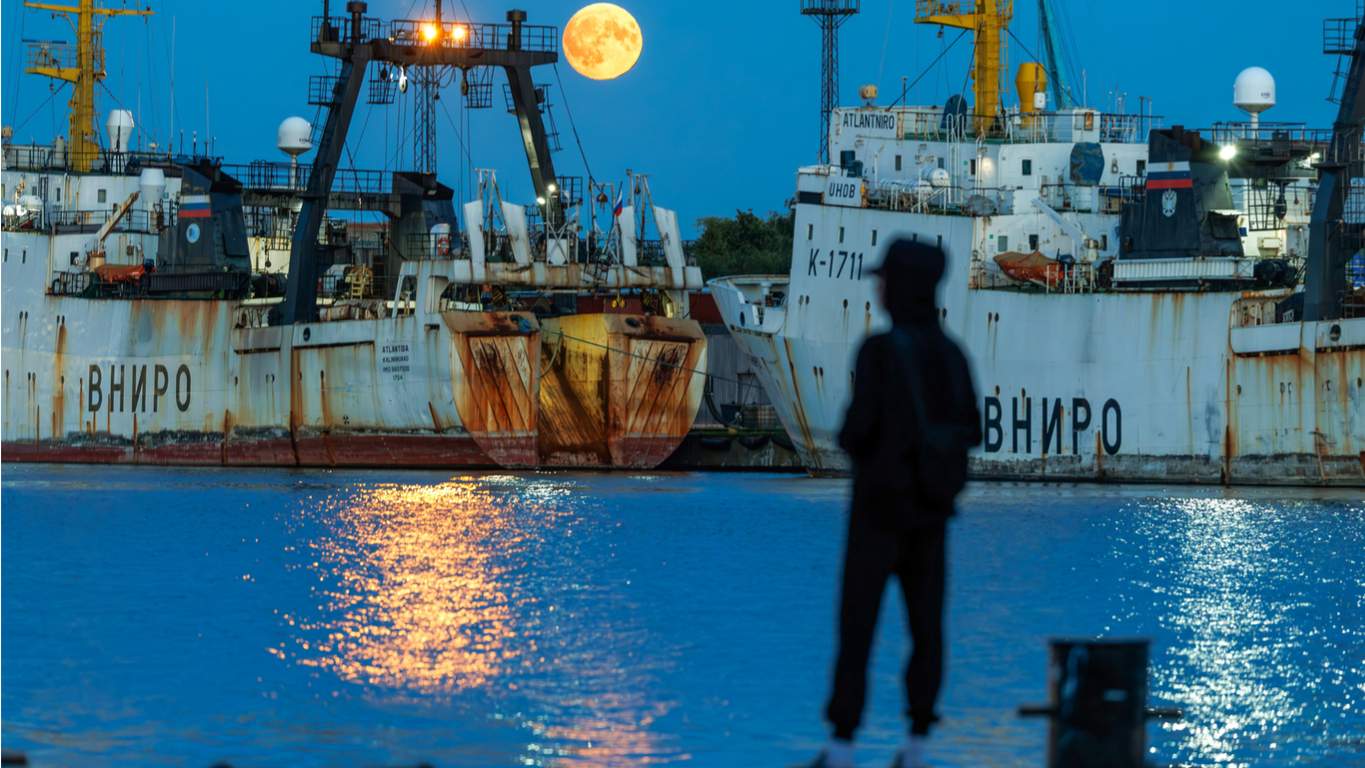
After sanctioned goods came under transit restrictions, Russia quickly began rerouting Kaliningrad cargo to maritime transport. The Ust-Luga–Baltiysk ferry crossing — where vessels can accommodate cars, containers, railway cars, and rolling stock — became the main route.
According to the maritime news agency PortNews, roughly 1.2 million tonnes of cargo passed through the Ust-Luga ferry complex in 2021, along with 13,600 loaded railway cars and around 9,000 units of rolling stock. By comparison, between January and March 2022, 360,000 tonnes were transported along this route — 85% more than in the same period of 2021. This included more than 4,100 railway cars and around 2,200 units of rolling stock.
By the end of 2022, the sea route had been expanded even further. While in January two ships operated permanently on this line, by December, a total of eight vessels operated on the Ust-Luga–Baltiysk and Bronka–Baltiysk routes, making seven or eight ship calls per week.
As a result, by 2025, more of Kaliningrad’s cargo was being transported by sea than by rail. While the railway’s share of freight transport fell by two-thirds to 36%, maritime routes carried 4.9 million tonnes of cargo, accounting for 52% of the total volume.
The Ust-Luga–Baltiysk line remains the main sea route today, and Russia’s Transport Ministry announced plans in January to further increase its capacity, ultimately doubling annual throughput.
A second maritime transport route connecting Kaliningrad with Russia’s second city St. Petersburg is mainly used for cargo — in particular, the container line operated by FESCO, a subsidiary of the State Atomic Energy Corporation Rosatom. In 2025, the company transported more than 40,000 TEUs (a standard unit for counting 20-foot containers) along the route, a 2.2-fold increase from the previous year.
According to Alexey Tkachenko, the Kaliningrad region’s managing director of port assets, container turnover at local ports could hit a record 200,000 TEUs by the end of 2026.
The spike in maritime transport between the Kaliningrad region and the rest of Russia is largely being supported by federal financing. The government began compensating carriers for some of their expenses after the EU imposed transit restrictions in 2022, and the volume of funding has gradually increased.
Rosatom’s Kaliningrad role
Before the full-scale Russian invasion of Ukraine, the Kaliningrad Commercial Sea Port was privately owned. However, following legal action by the Prosecutor General’s Office in 2023, the courts transferred almost all of its shares to the state.
Though initially run by Rosimushchestvo, the federal agency charged with managing state property, in 2025 control was passed to FESCO, a transport group belonging to Russia’s nuclear power agency Rosatom, which became the port’s sole shareholder in May.
In 2021, around 2.2 million tonnes of cargo passed through the port, but that figure dropped to 1.2 million tonnes in 2022. Though the port has remained underused since the war in Ukraine began, its role in transporting cargo between Kaliningrad and the rest of Russia has significantly increased.
Though in 2022 such shipments amounted to just 159,000 tonnes, by 2025 they had grown to almost 1.4 million tonnes. As a result shipments between Russian ports accounted for around 85% of the port’s cargo turnover last year.
In an interview with Russian business daily Vedomosti, Kaliningrad Region Governor Alexey Besprozvanny said that restrictions on overland transit were an opportunity for the regional authorities to further develop maritime transport routes and announced that two new ferries were already under construction, with the purchase of two more being discussed.
“As for abandoning road and rail transit, that’s not on the table. Although we are prepared for absolutely any scenario, I don’t think European countries will impose such restrictions themselves, since their own economies are linked to our transit,” Besprozvanny said.
Kaliningrad also needs transport routes to ship out products from local enterprises. In particular, FESCO sends industrial and agricultural products from Kaliningrad to St. Petersburg by sea. Per the company’s press office, cargo volumes of such shipments exceeded 8,500 TEUs in the first nine months of 2025 — 3.5 times more than the previous year. Part of this cargo is then exported from St. Petersburg to China and other Asian countries.
The Kaliningrad-based Sodruzhestvo group, a major agricultural holding, accounts for more than 90% of the region’s agricultural exports. A significant portion of Sodruzhestvo’s cargo is still transported by rail: in 2026, Rosmorport estimated that it accounted for more than 50% of the region’s rail transit.
Return maritime cargo flow remains lower than incoming freight, as is logical for an exclave. In 2025, carriers reported that vessels sailing from Kaliningrad operated at less than half of their technical capacity.

Adapting to new realities
Secure maritime transit routes alone are unable to insulate Kaliningrad’s economy from further isolation on land, however. Even though volumes have fallen in recent years, millions of tonnes of cargo are still moved by rail each year.
To make shipping all cargo in and out of the region possible, Russia would need to buy additional vessels, expand port infrastructure, and provide further subsidies for maritime transport. However, given the tenfold increase in the transport of goods by boat, any further EU restrictions on rail transit would be unlikely to complicate life for those in the exclave too much.
Further isolation would primarily harm the region’s major industrial enterprises, such as auto manufacturer Avtotor. Before the full-scale war, the Avtotor factory assembled cars for BMW, Hyundai, and Kia, but it was forced to diversify when those companies exited the Russian market in 2022, and it now works primarily for Chinese brands.
At the same time, production volumes decreased sharply: from approximately 177,000 vehicles in 2021 to 54,100 in 2022 and 29,100 in 2023. In 2025, the factory produced 33,400 vehicles, remaining at 10% operating capacity. Currently, Avtotor is trying to start producing some of its own components, but it still depends on external parts for vehicle assembly.
Fish processing is another major industry in the region. According to Rosstat, Russia’s federal statistics agency, enterprises in the Kaliningrad region produced 288,500 tonnes of processed and canned fish and seafood in 2024, and 282,200 tonnes in the first 10 months of 2025. By comparison, output was 305,000 tonnes in 2023 and 281,000 in 2022.
The FOR Group accounts for more than 40% of the region’s fish processing, with another 27% coming from Vici-Rus. These companies also rely heavily on external logistics to bring raw materials into the region (including from other fishing grounds) and to ship out finished products.
Oil production in the region is a special case. Energy giant Lukoil is developing the Kravtsovskoye (D-6) and D-41 offshore oilfields on the Baltic Sea shelf. The D-6 platform is located approximately 22.5 kilometres off the coast. The extracted oil flows through an underwater pipeline to the Romanovo onshore oil collection point; after processing, it is sent to the oil terminal in the Vistula Lagoon (known as the Kaliningrad Bay in Russian). From there, it can be exported by tankers.
As such, cutting off rail transit wouldn’t stop oil extraction on its own. However, if maritime shipments are heavily restricted or halted altogether, the final link in the chain — exporting oil from the terminal via tankers — could be disrupted.