The Ukrainian military spent the first half of 2026 doing serious damage to the backbone of Russia’s traditional economy, the oil industry. Now, it appears to have set its sights on an industry that’s become a keystone of the country’s economy more recently: online retail. In just a few years, the sector has multiplied in size, and its contribution to Russia’s GDP now rivals that of agribusiness, oil refining and metallurgy. Novaya Europe traces the rise of Russian internet commerce and digs into whether civilian logistics have become a new strategic target for Ukraine’s armed forces.
A ‘soft target’ that burns well
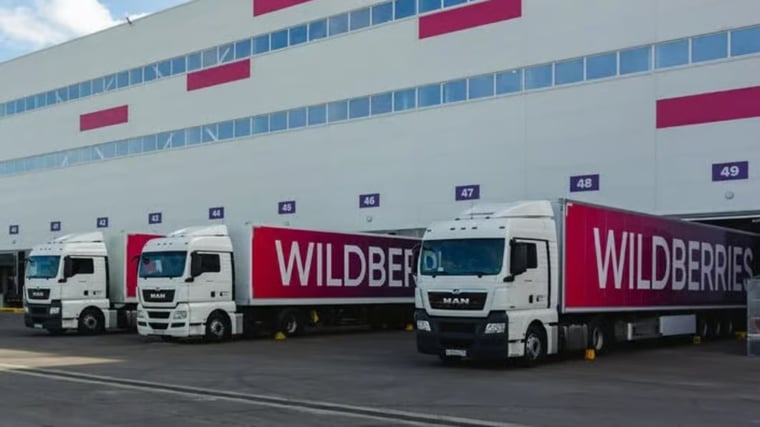
Russian retailers own vast networks of warehouses and distribution centres, most built in the last few years, and online marketplaces lead the way: Wildberries has more than 5.2 million square metres of storage space, while Ozon has more than 5 million. Traditional retail chains lag far behind — X5 and Magnit have around 2 million square metres apiece, while Mercury Retail Holding, fifth in the retailer rankings, has a third of that.
Online marketplaces are racing to blanket the country not just with pick-up points but also with warehouses, since delivery speed and inventory turnover both depend on how quickly cargo can be sorted at distribution hubs and how well that infrastructure is interconnected. In 2025, Wildberries alone opened or was building 17 warehouse complexes. Beyond Moscow and St. Petersburg, these include facilities in major cities such as Volgograd, Samara, Voronezh, Novosibirsk and Saratov, with plans for warehouses in nine more cities plus the Moscow region.
Having so many facilities is both a strength and a vulnerability. The more warehouses a company has, the easier it is to redistribute goods quickly in an emergency, one marketplace seller told Novaya Europe, adding that Ozon — which relies more on small local warehouses — stands out in this respect. But even Wildberries has already had roughly 14% of its storage space damaged by strikes, according to an estimate by Data Insight and Novaya Europe that includes the 22 July strikes on warehouses in the Krasnodar and Stavropol regions, whose combined area is around 250,000 square metres.
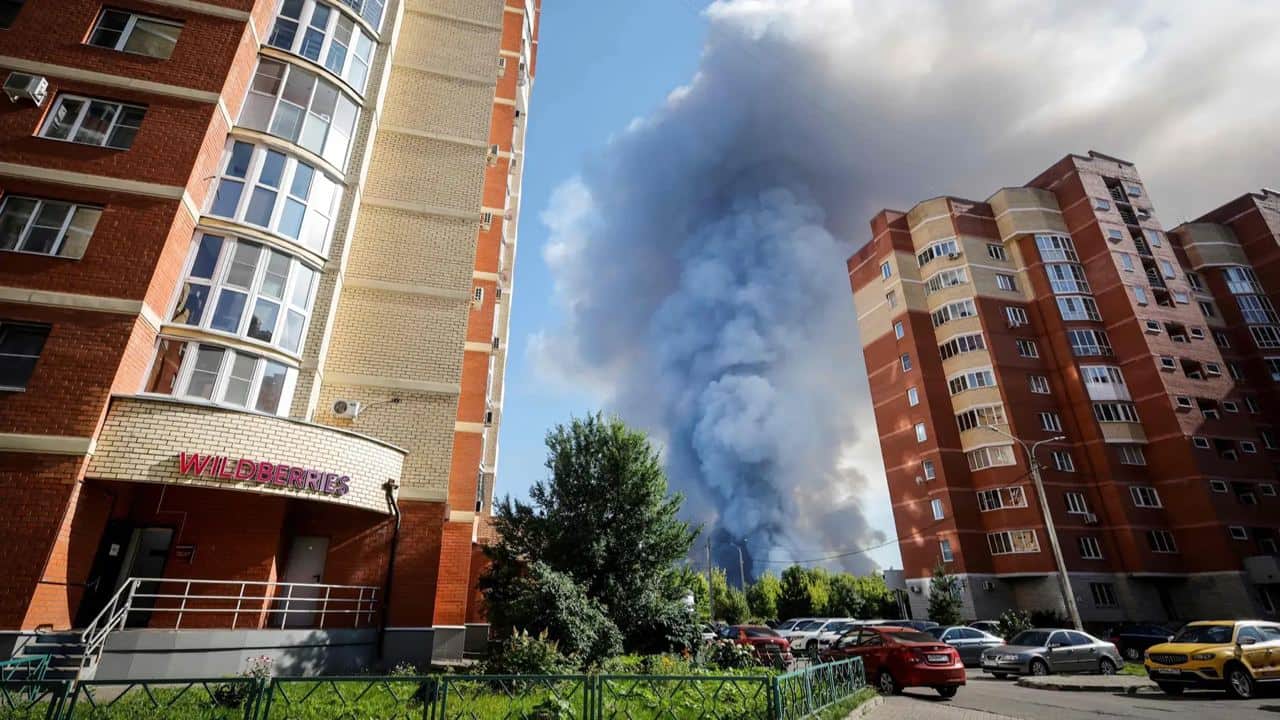
Large, modern trade-logistics facilities were targeted by Ukrainian forces for the first time on 18–20 July 2026, according to Novaya Europe’s interactive map of strikes on Russia.
Russia as a whole has more than 60 million square metres of quality warehouse real estate, of which the two largest marketplaces account for about a sixth, an industry analyst told Novaya Europe. “Knocking out that much space would take considerable effort and quite a bit of time. So I don't think events like this could trigger any kind of logistical collapse or seriously affect retail turnover overall,” he said.
However, the source acknowledged that this could change if the strikes become systematic — in which case Wildberries' operations would be seriously disrupted.
The risk stems from Ukrainian forces' growing ability to breach air defences and hit large targets such as warehouses, which range from 100,000 to 270,000 square metres.
If sellers come to see shipping goods to Wildberries' hubs as too risky — since the company bears greater exposure and is reluctant to take responsibility toward the owners of the goods — they may simply stop working with the company, the analyst said.
That, in turn, could spell serious financial trouble for a company that has taken on enormous debt, estimated at 1.3 trillion rubles (€14.5 billion), to finance the construction of those very warehouses. If Ukrainian strikes on trade logistics continue, retailers and marketplaces may have to turn to the state for financial help, the source believes.
Smoke rises above the Wildberries logistics complex in Elektrostal, Moscow region, 18 July 2026. Photo: Tatyana Makeyeva / AFP / Scanpix / LETA
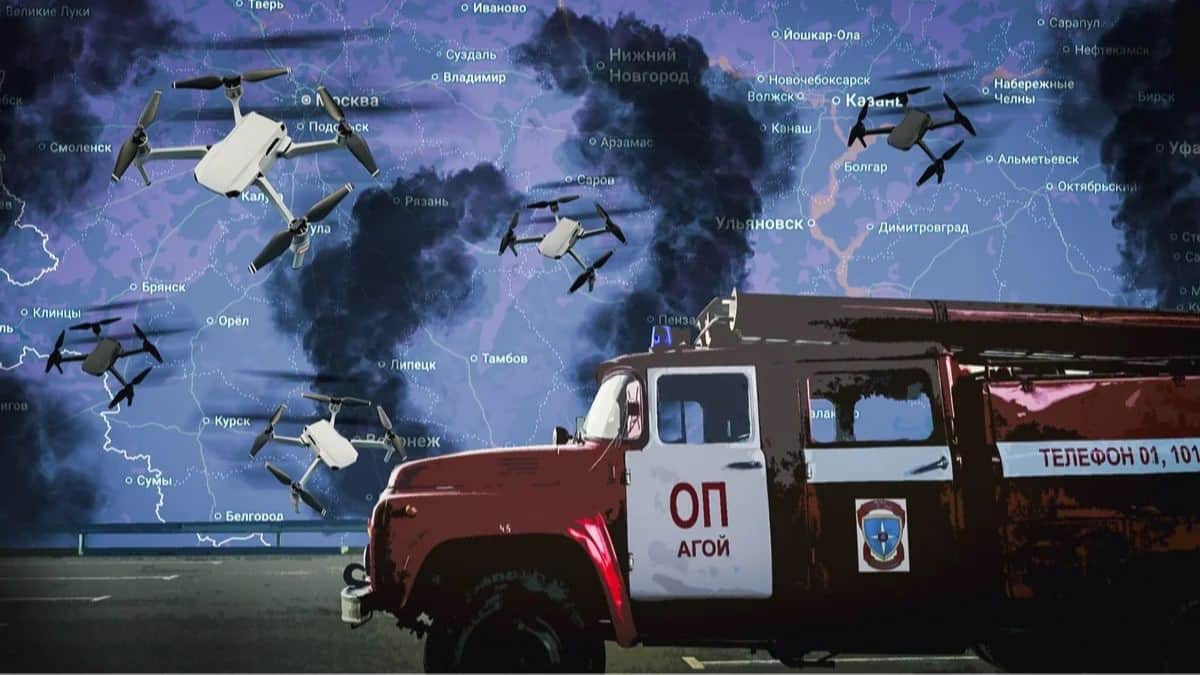
Setting fire to a warehouse packed with flammable goods is far easier than hitting a single distillation unit at an oil refinery — which is why Ukraine probably already has the capability to disrupt Russia’s trade logistics, military analyst Kirill Mikhailov told Novaya Europe. He pointed to the roughly 400 Ukrainian drones reportedly used to strike the Moscow region on 18 July as proof that mass strikes on such targets are far from implausible.
“Considerable damage could be done, especially if drone production [in Ukraine] keeps growing. If Ukraine can sustain campaigns against both the oil-and-gas sector and logistics at the same time, most terminals within range would eventually be hit,” an analyst with Conflict Intelligence Team (CIT) told Novaya Europe.
Warehouses within roughly 1,500 kilometres of Ukraine fall within strike range, meaning the industrially developed Volga region, Bashkortostan, Tatarstan and Perm region are all reachable. Everything beyond that is relatively safe, the analyst added. The main objective, he said, is economic damage: in military jargon, warehouses are a “soft target” — and one that burns well. They're almost certainly not defended by local air defences, since no one in Russia anticipated this kind of scenario. The result would be major damage to businesses, plus the now-familiar image of a huge column of smoke that's impossible to miss, he suggested.
Militarily, the damage would also show up in how strikes on warehouses stretch Russian air defences even thinner. But whether Putin decides such facilities are worth defending is another question, according to the CIT analyst. He considers the risk to army supply lines from warehouse strikes minimal. “People tend to overestimate the share of supplies that doesn't go through Russia's Defence Ministry but instead comes through volunteers or is bought privately,” he noted.
It's still too early to say with confidence that Ukrainian forces have made civilian logistics a new strategic target, the CIT analyst said. There have been cases before where one side launched a campaign only to abandon it fairly quickly. Russia, for instance, struck Ukrainian military enlistment offices (TCCs) in various regions before eventually stopping.
The pandemic tipping point
Just seven years ago, nobody thought of online marketplaces as a backbone industry. In 2019, Russians bought only 2 trillion rubles' (€22.4 billion) worth of goods online — nearly 16 times less than they spent in brick-and-mortar stores.
By 2025, online retail had grown six- to sevenfold, by various estimates, with volumes now put at between 11.5 and 13.4 trillion rubles (€129–150 billion), a sixth of all retail trade in the country.
Its share of the national economy has tripled, reaching 5–6% of GDP, up from 1.9% in the last year before the pandemic, meaning e-commerce now rivals traditional backbone industries. Russians spend more on marketplaces than the entire agricultural sector produces (10.6 trillion rubles, or €119 billion), while metallurgy (12 trillion rubles) and oil-product manufacturing (13.6 trillion rubles, or €152 billion) add only about as much to GDP, or slightly more.
The turning point was the pandemic: up to 10% of traditional retail outlets closed, and online shopping became a lifeline both for retailers battered by government-imposed “non-working days” and for customers barred from leaving home for weeks on end. Wildberries owner Tatyana Kim vowed that online retailers would deliver everything to people's doorsteps and urged customers to stay home, while telling offline retailers to shut their doors and reinvent themselves as pick-up points.
Both her platform and her rival Ozon grew two- to two-and-a-half-fold during the lockdowns in the second and third quarters of 2020. But this wasn't just because of the pandemic — it was also because of how skillfully the platforms seized the opportunities suddenly available to them.
Photo: Olga Volodina / ddp / Vida Press
Online shopping went from a pastime of the urban middle class to a habit adopted across all layers of society, offering a huge selection of goods with just one click, fast delivery to a neighbouring building or straight to the customer's door, discounts, and convenient banking services built right in.
Pick-up points spread across Russia. Their number grew fivefold from 2020 to reach 226,000 as of 1 January 2026. That explosion was driven by a new business model in its own right: marketplaces stopped opening pick-up points themselves and instead franchised them out to partner operators, spawning a whole new industry of franchisees running PVZs on the platforms' behalf. Pick-up points sprang up on virtually every street, in even the smallest towns and villages, and this dramatic expansion of the customer base gave small local entrepreneurs access to a national market.
“In the past, customers wanted to visit a physical store to feel the product and confirm its quality, while online shopping was seen as risky. After 2020, that perception shifted: now a digital footprint — thousands of reviews, unboxing videos, seller ratings, plus Reels and blogger accounts with reviews — gives consumers more assurance of quality than a salesperson in a physical store,” a manager who has worked at several different marketplaces told Novaya Europe.
Thanks to all of these factors, the volume of online retail sales has roughly doubled every two years since the pandemic.