‘In a foreign country, we’re nobody’
Nadine Geisler was sentenced to 22 years in a Russian prison for helping Ukrainian refugees. Her family has been on the run ever since.

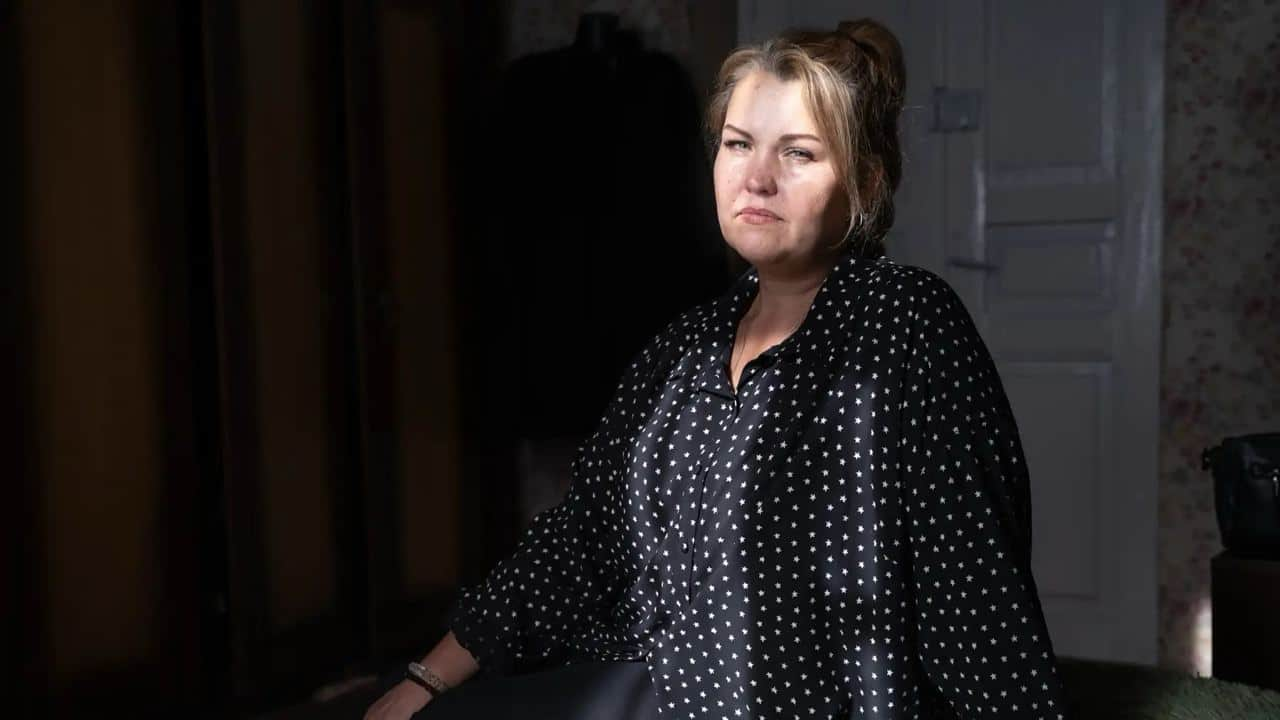

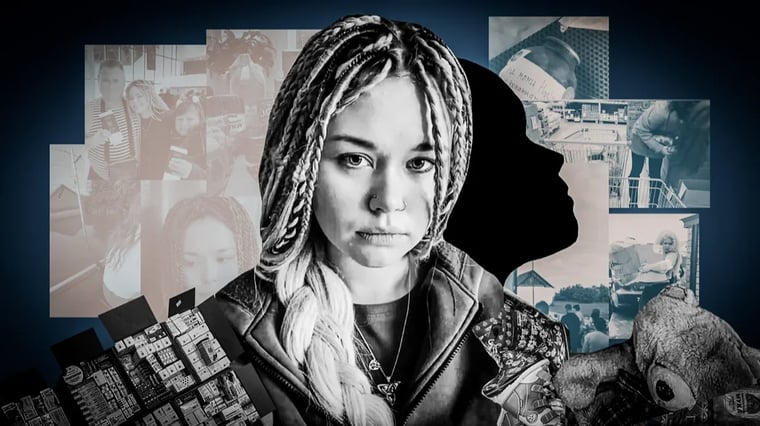
Nadine Geisler (real name Nadezhda Rossinskaya), a volunteer from Russia’s Belgorod who assisted Ukrainian refugees and delivered aid into occupied parts of Kharkiv region, is serving 22 years in a Russian penal colony for allegedly financing the Ukrainian military. The case rests on an Instagram account that she says she never controlled. Her parents have since been forced out of Russia, then out of Belarus, and are now renting an unheated, dilapidated house in Armenia. Novaya Gazeta Europe’s Viktoria Litvin, who first met Nadine in 2023, spoke with her mother about Geisler’s trial, the KGB raids on the family, and how they ended up in exile.
To reach Nadine Geisler’s parents, you take a taxi from Yerevan to a village outside the city, down a gravel road full of ruts and potholes.
The house they rent barely looks lived-in. Her mother, Yevgenia, and younger brother, Ravil, have only been here for a few weeks. Before that, the house stood empty for about 15 years. When Russian emigrants began flooding into Armenia, the owners remembered their half-forgotten property and rented it out for 150,000 drams a month (about €375).
As soon as we step through the door, her mother starts telling me how she had to close down the warehouse of her daughter’s volunteer group, Army of Beauties, back in Russia after Geisler left and arrest seemed imminent. The lease had only two days left, and in that time everything had to be cleaned and carried out — a job that fell to Yevgenia. She recalls driving boxes of aid around to neighbors and sending off truckloads on her own.
Then Yevgenia pauses, and we start from the beginning.
The pushiest one in the family
Yevgenia and her husband lived in Temirtau, Kazakhstan, when Nadine was born. Nadine’s father worked at a fire station, which had apartments for its employees, and Yevgenia worked as a house painter.
Later the family began to think about moving. Yevgenia did not want to live in Russia, and Belarus came up. But her then-husband had relatives in Russia’s Belgorod region, and before heading to another country, the family stopped by to visit them for a few weeks. They ultimately stayed, moving into a dilapidated house.
Yevgenia later split up with Nadine’s father. He had a daughter, Alyona, with his next partner. Yevgenia also started a new family. Nadine, Alyona, and Ravil got along well; Nadya, the feistiest of them, brought them all together and got both her sister and her brother into volunteering. Even as a very young child, she tried to help others. A girl at her kindergarten had a mother who wouldn’t let her grow her hair and kept cutting it short. Seeing long-haired Nadine, the girl would constantly cry. One day Nadine came home, waited for her parents to go out to the garden, and cut off her own hair so that the girl at kindergarten wouldn’t cry anymore.
At first, her parents were puzzled by her behaviour, but they eventually got used to it. As she got older, she rescued animals and took in stray cats. She once even talked her family into building cages for a makeshift shelter.
Yevgenia backed her daughter’s efforts and helped where she could, loading the car for aid runs and handing over clothes and food. She always told her to be careful.
Leaving Russia
Nadine decided to leave Russia in spring 2023. Yevgenia remembers getting a call from her daughter, who said she was coming home. When she arrived, she explained that a human rights activist had warned her a case was being prepared against her and that she had to leave the country.
“We sat with her in the greenhouse and then at home. Mostly we just cried. I didn’t understand what was going on at all,” Yevgenia says, pouring me tea.
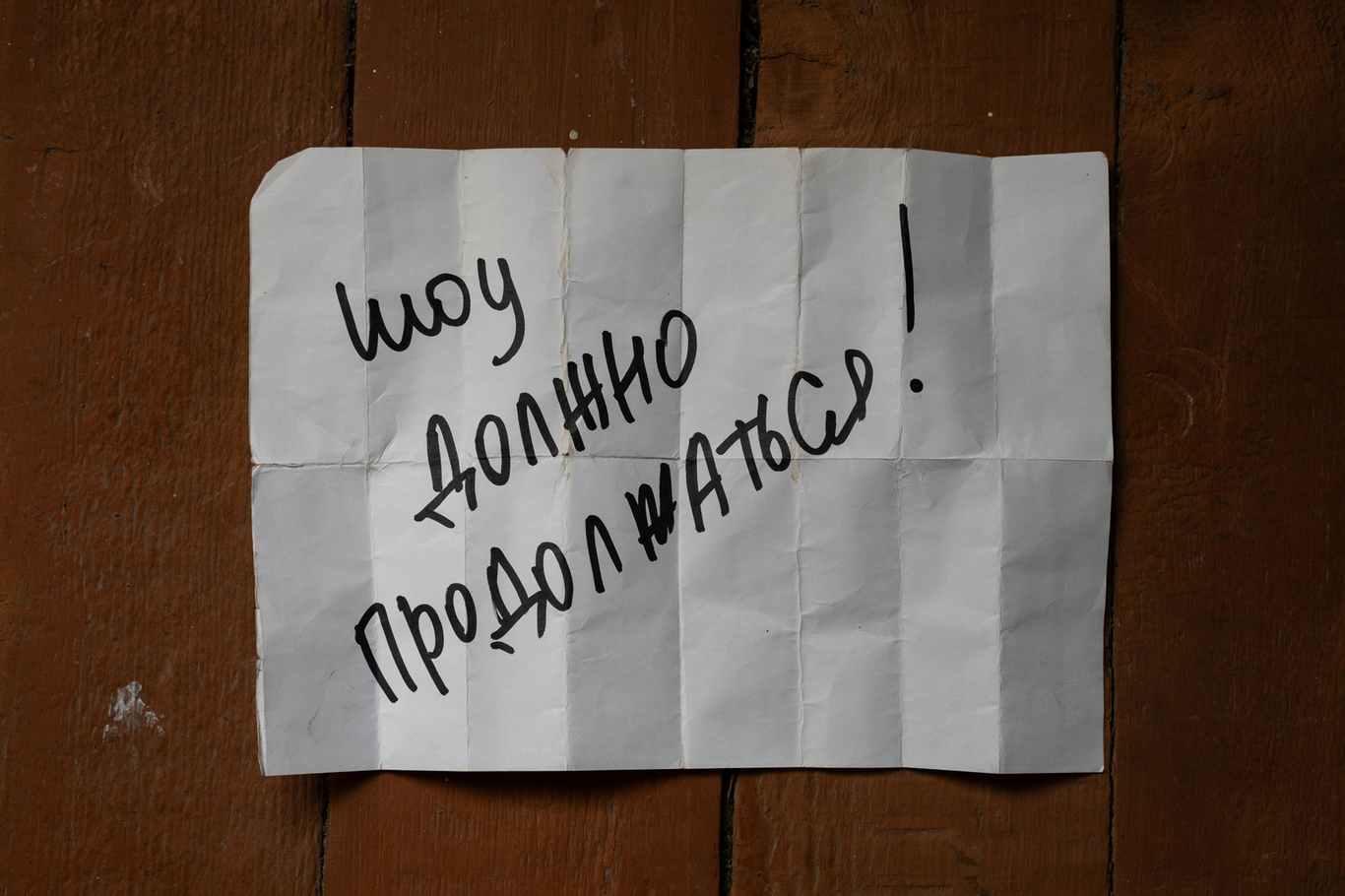
Then came the practical problems. The warehouse Nadine had rented stopped operating without her, and there wasn’t enough money to pay the rent. Yevgenia recalls how they stuffed the aid into sheds, since there was very little space at home — barely more than 26 square meters.
With Nadine gone, someone had to sort and repack all the aid. Some of it had been bagged for specific people in occupied parts of Kharkiv region, with names and addresses on each bag, but without Nadine, who would put on body armour and carry it in herself, there was no way to deliver it. The bags had to be opened and the contents sorted: children’s clothes in one pile, adults’ in another, and medicine checked for expiration dates and set aside.
“She had ordered three million rubles’ [€33,400] worth of medicine from Moscow before she left: lots of bandages and hemostatic supplies. A lot of it was meant for the hospital. The Izyum Central District Hospital had also ordered these medicines, and there was a letter from them requesting the supplies,” Yevgenia says.
The medicine and other goods ultimately went to the family’s neighbours and Ukrainian refugees. The unspoiled food, along with some of the clothes, was sent to other volunteers in Crimea.
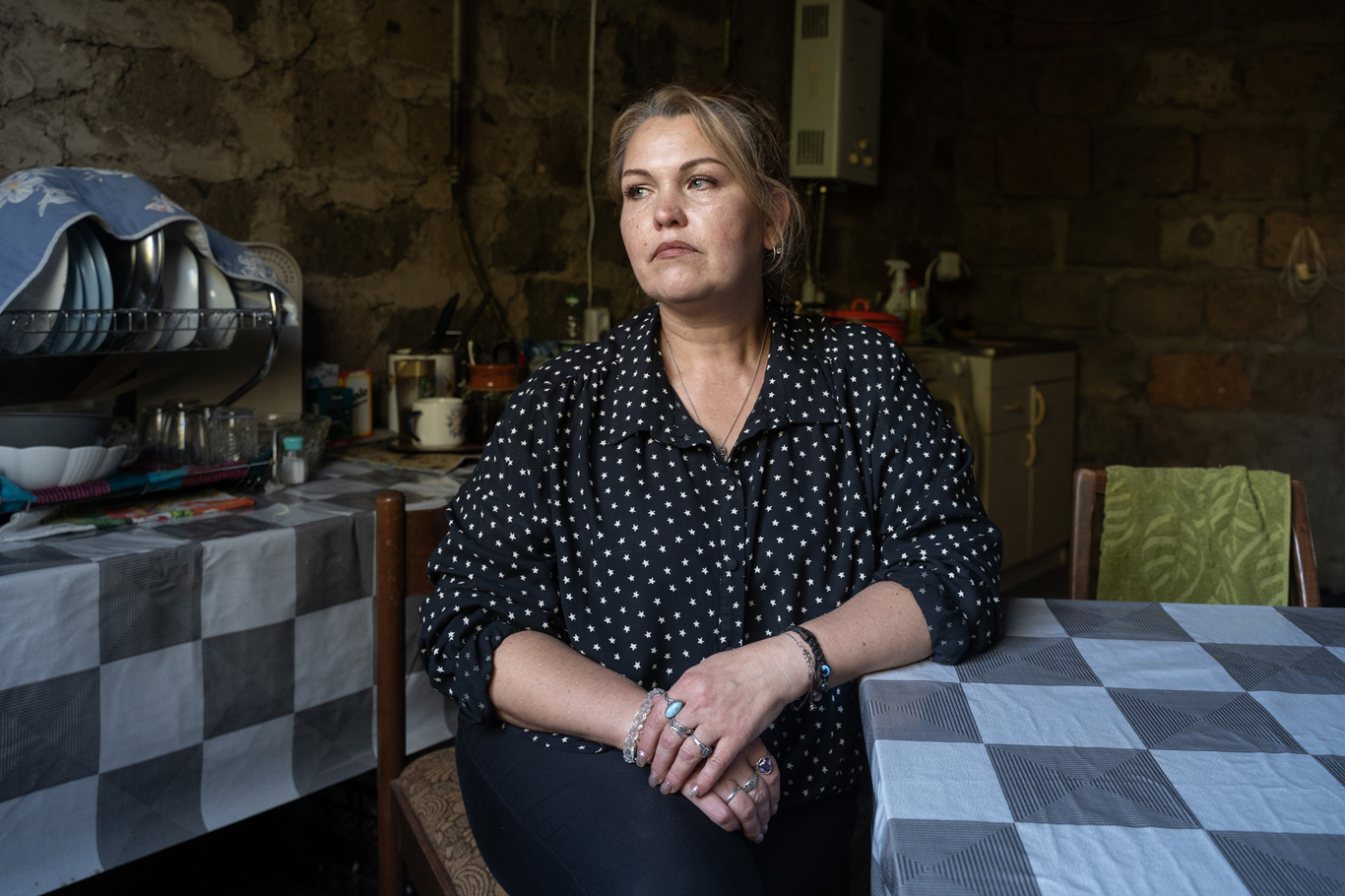
It is hard to square the millions of rubles’ worth of aid Yevgenia describes with the way the family lives now. The house in the Armenian village was handed over completely unrenovated. The walls are bare cinder block, the cement between the blocks flaking away and leaving gaps. The ceiling is covered in bumps and black stains, and directly above the dining table is a brown square, either thick plastic or a sheet of metal. Yevgenia hasn’t yet dared to look at what is behind it.
‘The longer the sentence, the higher the price’
Nadine returned to Russia in January 2024. Yevgenia says she still doesn’t understand the real reason.
“She told us she missed us and missed home, and that she had no money there and couldn’t survive. We didn’t know how the FSB works, we’d never dealt with it. And there’d been nothing about Nadya, it had all been quiet. What mother wouldn’t have told her, ‘Yes, sweetheart, don’t come’? We didn’t understand how serious it was,” she says.
Other reports suggest Nadine may have gone back to help move dogs evacuated from a shelter in Melitopol, which Russian border guards would not let out of Belgorod region.
“She showed up in a taxi with two suitcases and a backpack. She pulled up so quietly we didn’t hear her, and we hadn’t opened the gate in time. So she texts: ‘What’s this, the gate’s shut! Is anyone even expecting me?’ And we rush out, hug her, haul the suitcases in,” Yevgenia says.
The searches began on the morning of 1 February 2024, targeting the whole family. FSB officers arrived at three addresses at once: Nadine’s own apartment, her mother’s, and her sister Alyona’s. During Nadine’s search they told her they had already called the officers at her mother’s and that her mother had supposedly told them everything.
The officers were looking in Nadine's parents' home for a “large sum of foreign currency”. When Yevgenia was told this, she says she laughed in their faces. “Oh, of course, we’re sitting on a pile of cash and just never noticed,” she says she told them. “We’d have been living well years ago. Our house back then was worse than this one, a tiny hovel that was falling apart.”
They took all the electronics and documents from the house, leaving only a brand-new laptop the family hadn’t used yet.
“Then they took me to counterintelligence, to see an operative in an armoured room. They asked me about everything to do with Nadine: what she did, what she told me, whether we helped her, even where she studied. I remember I brought up Sasha Skochilenko. I said, ‘You’re really serious about going to war with girls.’ The operative said, ‘Like who?’ I said, ‘Well, Sasha, for instance. Some master criminal, swapping price tags. She should be killed for it, executed,” Yevgenia says.
There were no more interrogations. Human rights activists advised the family to leave, but as long as Nadine hadn’t been sent to a prison colony and they could still visit her, Yevgenia kept putting off the move.
After Nadine’s arrest, Yevgenia couldn’t work in her greenhouse anymore. She lay in bed all day and got up only to take sedatives and use the bathroom.
“I just lay there and howled. Then the papers for the first visit were signed, and my husband said, ‘Come on, up. Let’s go to the visit. Or are you going to lie through that too?’ And at the visit, once we saw her, it got a little easier,” Yevgenia says.
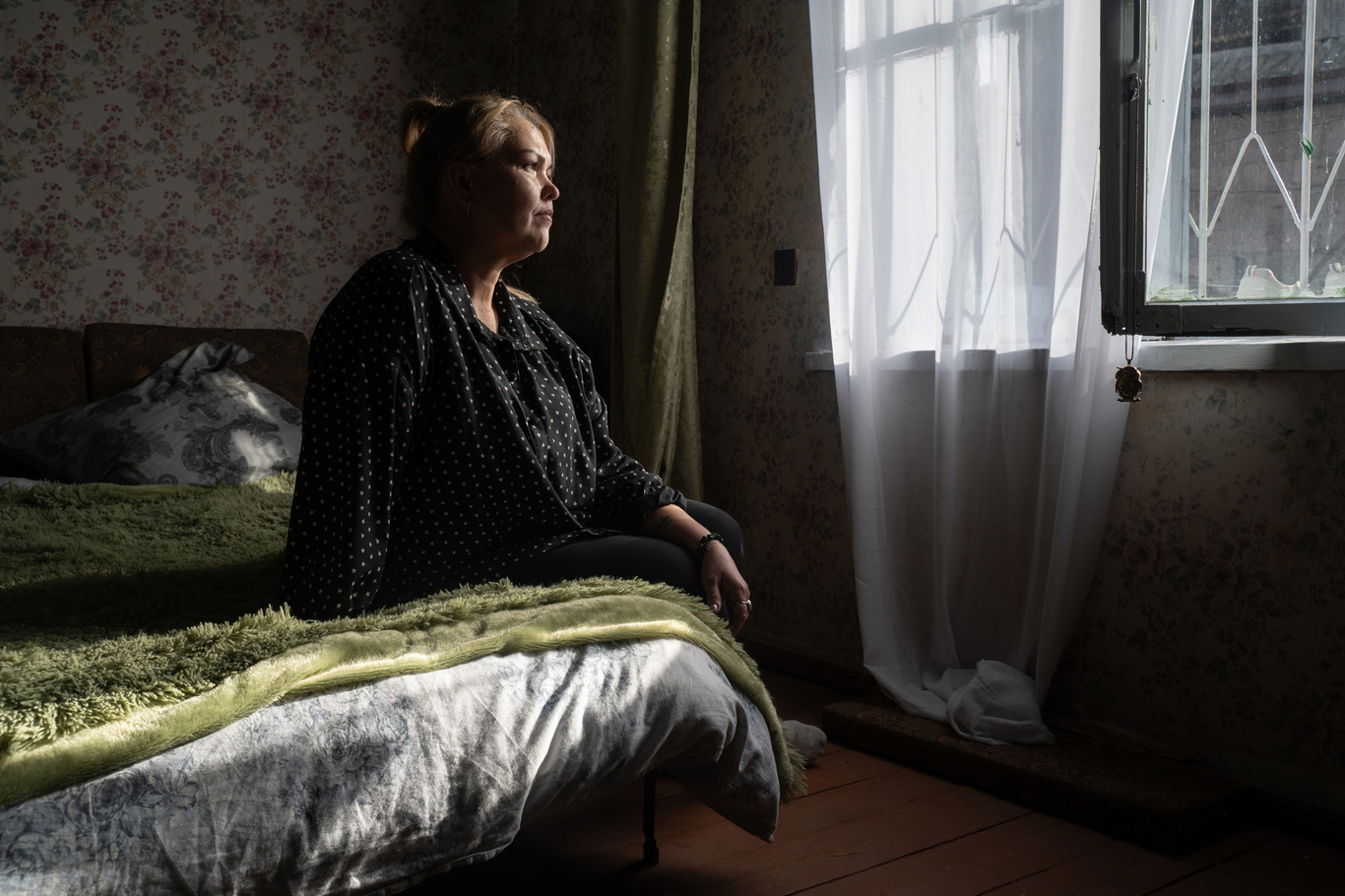
‘So what am I doing here?’
Visits with Nadine take place in closed-off booths resembling old Soviet phone booths, Yevgenia says.
At the first visit, they talked about the case. Neither Nadine nor her parents could understand what she was being charged with. All the official accusations looked absurd. After they’d gone over everything, Yevgenia recalls, Nadine asked, “So what am I doing here?”
Nobody ever found an answer. Even the official case rested on a post that prosecutors say she made from an Instagram account named in the case file, urging people to donate to Azov. But that account no longer exists, and Nadine’s real page has no such post.
The trial took place on 20 June 2025. Prosecutors originally asked for 27 years, nearly a record for a woman; the only comparable sentence went to Daria Trepova, the woman accused of killing the war blogger Vladlen Tatarsky. In court, Nadine asked the prosecutors to add a day to her sentence so she could beat Trepova’s “record” and get the longest term of any woman in Russia. In the end she was sentenced to 22 years and fined 320,000 rubles (€3,500).
“Nadya was in shock — she gave a kind of smirk. And I was sobbing my eyes out. But someone later explained to me that the longer the sentence, the higher the price [in a prisoner swap],” Yevgenia says.
The prospect of so many years in prison ahead has been hard on Nadine. “She can say 300 times a day that everything is fine, that her fighting spirit isn't broken, as she often says. But the body malfunctions. You can't explain to it that no, I don't have arrhythmia, everything's fine, my tooth doesn't hurt,” her mother says.
Some months after the trial, in late fall 2025, authorities stopped allowing the family to see Nadine. They left for Belarus, where they had relatives, and where it seemed unlikely that Russia would care enough about Nadine’s parents to go after them there. They were wrong.
‘Decided to play games with the state?’
In Belarus, the family moved into an old village house they’d inherited from relatives. Nearly all their modest savings went into fixing it up. They couldn’t sell the house in Belgorod region, because Nadine is registered there and a sale can’t go through until her conviction is cleared.
On 24 June 2026, the Belarusian KGB came for them, acting on a letter from the Belgorod FSB.
“My husband was supposed to go to Minsk to see his daughter from his first marriage and give her a guitar. He went out to the outhouse, and I was standing there ironing his shirt. I’d just switched off the iron when I heard shouting. I thought maybe it was the kids. It turned out the KGB guys were yelling at him,” Yevgenia says.
They seized her husband as he came out of the outhouse, shouting, “We’re KGB!” They shoved him face-down in the dirt and cuffed him.
“One of them put a gun to my forehead, and another grabbed my right arm, twisted it behind my back and drove my shoulder into the floor. That wasn’t even the worst part. Then they stepped on my head with their full weight. I don’t know what they used, a fist or a boot, but they pressed so hard I was screaming, ‘Just get off my head!’ I thought my skull was going to burst. They put their whole weight on it,” Yevgenia says.
After that, she says, she barely remembers getting up. The next thing she recalls is sitting on the bed, listening to the KGB men shouting.
“One of them yells, ‘Why did you come here? What was your purpose?’ I say, what purpose could there be? Home, family. He asks again and again, ‘What purpose?’ I’m thinking, are you stupid or deaf? It’s one or the other, that’s for sure,” Yevgenia says. Eventually, she adds, the officer got it and started asking how she was related to Nadine and what she knew about her.
The couple were then to be taken to the KGB station. Yevgenia was in just a nightgown, but they told her to put on her underwear right there in front of them.
“My husband was shouting, ‘Where’s my wife? What have you done to her?’ They took him into a room. He also asked on what grounds they were holding him, and they punched him in the stomach, like, shut your mouth, no questions,” Yevgenia says. Then, with a faint laugh, she adds that “these heroes” were too scared to walk past the dogs. “Afraid for their white jeans, I guess. But every minute they kept yelling, ‘We’re KGB, we’re KGB, we’ll shoot you!’ We’d kind of figured that out by then.”
The couple were put in separate cars and driven to the KGB office. Inside the building, Yevgenia says, “the Soviet Union never ended.” The building looks ordinary from outside, but inside it has kept its Soviet interiors: old cabinets, windows, linoleum, offices. And above it all hangs a portrait of Felix Dzerzhinsky.
They were taken in separately for polygraph interrogations. This time the family was asked not only about Nadya but also about their Ukrainian acquaintances, and whether they had any contact with Ukrainian intelligence.
Afterward, the same KGB officers who had threatened and beaten them stood in the corridor smiling at the family: “You’ve told us the whole truth, so now you can live in peace.” The family believed them. A month later a local police officer showed up and said an order had come “from above” to bring the family to the migration service.
“They didn’t let both of us into the migration service building, only me. I open the door, walk in, and see that KGB officer who stepped on my head. Sitting there, legs crossed, he says: ‘So, breaking the rules? Deceiving the state? Decided to play games with the state?’” Yevgenia recalls.
“For some reason he thought we hadn’t registered at our home address and were breaking the law,” she explains. “A woman from the migration office was sitting next to him. While he was saying all this, she took my passport, opened it and said: ‘She does have a registration.’ The KGB guy jumped: ‘What do you mean?’”
But having a registration didn’t help the family. They were later simply handed an expulsion order from Belarus. The reason given was a “preventive measure” to forestall unrest in Belarus: Nadine’s family, supposedly, had come to stage protests.
“After that we came home and taped over the cameras on our laptop and phone. We sat and talked in whispers. We couldn’t shake the feeling that the KGB officers were standing behind the door, or that one of them was lying under the bed. And that was it. And we gradually went to buy a suitcase, to pack our things,” Yevgenia recalls.
They were given a month to pack and leave. The family had no money for the move and again had to ask human rights activists for help.
Surviving the winter
“When we first walked in here, I said: this isn’t a house, it’s a shed,” Yevgenia says. “But it’s either this shed-house or the street. We couldn’t find anything bigger. But we’re afraid we won’t be able to scrape together the rent even for this.”
The house also has no windows in the attic and no interior doors, except for the front door and the one to the toilet, painted beige. Leftover cobwebs still hang from the ceiling there. Soviet cabinets and wall units stand in the hallway, and the chairs clearly date from that time too. Rusty iron pipes show behind the stove. Next to them is a newer washing machine, yellowed with age.
Village chores are already in full swing: pots of seedlings sit on the doorstep in the sun, walnuts are drying in the hallway, and a huge jar of sauerkraut stands under the table.
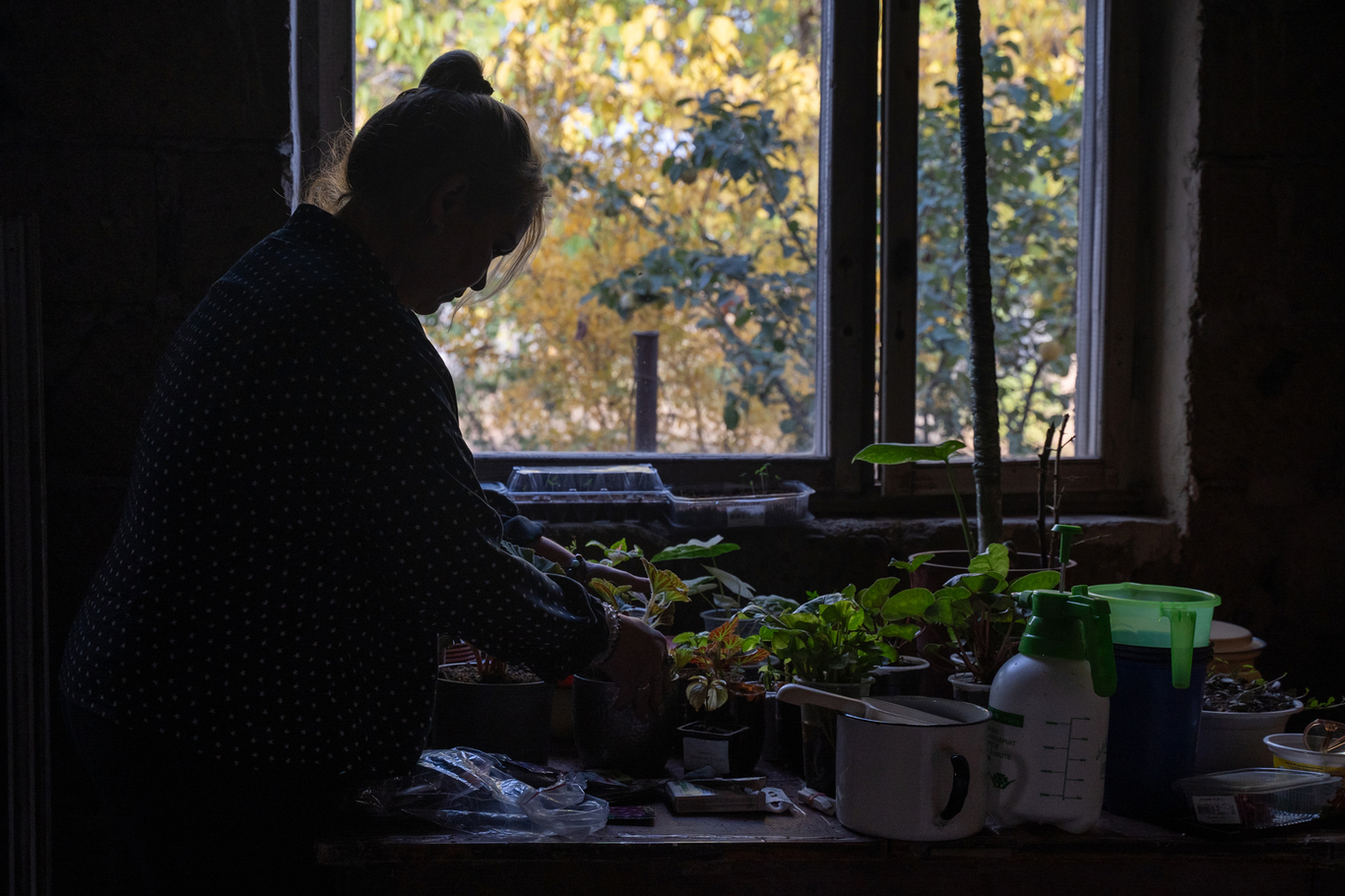
The worst of it, though, isn’t the bare blocks or the dirt but the lack of heating and the wooden windows, which, Yevgenia suspects, let in plenty of drafts. Another problem is her health. Yevgenia has a bad back, with bone spurs forming on her spine. Still, she has to find some way to fix up the house and keep it clean.
Where to go next is unclear. Yevgenia is afraid to make plans. One option would be to draw on her German roots and try to move to Germany under the programme for late resettlers, but, as human rights activists told her, she would have to go there alone first and only later try to bring her family over.
Her son has a confirmed diagnosis of PTSD and bipolar disorder, a result of the search, during which the officers threatened to throw him out a window. He still sleeps with the door open in case someone comes in.
Yevgenia herself hasn’t seen a psychologist. Friends have advised her against the state-funded specialists in Yerevan, and she can’t afford the private ones. But she can feel that what she’s been through has left a deep mark. “I’m still afraid of noise. I’m afraid of running into people, of making conversation, of talking,” Yevgenia says.
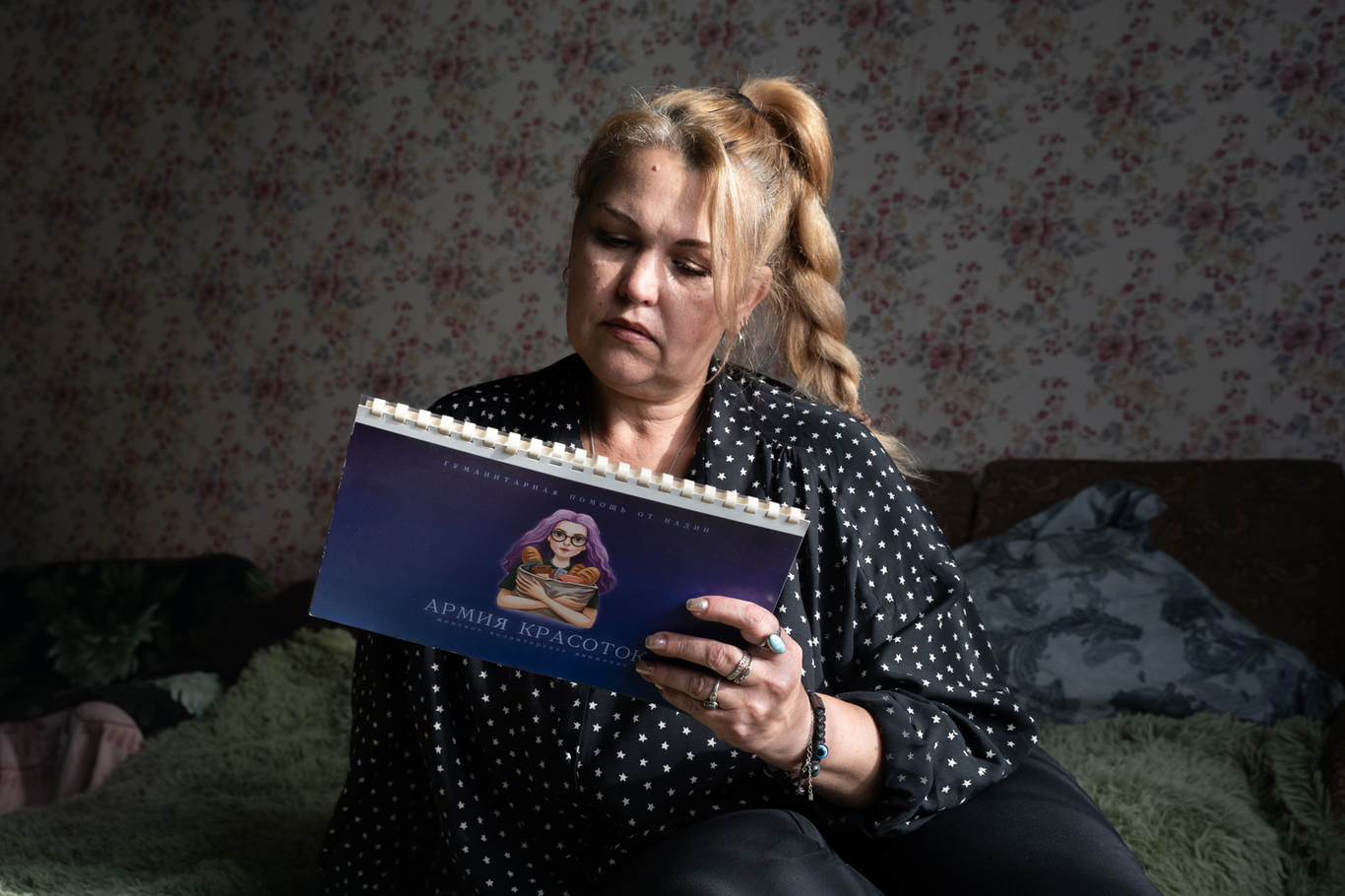
Yevgenia is reluctant to ask for money for a psychologist or for repairs. She at least has her freedom, she says, while her daughter is in prison, so Nadine’s needs come first. Fundraising for Nadine has been slow lately, too. Human rights activist Alexey Pryanishnikov recently launched a campaign for Nadine, for example, but so far very little has come in.
“We lost both our money and our things. We’re grown adults, and we’re left with two suitcases, no money, no nothing. At 50, left with a suitcase. In a foreign country, we’re nobody. If it weren’t for the volunteers, we probably wouldn’t be here anymore,” Yevgenia says.
Still, she says, none of it matters as long as her daughter is free.