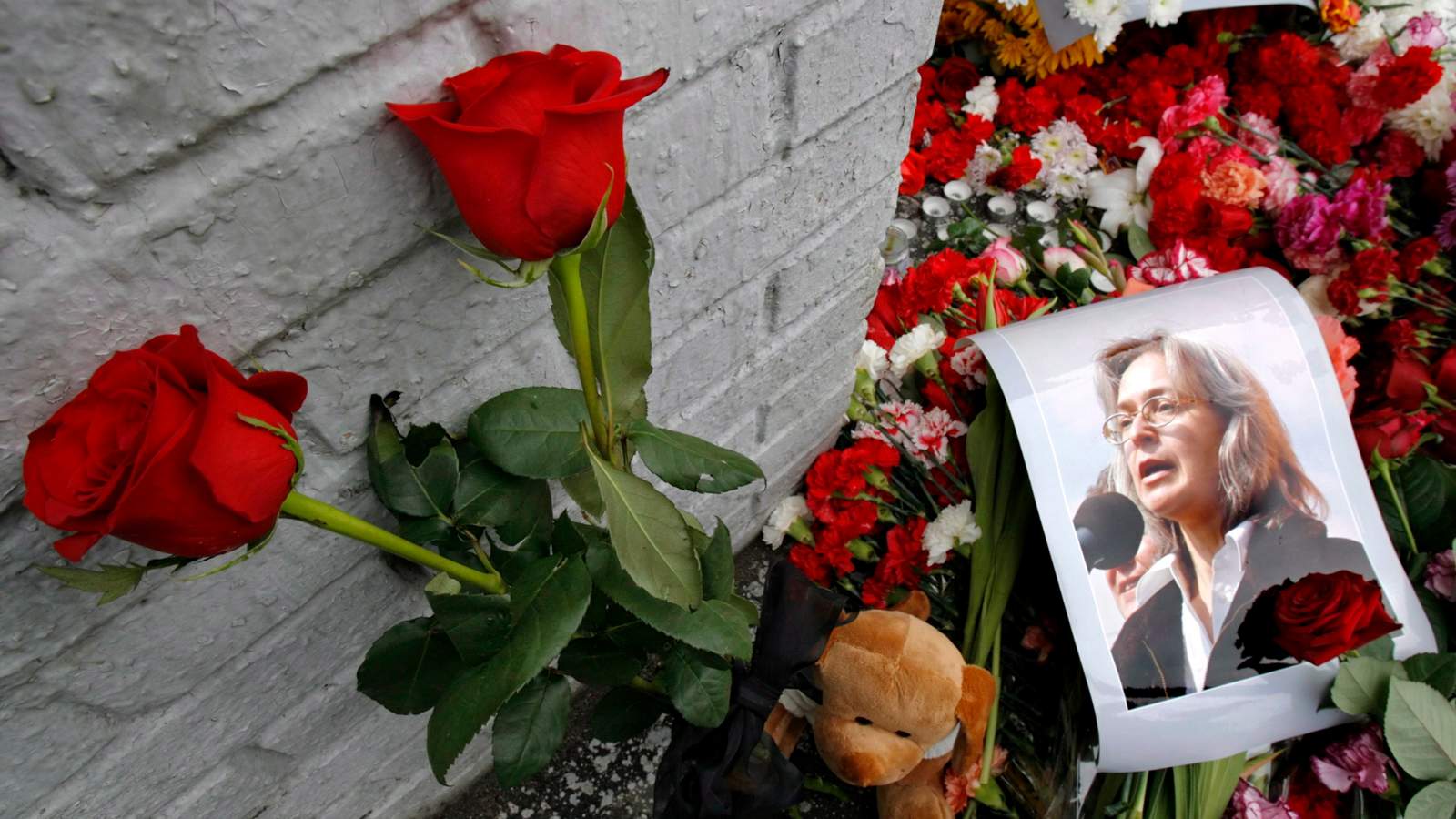
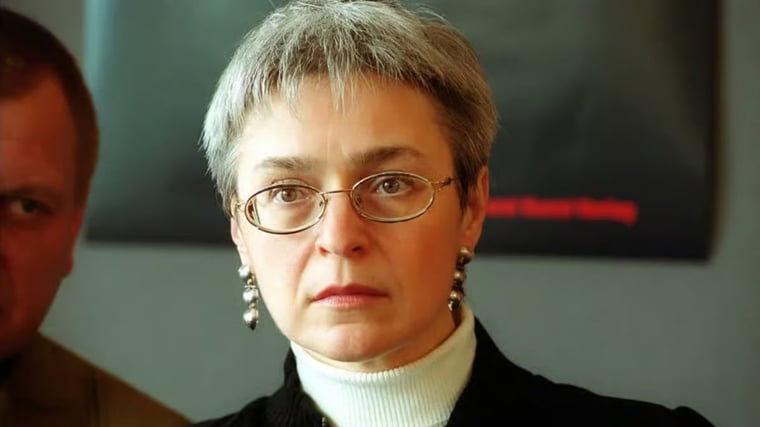
Twenty years ago today Novaya Gazeta special correspondent Anna Politkovskaya was gunned down in the elevator of her Moscow apartment building in a savage contract killing that shocked the world and changed Russian journalism forever. Since then, Russia’s transformation from a deeply flawed democracy to an authoritarian police state waging war on its neighbour has only served to underscore just how important brave, dissenting voices such as hers were, and how corrosive their silencing has been for the country.
While Politkovskaya had been an outspoken critic of Vladimir Putin since his sudden rise to power in 1999 during the final year of Yeltsin’s moribund presidency, it was her singular devotion to reporting first-hand on the Second Chechen War, launched by Putin while he was still Yeltsin’s prime minister, that made her a household name, even if her fame outside Russia far exceeded her notoriety inside it.
Blacklisted from appearing on most TV channels in her own country, where her column in Novaya Gazeta reached a relatively modest national readership, Politkovskaya nevertheless received international recognition for her work, winning multiple awards for her journalism and human rights advocacy in the years before her death.
Putting herself at enormous personal risk in order to speak to Chechen civilians during her frequent journeys to the breakaway North Caucasus region, Politkovskaya was branded a traitor by pro-Kremlin media outlets for exposing the atrocities committed by Russian forces as they razed entire villages and towns to the ground in their quest to bring Chechnya back under Moscow’s control. Her reporting earned her the personal enmity of Ramzan Kadyrov, the warlord Putin ultimately appointed to run the republic, and made Politkovskaya a host of other very dangerous enemies.
Though in 2014 a Moscow court convicted two men of organising and carrying out the hit on Politkovskaya and jailed them both for life, it’s still impossible to say with any certainty whether her killing was ordered by the Kremlin.
When Vladimir Putin finally deigned to address the murder of his fiercest domestic critic a full three days after her body was discovered by a neighbour, he snarled that her murder had done “much more harm to Russia … than any of her articles,” a neat way of downplaying the impact of her reporting by highlighting her relatively fringe profile. He then added that Politkovskaya’s assassination had been particularly egregious because she had been both a wife and mother, as if gunning down an unmarried and childless journalist would count as something else entirely.
Yet Politkovskaya was far from the first journalist to lose her life in the violent maelstrom of post-Soviet Russia. Indeed, she wasn’t even the first Novaya Gazeta journalist to have been killed in the line of duty, but the third. Staggeringly, another three have met the same fate since then.
Why is it then that Politkovskaya’s murder continues to cast such a long shadow over Russia 20 years later? The past year alone has seen the release of a feature film, Words of War, about her life, starring Maxine Peake and Jason Isaacs, and the repeated destruction of a memorial plaque on her Moscow apartment building by pro-Kremlin thugs.
The shamelessness with which Politkovskaya was killed, the nonchalance with which the shooter dropped his weapon on the ground before calmly exiting the building, and the fact that the assassination took place on Putin’s birthday all garnered international headlines, as did — inevitably — the fact that Politkovskaya was a woman doing such a dangerous job.
Politkovskaya’s murder meant that she ultimately became part of the very story she was reporting, and yet, for all the brutal circumstances of her untimely death, it is Politkovskaya’s writing that is most responsible for her continued relevance. Both the moral clarity and political prescience of her work have ensured she remains an essential element of the discourse on contemporary Russia.
While she was certainly not alone in seeing Putin for who he really was from the first day he stepped out of the shadows, few journalists dared to be as scathing as Politkovskaya was about the low-ranking former KGB officer who suddenly found himself in charge of the largest country on Earth, even in the relatively permissive media climate of the early 2000s. She also refused to conflate Russia and its rulers, remained a patriot despite calling out the war crimes she witnessed in Chechnya, and continually spoke truth to power.