For more than a year, residents of occupied Oleshky, on the left bank of the Dnipro across from Kherson, have begged for a civilian evacuation. At times it seemed they had been heard: volunteers compiled lists of those still in town and passed them to officials and international organisations, hoping they would negotiate a humanitarian corridor with the occupation authorities. Nothing came of it.
This summer, volunteers documented the first deaths from starvation among residents, though no one can officially confirm them, since Oleshky is on the front line. The town is shelled hourly from both sides, and there is no civilian government. The Ukrainian military administration sits across the front in liberated Kherson, while the collaborationist authorities are 70 kilometres away in occupied Skadovsk. Russian soldiers, who are also hungry, are stationed in the town. The last time volunteers brought food to the residents, who are effectively held hostage by the Russians, was 26 May.
Now the whole world is watching. Football fans, musicians, religious leaders and others have begun advocating for the town's residents under the banner SAVE OLESHKY, and Ukrainian officials have appealed to the international community to secure aid and an evacuation.
Novaya Gazeta Europe spoke to residents about what life in Oleshky looks like today.
The hunger games
“We’re finishing the last of our vegetables, and after that it’s ‘Happy Hunger Games, and may the odds be ever in your favour!” says Andriy (name changed for security reasons), a badly emaciated 46-year-old who has not left his hometown once since 24 February 2022.
Early in the war, the Russians took him away with a sack over his head to a basement, where they tortured him for several days. When they let him go, they warned him that if he tried to leave Oleshky, he wouldn’t leave the torture chamber alive next time. Andriy knows he is unlikely to get past the many Russian checkpoints. He says he no longer knows which is worse: watching his parents starve to death beside him, since they refuse to leave without him, or facing the torture of the Russian security forces again.
The last food delivery to Oleshky was on 26 May. The next attempt ended in tragedy.
On 2 June, four vehicles carrying food and humanitarian aid headed for the town. One of them belonged to a local priest. The drivers stopped repeatedly, getting out and checking the road for mines before moving on.
The priest drove two of the seriously wounded to the hospital in Skadovsk; one died on the way. Another driver was loaded into a garden wheelbarrow and rushed to the hospital in Oleshky. The wheelbarrow filled with blood almost immediately, and his chances of survival seemed slim, but he made it. The fourth driver also lived, with less severe injuries.
After that, nobody tried to bring food into the blockaded town again.
1/4
2/4
3/4
4/4
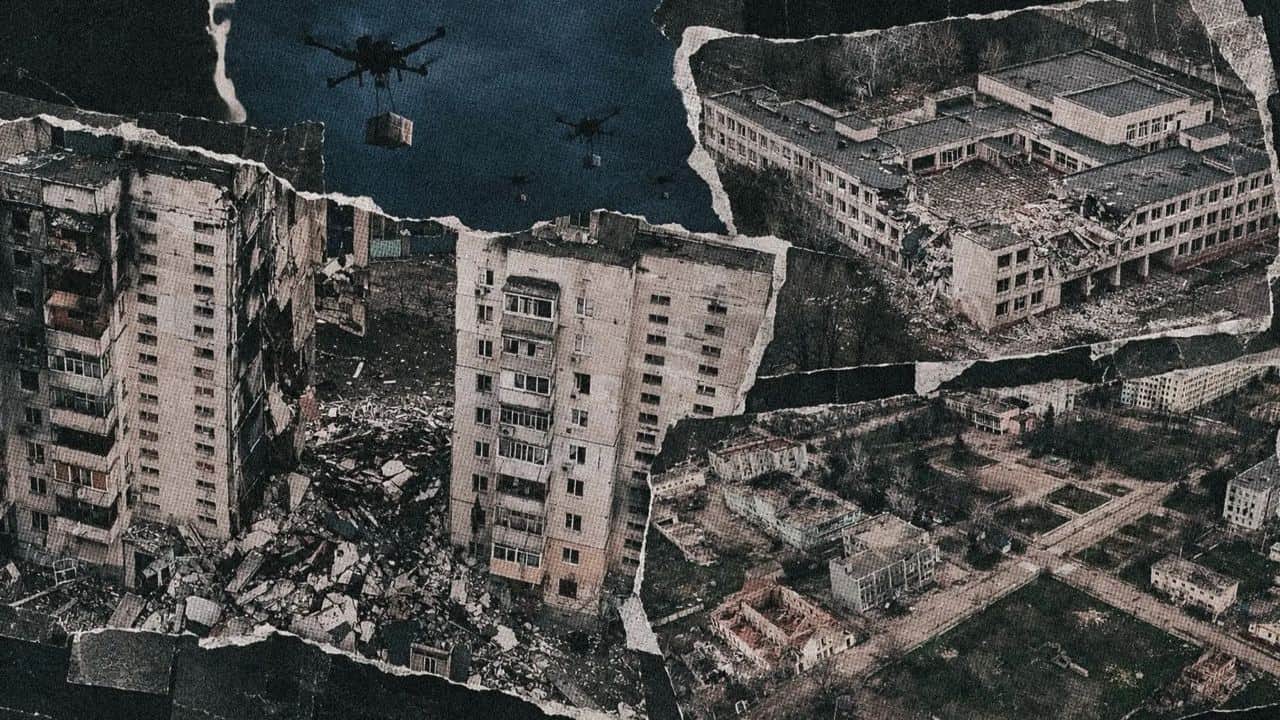
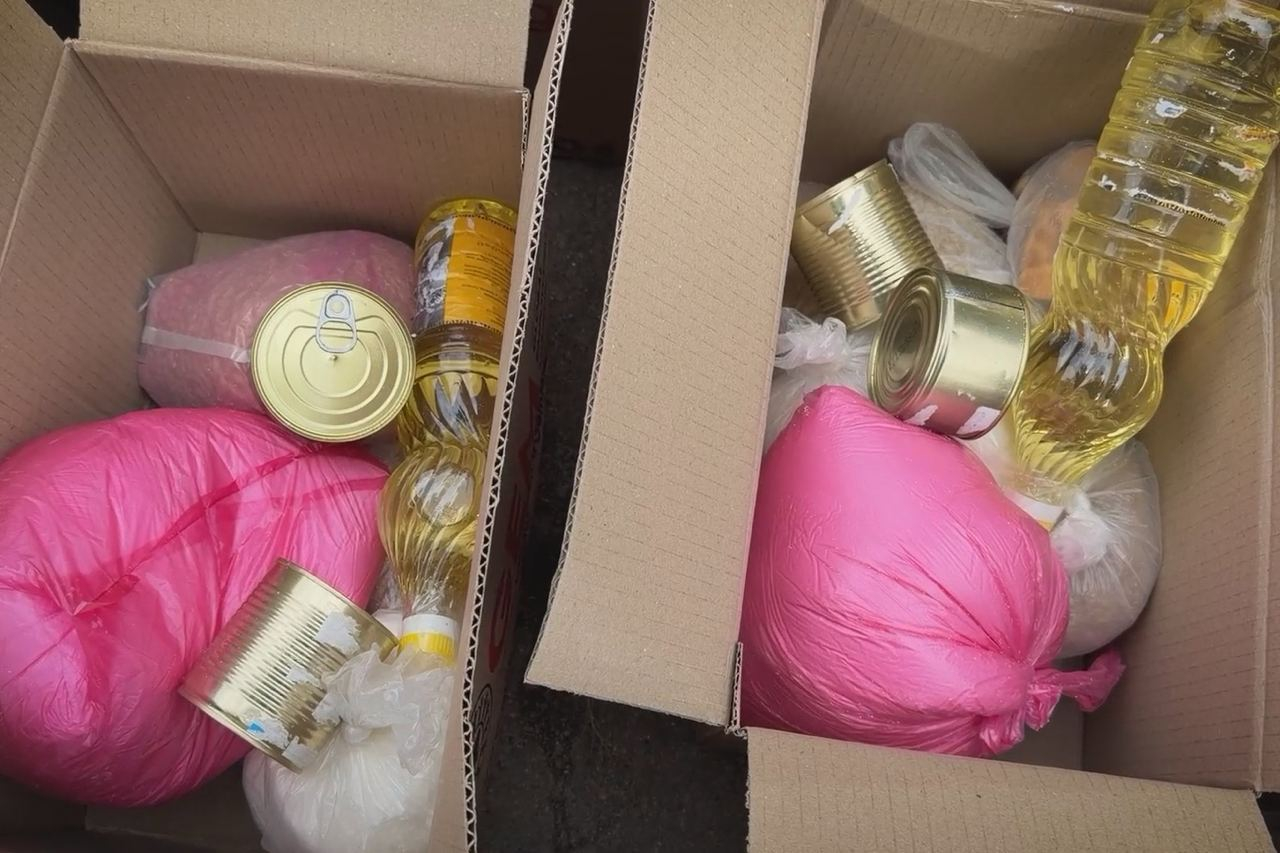
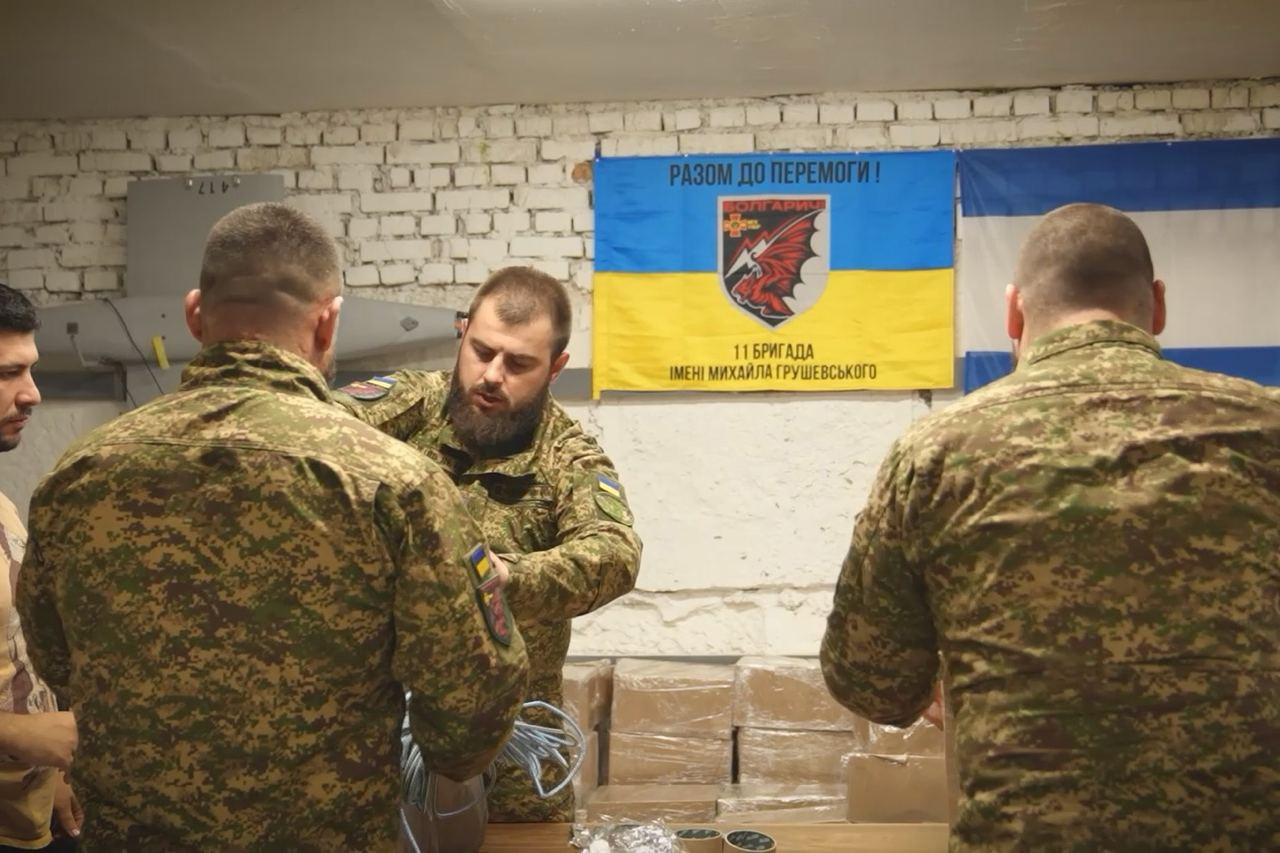
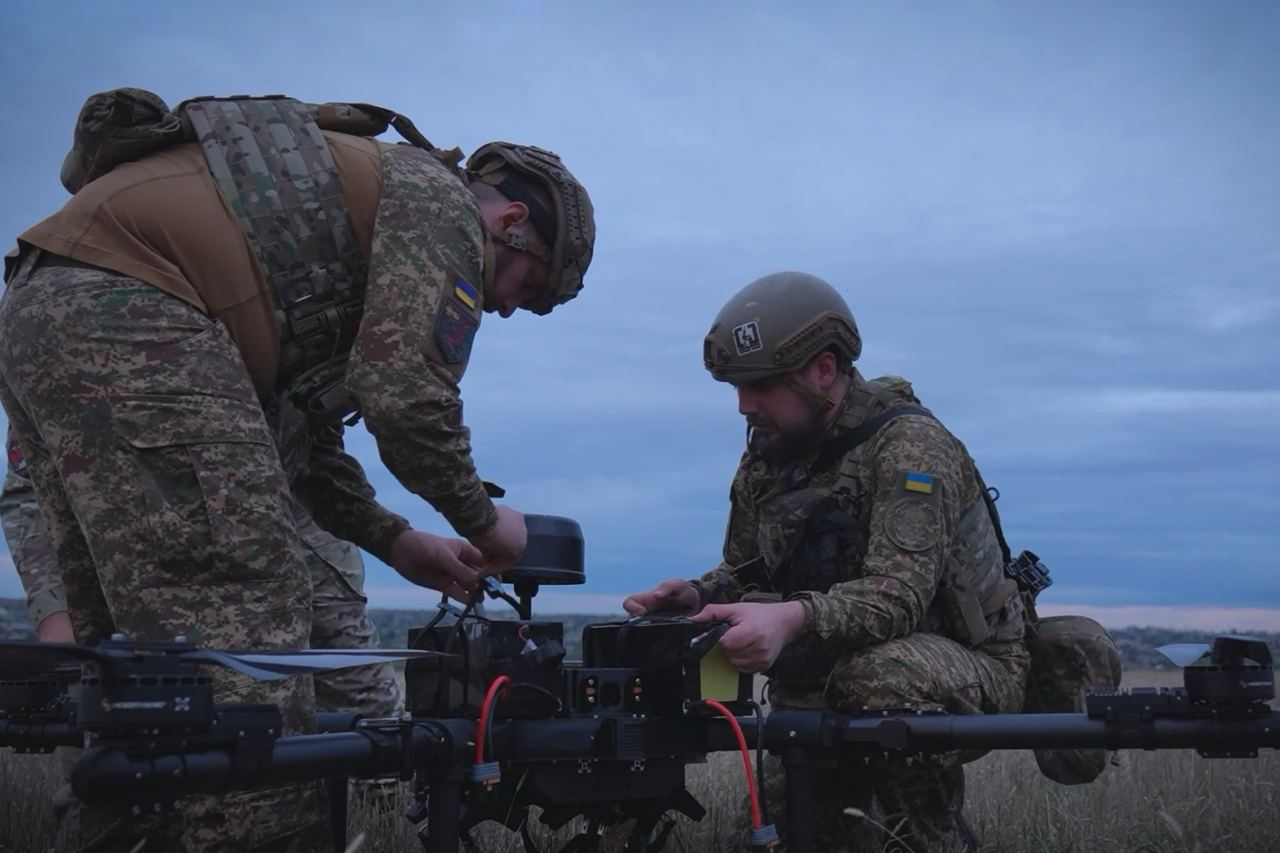
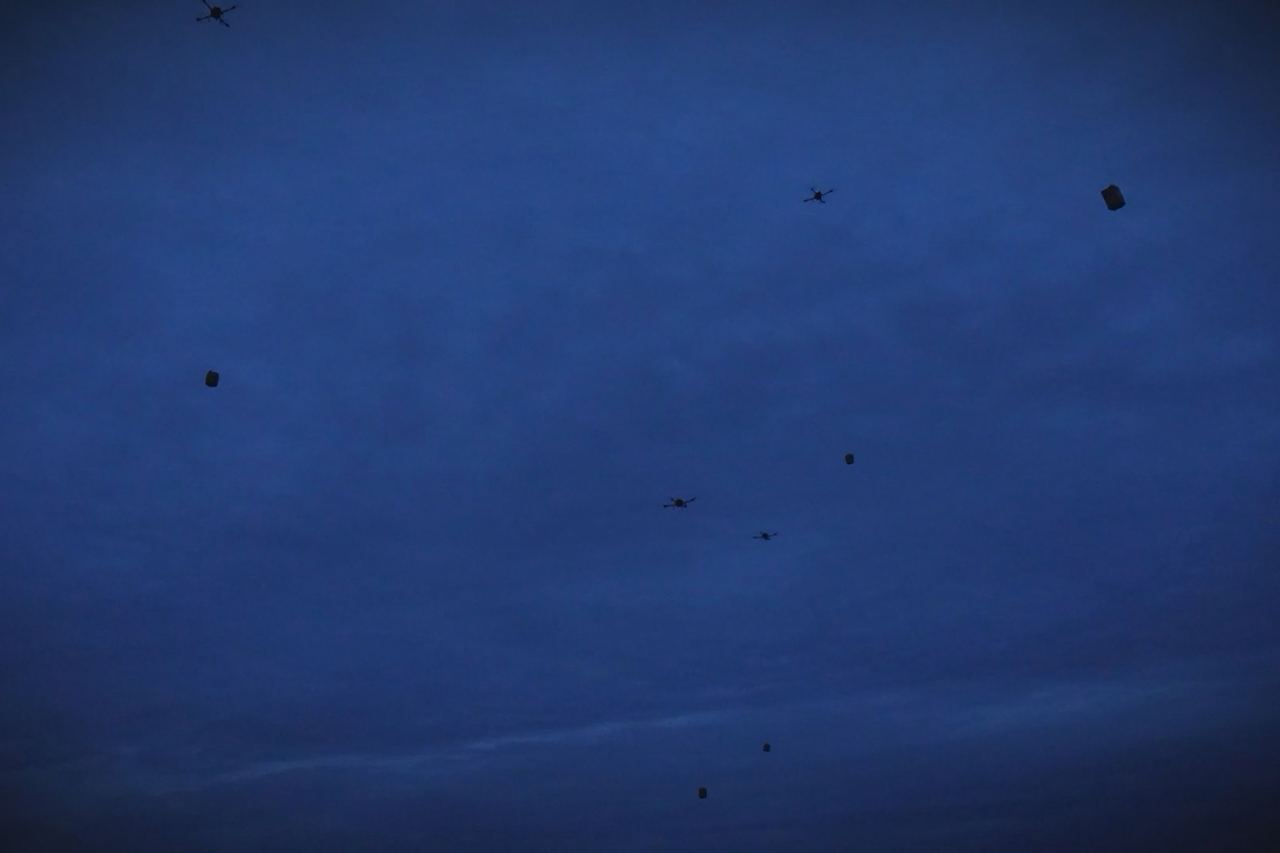
Ukrainian forces delivering humanitarian aid by drone. Photo: Oleksandr Prokudin
Foraging past mines
Somehow the locals made it through the summer by eating grass and vegetables from their gardens. They searched the cellars of neighbours who had left or been killed, and sometimes they got lucky and found food. By autumn, things had become desperate. Hunger drove people farther and farther from town in search of something to eat.
The river is off limits; everything along it is mined. The woods, with their mushrooms and berries, are out of bounds too, since Russian troops are there, along with more mines. The town of Hola Prystan, where a few goods still trickle in from time to time, is unreachable: the road runs along the Dnipro, which is to say along the front line, and it is mined and patrolled around the clock by drones, which kill anyone they detect.
Desperate with hunger, some residents began travelling to Radensk, a village that is also occupied but 20 kilometres farther from the front. When the first came back with food, others followed. Radensk still has a market and shops, and it’s sometimes even possible to pay with a Russian bank card. Some people — pensioners and hospital and utility workers — had the foresight in the first years of the occupation to have their pensions and salaries paid onto cards.
“If they open the road to Radensk, there will be food,” says Andriy. “Right now, groups go on foot every day to buy supplies. Not everyone comes back. People try to finish everything before dark, because after sunset you can’t see the mines. But I’ve heard this route will be closed off in the next few days too. I hope that’s just gossip.”
According to the volunteer Ksenia Arkhipova, who left Oleshky herself in 2022 and has since organised free evacuations from her hometown and arranged deliveries of food and animal feed, people gather by the hospital in Oleshky at dawn and walk 23 kilometres together to the market in Radensk. The trip takes six to eight hours each way. Most are elderly and weakened by hunger, which means their speed is severely limited. There is also periodic shelling, which they have to wait out. Sometimes they physically can’t get there before the market closes, but the vendors know that “the Oleshky people will come” and set aside some goods for them.
The road to Radensk is mined just like the one to Hola Prystan, though a little less densely. Those who can cycle are better off. But sometimes they have to stop and carry their bikes so as not to set off magnetic mines. The roadside and the road itself are littered with burned-out vehicles. And the route is passable only in clear, dry weather: once it rains, or fog rolls in, or snow falls, no one can get through.
1/3
2/3
3/3
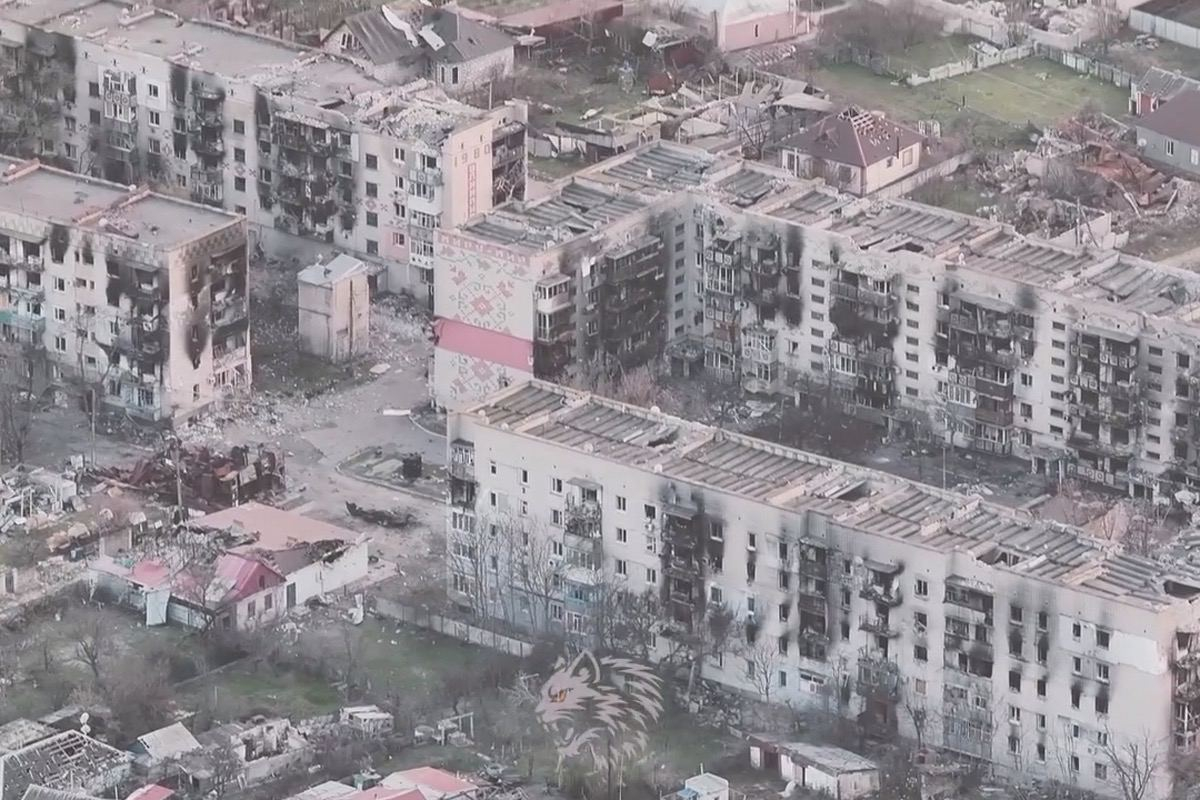
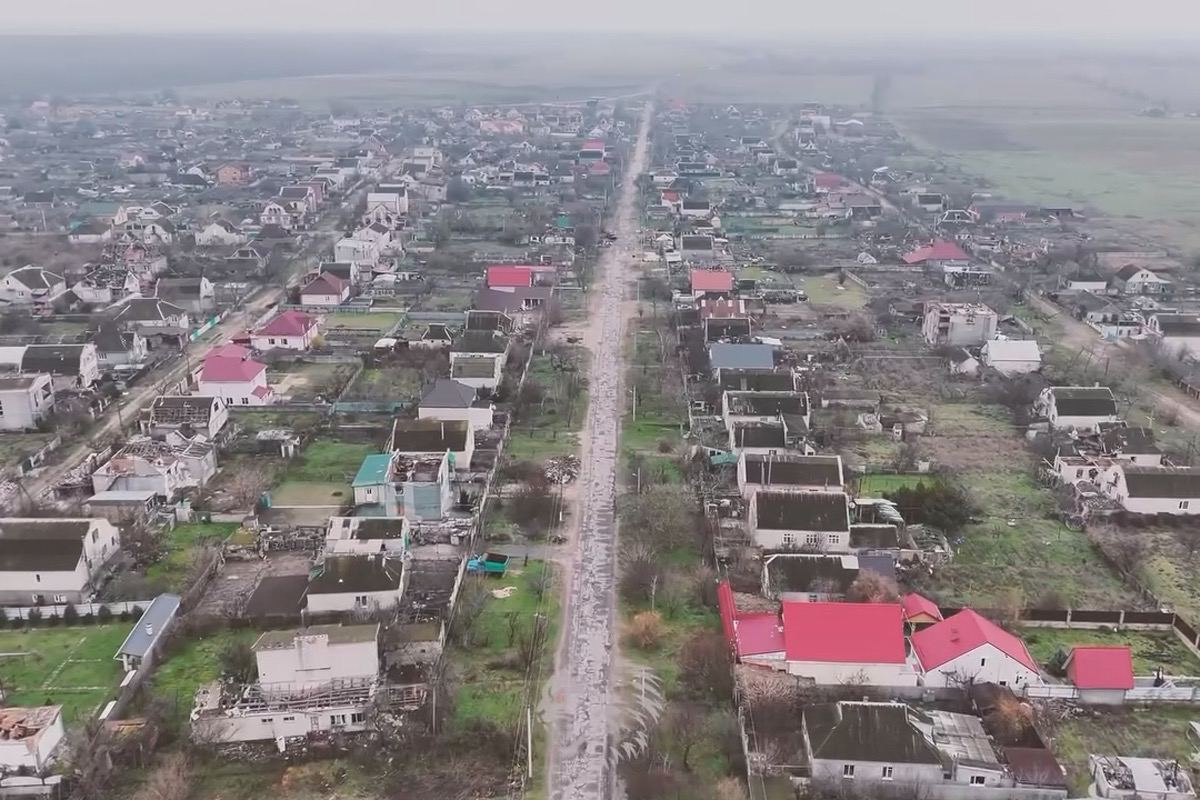
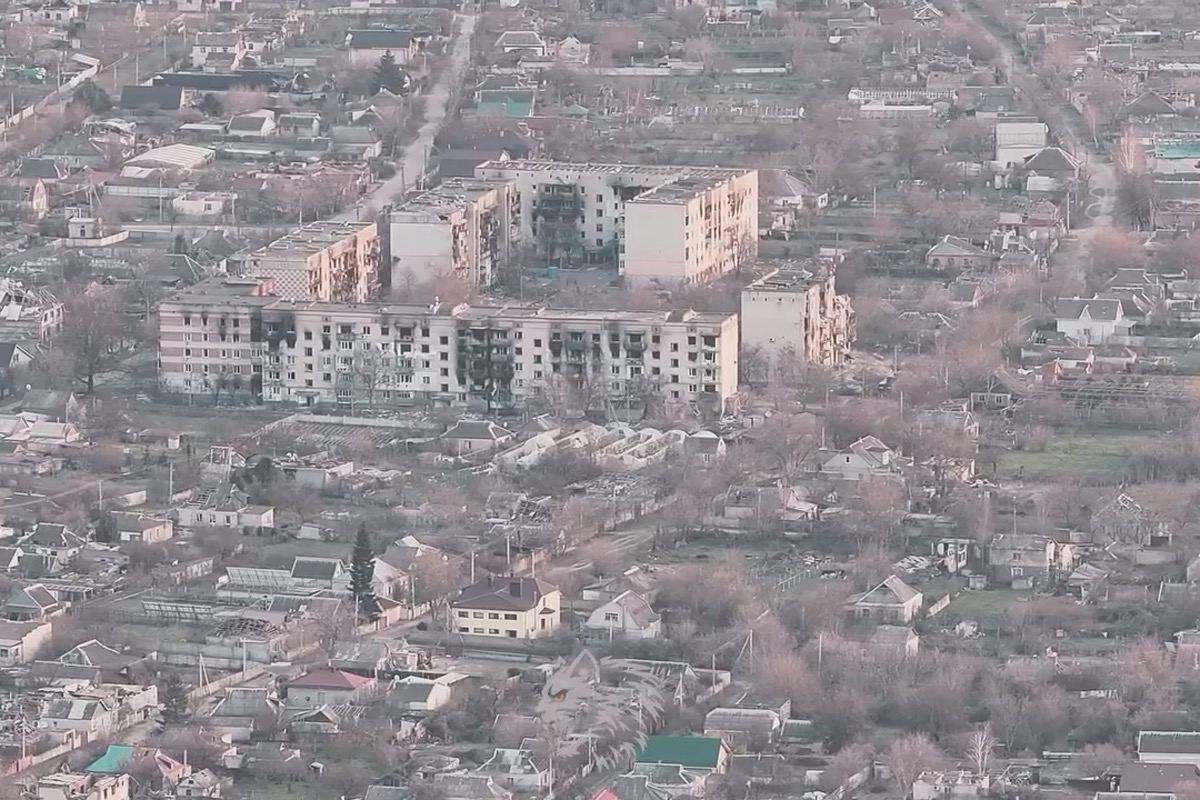
Oleshky seen from above. Photo: 34th Separate Marine Brigade / Oleksandr Prokudin
“Right at the entrance to Radensk the checks begin, and then there’s one at every checkpoint,” Andriy continues. “A ‘contaminated person’ like me has no business there. And anyone of draft age, even less so. Mobilisation has reached here too. I know two guys from Radensk were forcibly sent to a military medical commission, and there they pass everyone as fit, even the disabled.”
At the local market, he says, 80% of goods are now bartered. Cash matters mainly for arranging purchases in Radensk. Some people risk their lives to shop there on others' behalf and will bring you your order, but at several times the price.
“We ordered zucchini, cucumbers, tomatoes,” Andriy says. “In Radensk it’s about 100 rubles a kilo. Here they start at 1,000 right away. A dozen eggs there costs 150 to 300 rubles; at our market it’s 300 rubles for one egg. The chickens in Oleshky have all been slaughtered for meat, some eaten by their owners, some sold. Now a 1.4-kilo chicken costs 5,000 rubles here, while 20 kilometres away you can buy a kilo of beef for 600 rubles, and I mean actual meat, not canned stew. Canned meat here costs up to 2,000 rubles, whatever kind it is; in Radensk the most expensive is 250. In Oleshky flour is available only by exchange, no other way and no markups. People brought back five sacks from Radensk for 1,000 rubles.”
The middlemen risk their lives just as any other food forager does. Their first concern is feeding themselves and their families, so they don’t always take orders from locals, and sometimes they have to be talked into it. Andriy’s family has enough food for five days. He placed an order for groceries and medicine and handed over his last savings, asking the buyer to get the medicine first and use whatever was left on food. A third of the money went straight to the middleman.
‘If the hospital closes, there’s no town’
“Russian soldiers come into Oleshky on foot, through the woods,” says Andriy. “The occupation authorities can’t bring in troops and supplies for them without serious losses. So sometimes they go hungry too, except they have weapons. Every so often the soldiers rob the locals. If someone resists, they kill him, loot the house and then blow it to splinters with drones to cover up any trace.”
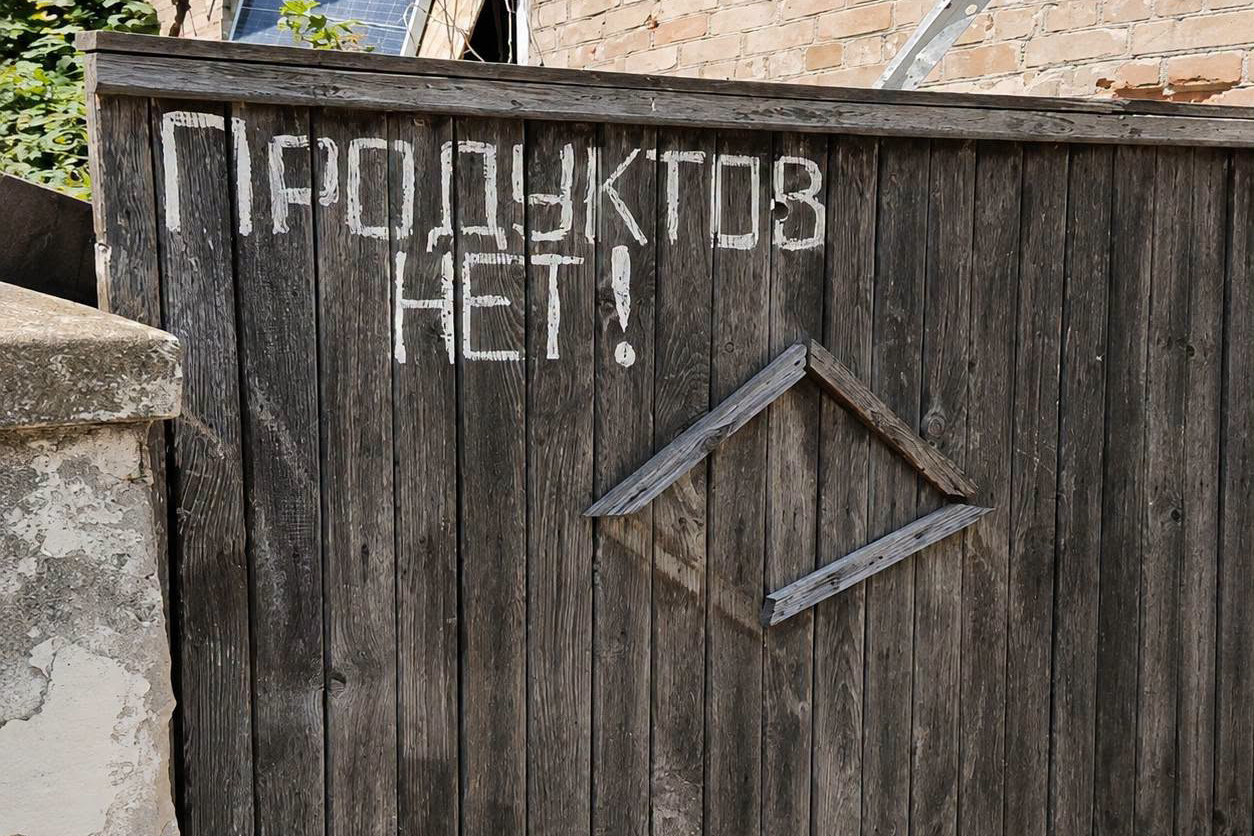
Ksenia Arkhipova confirms his account. Around town, you can see a message scrawled on fences: “There’s no food. We’re starving ourselves.” It is meant for the soldiers, who scavenge through the town for food just like the locals.
“We have no food!” Photo: Kherson Plus
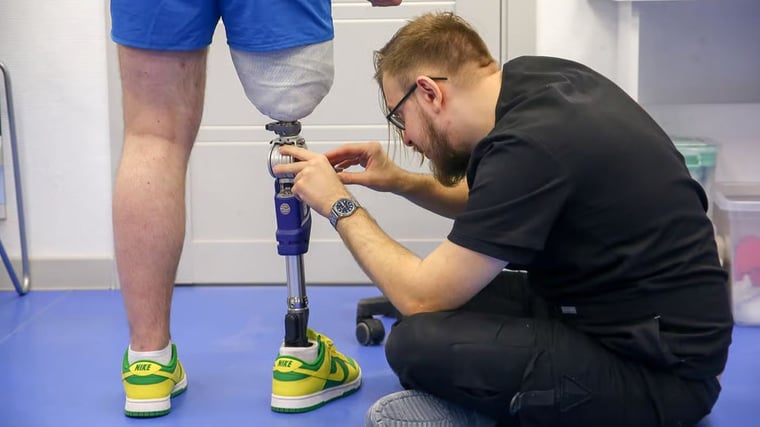
The situation in the hospital is even worse. Many of the people brought in are missing limbs. Doctors can stop the bleeding, but they have no medicine. The hospital has run out of food, too.
“The staff have asked residents to donate any grain at all so they can make porridge for the people lying here without limbs,” says Ksenia. “You understand, even in the hospital there’s hunger, though they had a chance to stockpile food back when they were still sending the wounded to Skadovsk. Staff are quitting and trying to get out of Oleshky. If the hospital closes, that’s it, there’s no town anymore.”
“The men weigh 50 kilos at most,” Ksenia says. “Recently we got out an old woman: just skin stretched over bones. They walk to Radensk with their feet bleeding. They have no strength, they faint, and other travellers pour water on them. And every day there’s a text: ‘Ksenia, help, my child is hungry’… This is a repeat of the Holodomor.”
Serhiy, a resident of Oleshky, is now in Ukrainian-controlled territory. About a week ago, he and his wife made the many-hour trek to a point where volunteers could pick them up.
“We had 300 grams of buckwheat, 200 grams of spaghetti and two cans of stewed meat left,” Serhiy says. “We ate it all before leaving the house so we’d have the strength to make it.”
Serhiy explains that he is of retirement age and staying in Oleshky any longer was impossible. If he fell ill, he doubts the hospital would have been able to help him. Almost nothing works there now, and the morgue is overflowing with decomposing bodies. Burial isn’t allowed without a forensic examination, and the only examiner is in Skadovsk, so bodies have been lying piled up in the local morgue for months. There has been no electricity for a long time, and the generator runs on gasoline, which hasn’t been brought into Oleshky since the beginning of summer.
Everyone left in Oleshky is waiting desperately for an evacuation, because many, like Andriy, cannot get through the checkpoints. Some of those who had got on the FSB’s radar tried to flee the hunger but vanished at Russian checkpoints.
“What really stings is that the authorities got people out of besieged Mariupol through an official corridor, and they only remembered us now,” says Andriy. “And here, you swim across the river and you’re in free Ukraine. But no.”
Photo provided by Ksenia Arkhipova
Deliveries by drone
“Yes, there really are problems with delivering food, medicine and so on there. The Kyiv regime is doing literally everything possible to obstruct these deliveries. Drones are constantly overhead, killing people. The situation is indeed critical,” Kremlin spokesman Dmitry Peskov told reporters a week ago.
“In occupied Oleshky, the Russians are holding around 2,000 of our people hostage, almost 50 of them children,” Oleksandr Prokudin, head of the Kherson Regional Military Administration, said on Sunday. “They are forced to survive without food, electricity or water. And the most terrible thing is that the Russians have effectively deprived them of any chance to leave this hell.”
“I really did hear the hum of drones, and then I found a box of food,” Andriy confirms. “Inside were canned stew, pasta, grains and other things. While the drones are in the sky, the occupiers hide, so we manage to collect the packages. Some of the food landed near the hospital. The [Russians] helped themselves there too, of course, but the medics also managed to grab something.”
This bought a little time against the hunger, but, unfortunately, did not solve the problem entirely. What matters now is finding a way to persuade the Russian authorities to organise a humanitarian corridor.
“Unfortunately, the Russian Federation does not agree to an evacuation of the civilian population and refuses to open a green corridor. It rejects all our proposals and initiatives,” said Dmytro Lubinets, Ukraine’s human rights ombudsman. “We worked out many technical details and considered different routes. We even agreed that the evacuation should be carried out only by a land corridor and that all combat operations would be suspended for its duration. We could have taken all these people out in a single day. We have only one problem: the position of the Russian side, which rejects any proposal. My impression is that they deliberately do not want a humanitarian evacuation, because the Russian military is now using the civilians as a shield against active operations by the Ukrainian army.”