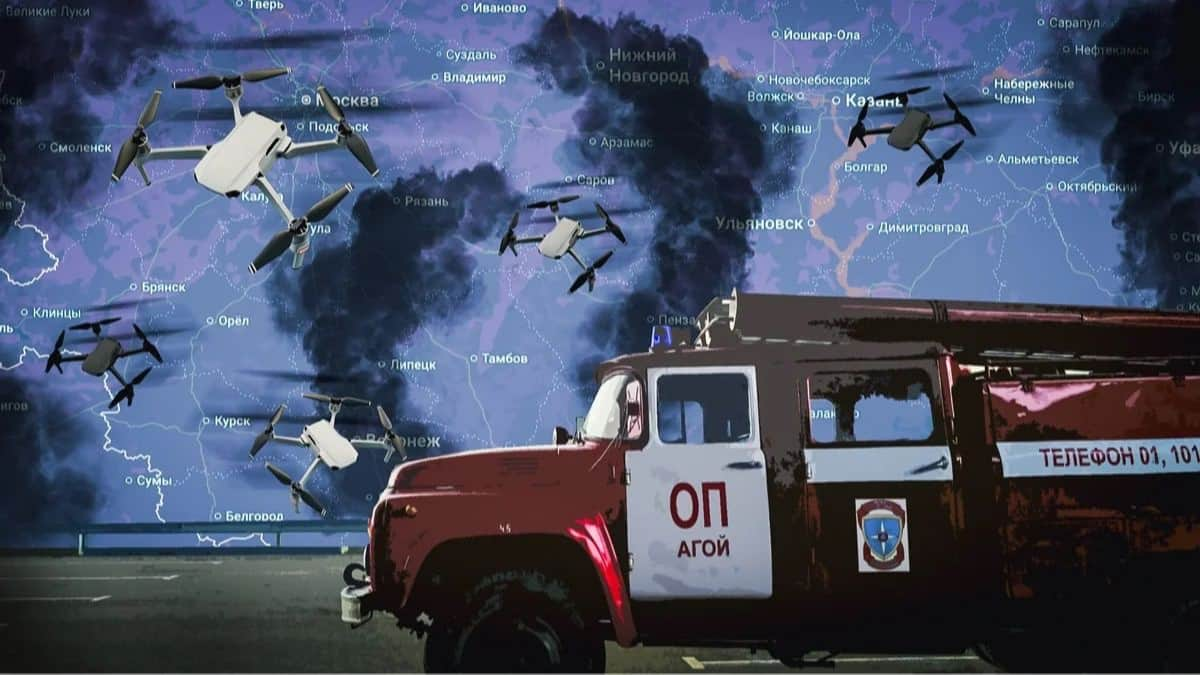
The tool Russia hasn’t been able to replicate
Ukraine now uses heavy bomber drones to deliver supplies, drop ground robots and evacuate the wounded

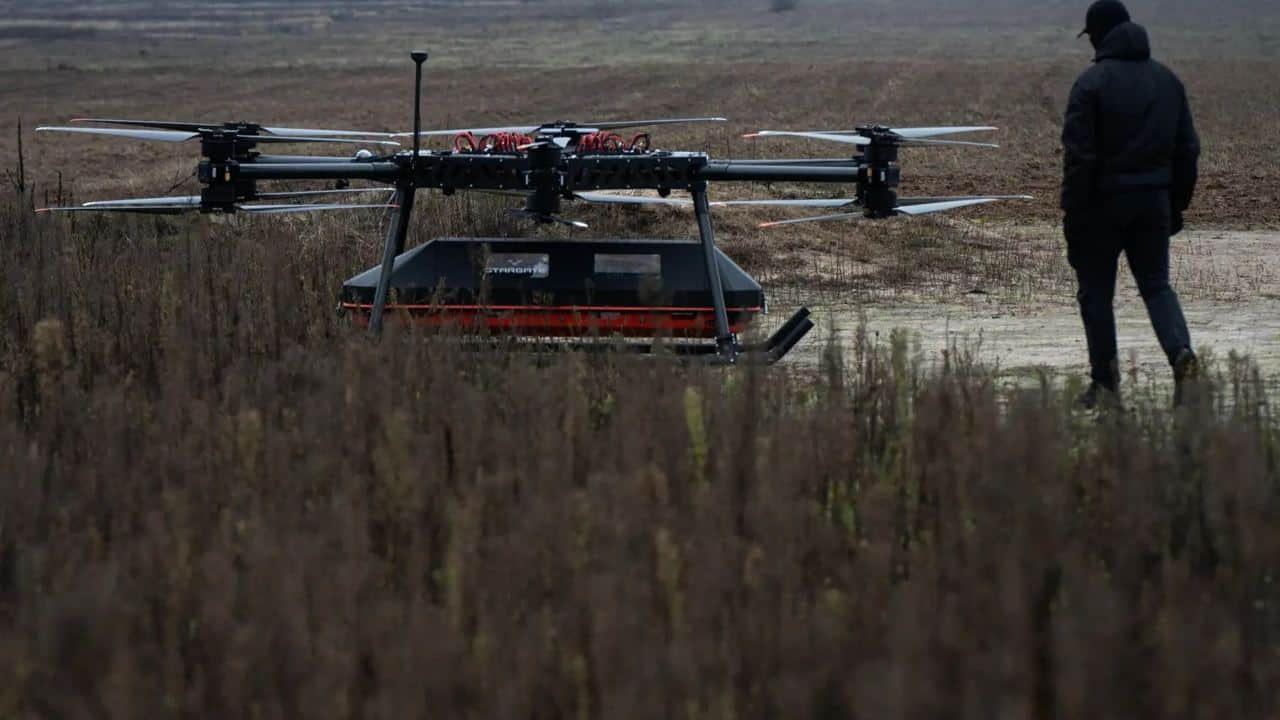
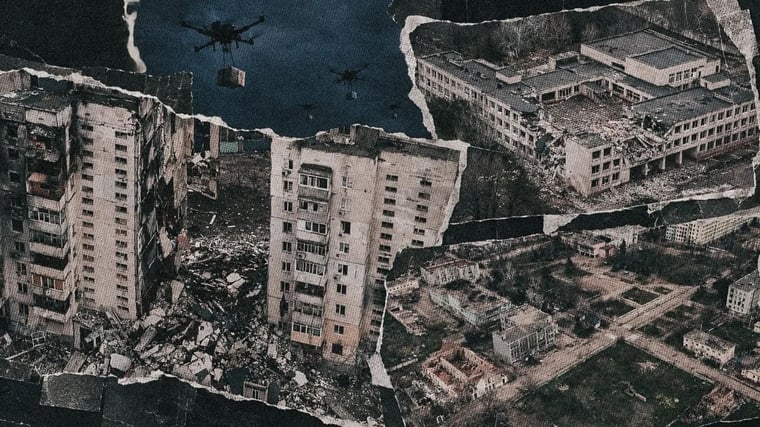
In recent months, Ukraine’s heavy bomber drones have become one of the country’s most important tools in defending against Russia’s invasion. They dropped off ground robotic systems behind Russian lines during Operation Vivaldi in the summer and autumn of 2026, helped deliver food to the isolated town of Oleshky, and now routinely fly wounded soldiers out of the kill zone. They’re also unique to the Ukrainian army: Russia has nothing like them in its arsenal.
To learn about these game-changing drones up close, Novaya Gazeta Europe special correspondent Dmytro Durnev spoke to their makers and visited several units of the Ukrainian National Guard’s Azov 1st Corps.
On 4 October 2026, a drone evacuated a wounded soldier from the battlefield — by all appearances, for the first time in the history of warfare. The Ayudag-6 hexacopter lifted a man weighing 80 kilograms and flew him 18 kilometres. Ukrainian units all along that stretch of the front provided cover for the flight.
Evacuation drones are big, bulky, easy to spot and not very fast, so the Russians throw everything at them: rifles and machine guns, interceptor drones and kamikaze FPVs. Ukraine’s 92nd Brigade threw the interceptors off by hitting targets to the left and right of the pickup point with other bomber drones. One Ukrainian Vampire drone was shot down, but the evacuation drone slipped through unnoticed.
Pavlo Feldblium, co-founder and CEO of Gurzuf Defence, which makes the Ayudag-6, told me that the first time a large transport drone carried a person was two years ago. It was a test, and the passenger was the company’s chief designer and fellow co-founder, Oleh Hynda. In other words, heavy drones able to carry close to 100 kilograms had been in development in Ukraine for a long time.
But Feldblum insisted they shouldn’t be thought of as air taxis or flying ambulances. Bomber drones evacuate people only when every other option has run out but there’s still a chance of saving a life. They were built for other tasks.
According to soldiers from Ukraine’s Azov Brigade who work with them, about 15% of a bomber drone’s workload consists of combat missions. It can carry two anti-vehicle mines of 8.5 kilograms each strapped together and flatten any concrete bunker with them. Most of the work, however, is frontline logistics: bringing water, food, ammunition, medicine, and even blood plasma and transfusion equipment, to infantry groups fighting in the kill zone.
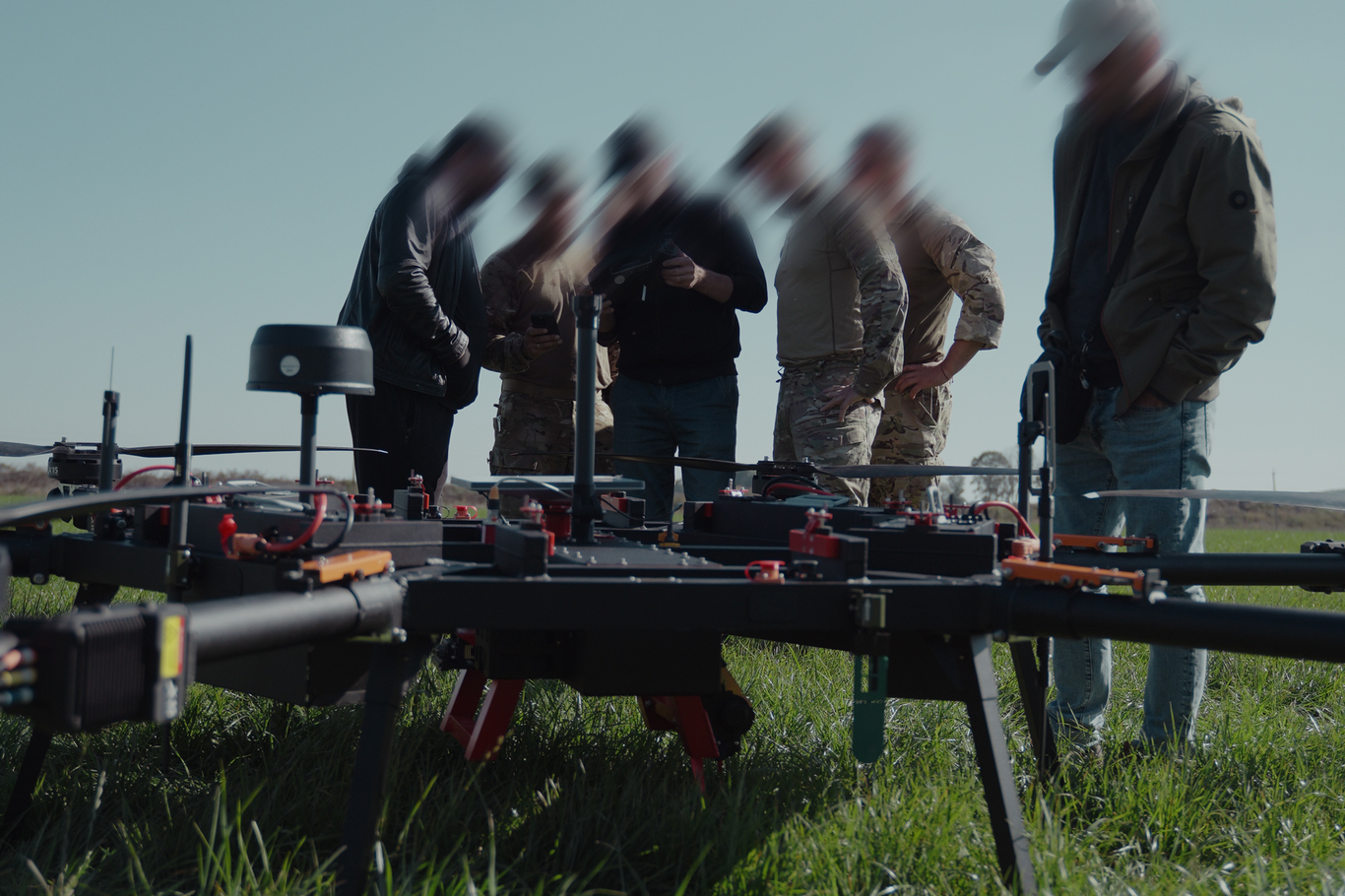
The Ayudag-6 is an unusual drone. The “6” is not a model number but the number of motors the vehicle contains. It holds the Ukrainian record for payload and range: it can lift 130 kilograms, and can carry 90 kilograms for 25 kilometres. But it’s not the only one of its kind. When Gurzef Defence announced its first rescue flight, SkyFall responded by staging a public demonstration for journalists of a dedicated medical evacuation drone, the StarGate, named after the American sci-fi franchise. The company says it can lift up to 150 kilograms, enough to carry out a wounded soldier wearing body armour and a helmet.
As of 4 November, StarGate had completed its first three evacuations of seriously wounded soldiers.
The Russians call every Ukrainian bomber drone Baba Yaga, after the witch from Slavic folklore. They have no bomber drones of their own, and it’s not hard to deduce why. The Russian army leaves little room for improvisation or initiative from below; instead, it takes proven solutions and scales them up as far as it can. Right now those solutions are guided aerial bombs — which aircraft use to literally carpet-bomb frontline cities and areas around any targets identified along the front line — and small infantry assaults.
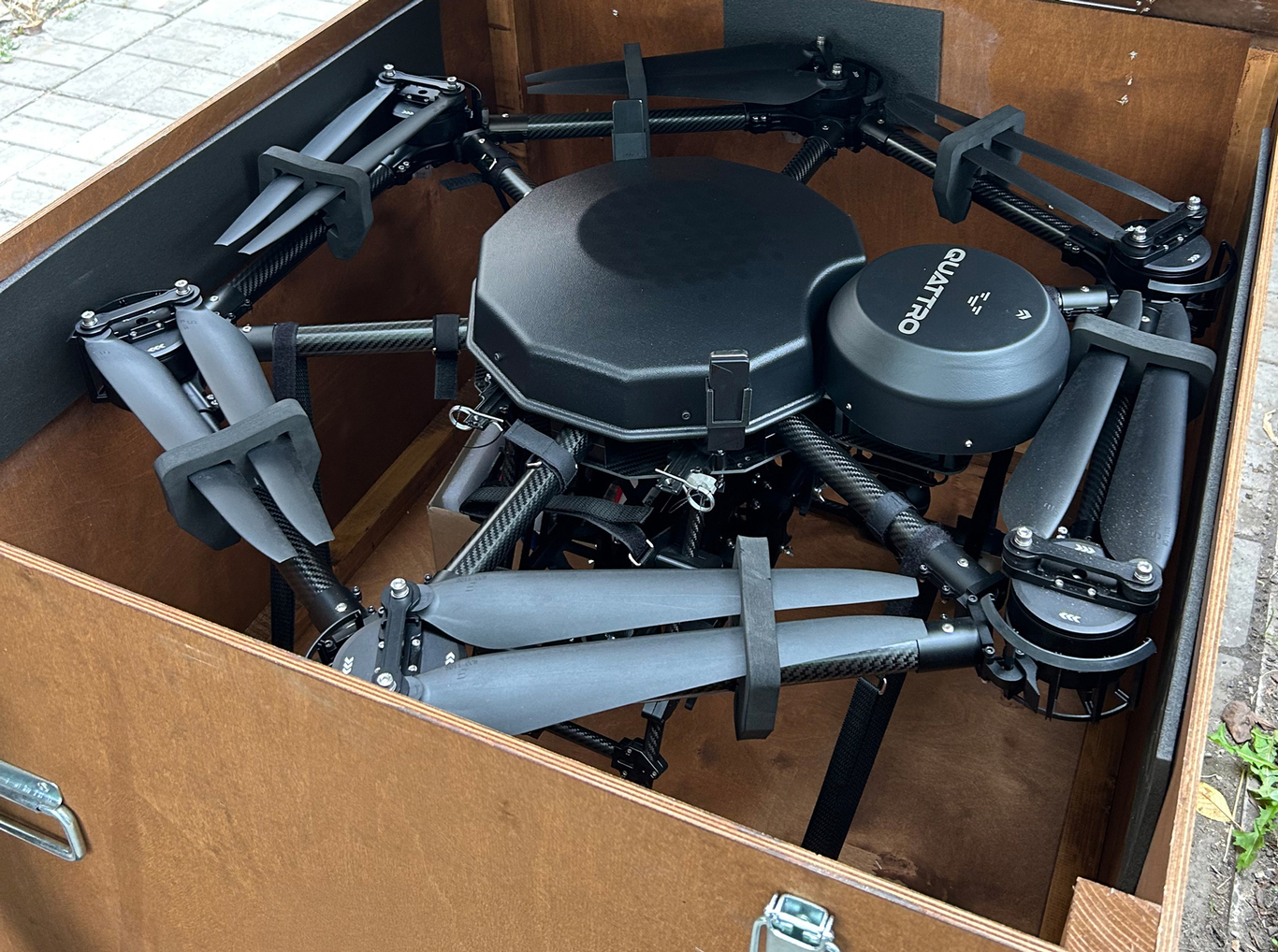
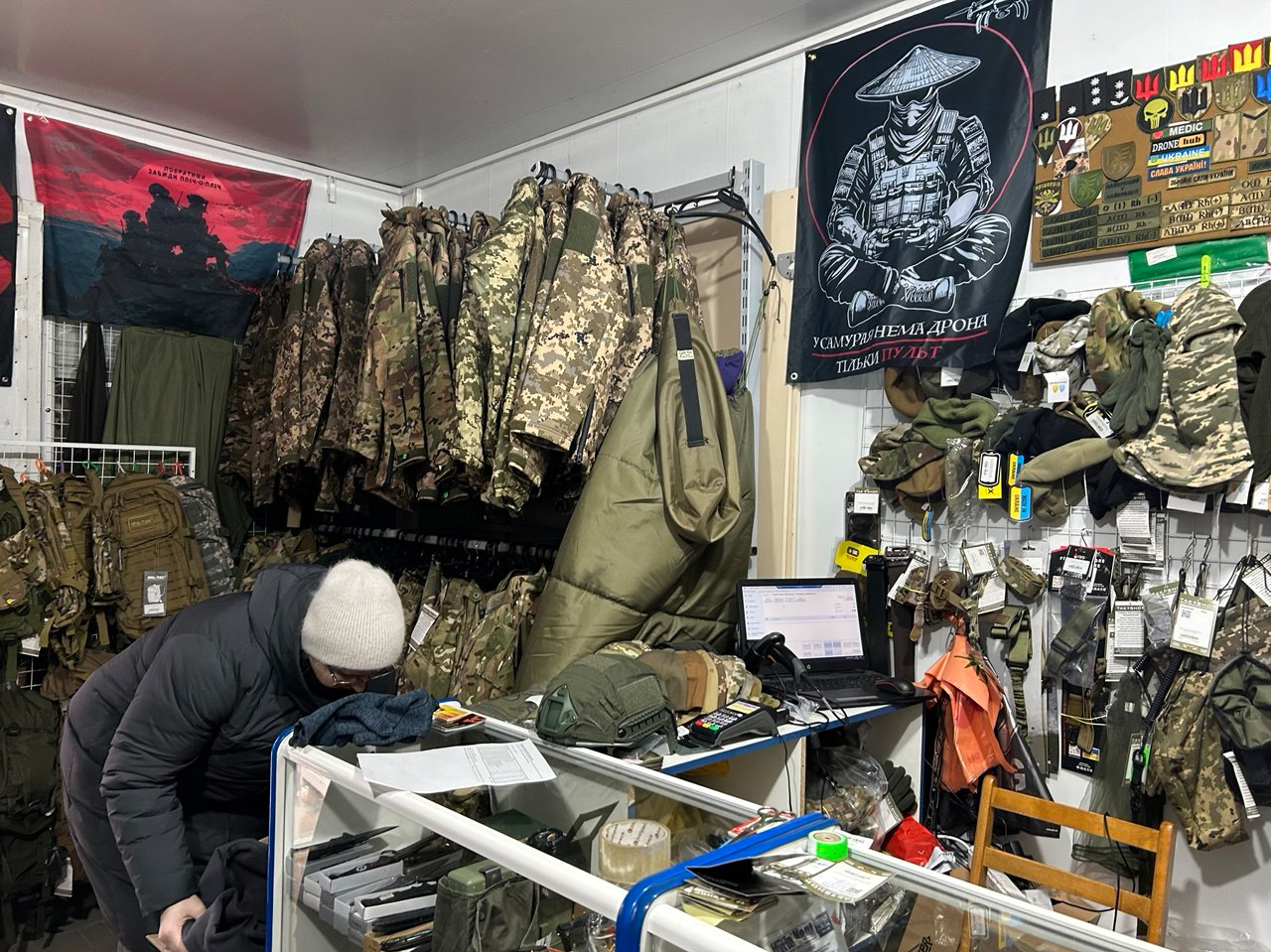
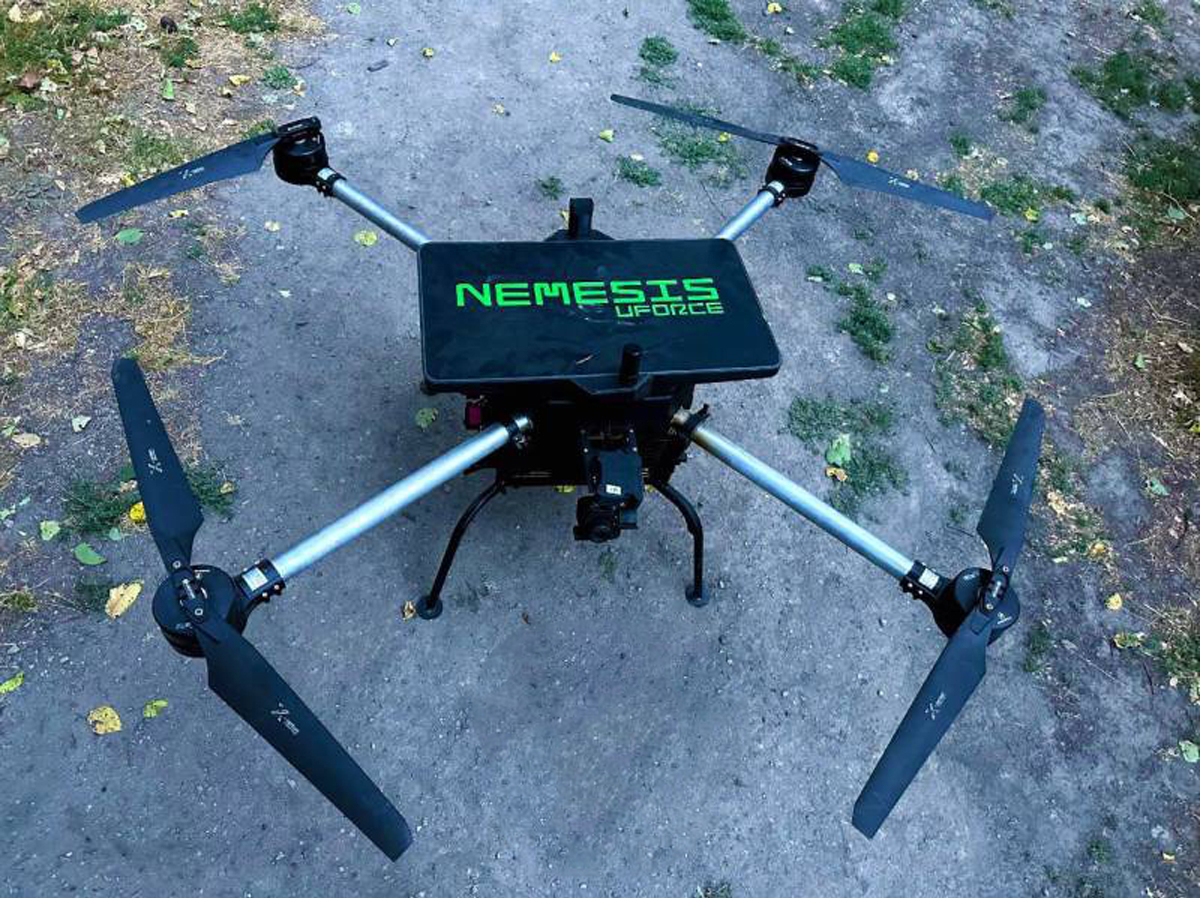
Ukraine now has at least five major bomber drone manufacturers. In the Azov units I visited on this trip, crews work with three types of drones: SkyFall’s Vampires, the Heavy Shot made by Gurzuf Defence, and the Nemesis made by UFORCE. Each comes in a number of variants.
“I won’t tell you how many versions we have,” says a Gurzuf Defence representative. “There are three basic versions of the Heavy Shot, each with a different level of complexity, as well as the Ayudag-6. And there can be just about anything in between. We adapt our products to the specific missions and requirements of individual units.”
‘Without us, the positions can’t hold’
I talk with Azov soldiers from the 52nd International Regiment in the yard of an ordinary residential building in a typical village, somewhere nearer the fighting in Dnipropetrovsk region. The basement holds a lab where damaged bomber drones are repaired. Under a covered area outside, there are two crates holding Heavy Shots, each with a big Starlink dish on top.
“We’re sending them back to the manufacturer,” says a soldier who goes by Kazhan (“Bat”). “These still have first-generation Starlink terminals, but the new, smaller, upgraded units will be installed now. You can photograph them, but make sure the serial numbers aren't visible.”
Before Starlink, a key term for Ukrainian crews was “radio horizon”.
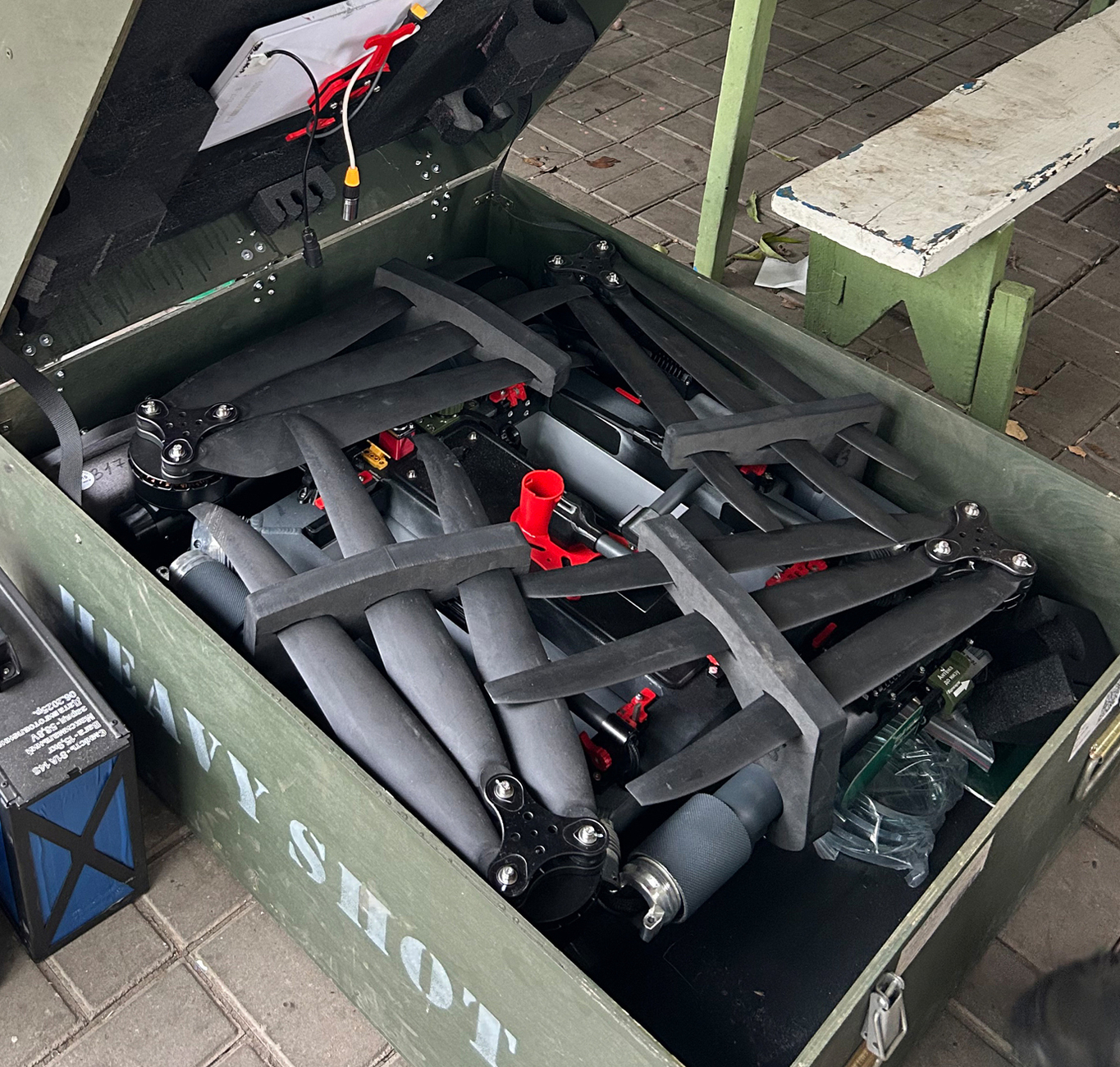
“[Back then], we might spot a perfect position and not take it, because the radio line of sight was blocked by something,” Kazhan says. “Infantry can sit in a cave, but pilots can’t. Another plus with Starlink is that it doesn’t need an external antenna. We used to need one, and it gave bomber drone crews away. It’s the first thing the enemy looks for.”
Kazhan is a native Ukrainian who has been fighting for nearly a year in Forge, the 52nd International Assault Regiment, which was formed from Azov’s 3rd International Battalion. He studied at a German university, in English, which has come in handy: English is the regiment’s working language, and the vast majority of its soldiers are volunteers from abroad.
Kazhan joined his bomber drone company in the spring; the coming winter will be his first of the war. Now he works in the lab, where he repairs, upgrades and services drones. He recently completed another training course on the Heavy Shot, the heaviest-lifting of the bomber drones. Among other things, these are used to retrieve other bombers damaged in action, particularly Vampire drones. The Heavy Shots haul them through the air, hooking them underneath like the claws in arcade machines.
The lab is run by a German who goes by the callsign Lippe. He was born in Soviet Frunze, now Bishkek, the capital of Kyrgyzstan.
“I’m Edward, and my brothers and sisters all have names like that. Russian names and the Russian language weren’t allowed in our house. My parents are very aware of who deported them to Asia,” Lippe says, chuckling.
“The Russians now have soldiers who sit under cover and watch the sky,” Kazhan says of his work. “They see a Vampire, signal, and an interceptor takes off. Bomber drones are big — they’re visible in the sky!”
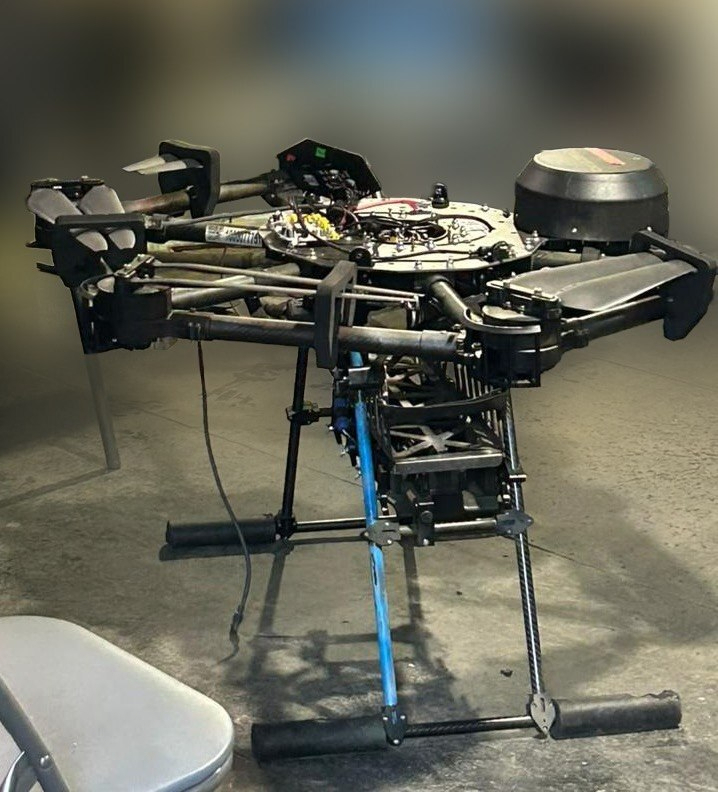
Even so, bomber drones are the infantry’s main logistical lifeline at the front. Kazhan says they fly day and night, and go where ground robots can’t, since those get hit even more often.
“Without supplies, the positions can’t hold,” he says. “The Mavic crews, the reconnaissance crews, the FPV strike teams all work only because of us. Drones don’t fly without fuel. We even fly in generators when they break down or get damaged in shelling.”
A typical delivery for the infantry is water and standard army rations. Where possible, they add chocolate bars like Snickers. “A normal combat tour lasts about two weeks, and then they try to rotate people out. But sometimes you’re on a position for 18 days, and the cigarettes run out, the chocolate runs out,” Kazhan says. Bomber drones fly combat missions only when the infantry needs fire support or a fortified position has to be breached. The main job is logistics.
“You have to fly smart and stay alert the whole time,” Kazhan says. “You have to keep an eye on the wind speed, its direction and strength, and anticipate how the system’s batteries will hold up. If the drone is flying into a headwind, it might not make it to its destination. With a tailwind, it’s a different story: you give it a little more speed, and it flies much faster. Once you’ve dropped the cargo, flying back into the wind is easier without the extra weight.”
‘They’ll throw everything at it’
“I’m 32. I grew up under the blue-and-yellow flag. I can’t imagine Ukraine not being independent, and I expect it will stay that way. Whatever our squabbles and troubles, my country’s future is to be free!” says a short, sturdy man who goes by Bars (“Leopard” in Ukrainian), the sergeant major of a bomber drone company.
Azov’s units are spread across Donetsk, Dnipropetrovsk and even Kharkiv regions. After visiting the Forge regiment, I go to a heavy bomber drone company of the 41st Unmanned Systems Regiment, Pilum, named after the javelin carried by Roman legionaries.
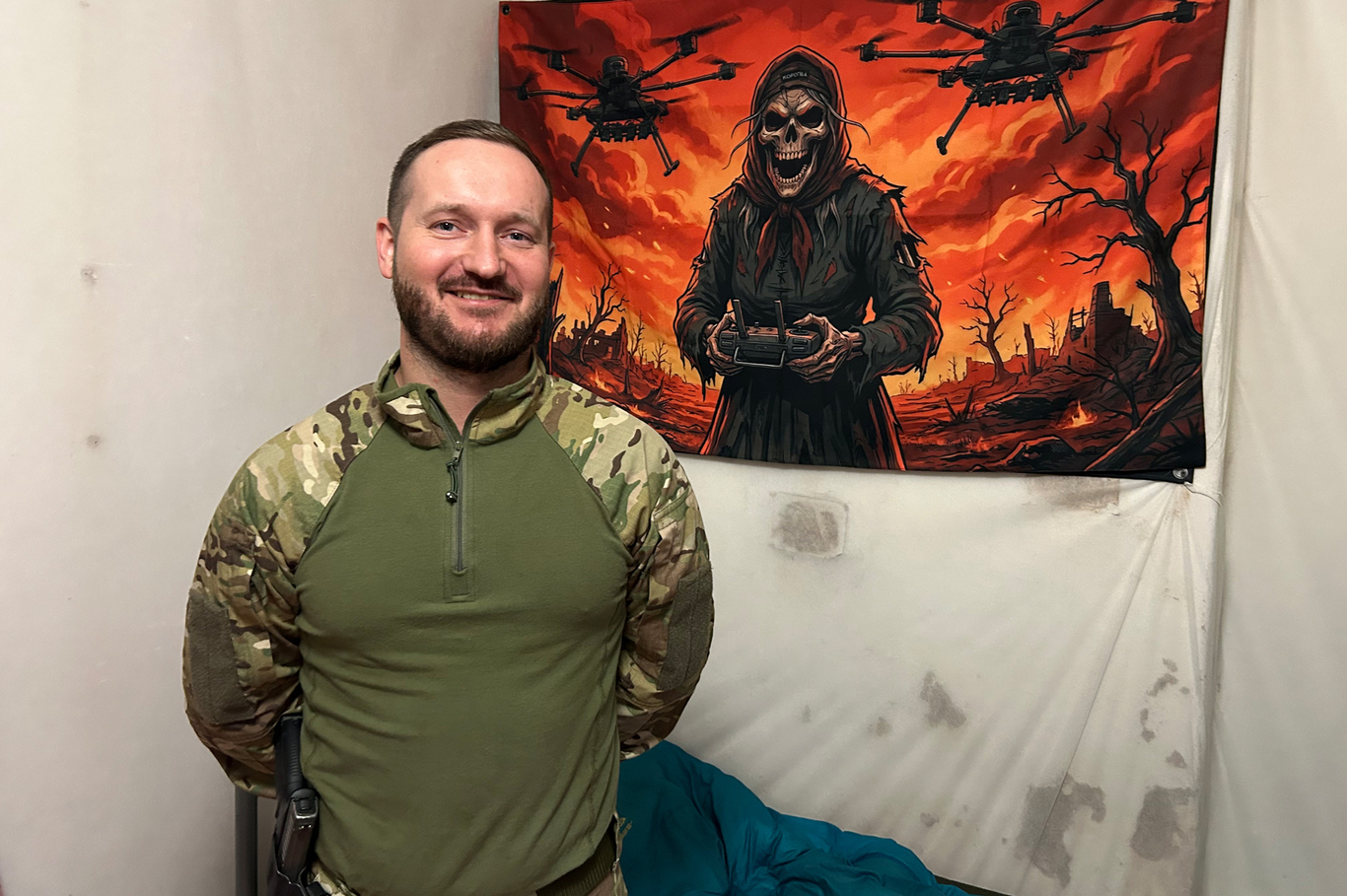
Bars started with drones as everyone did, with ordinary Chinese consumer Mavics used to scout the ground ahead and drop grenades on the enemy’s heads. He came to Azov from the Karna battalion, which is now part of the Pilum regiment too.
“We were an infantry battalion, but we were building up what you might call an unmanned systems force of our own,” he says. “First a squad, a few months later it had grown into a platoon, and three months after that into an unmanned systems company. By then we had our own big bomber drone, a couple of FPV teams, and the usual Mavics for observation and recon. That was near Niu-York [a town in Donetsk region], on its outskirts, where we were attached to Azov’s 12th National Guard Brigade.”
In August 2024, Bars took a Vampire course and has flown large drones ever since. With his Mavic experience, he says, the switch was easy. The principle is the same, but you have to get used to the inertia. A bomber drone is bigger and heavier and drifts more — a bit like going from a car to a bus.
Alongside his service, Bars studies robotics at Kyiv Polytechnic. When he graduates, he’ll be an officer.
“I started out mostly on combat missions, near Niu-York and Toretsk, when delivery was a side job,” he recalls. “We worked for the infantry: first remote mine-laying and bombing, then resupply. And today the top priority is still mining and bombing. You take a Vampire and calculate what you can hang under it, up to 15 kilograms, for a particular target, a reinforced concrete shelter or light armour. How many people are in that shelter? Which high-explosive or fragmentation munition do you use?”
In his view, the role bomber drones play at the front today can hardly be overstated.
“They say that in Vietnam the Americans were allowed to use a battleship’s main guns against a sniper’s position,” he says. “In other words, any weapon was fair game against one man with a rifle, because of how much damage he could do. It’s much the same now: a single drone crew can stop a mechanised assault in a given sector. The Russians treat a spotted drone crew the same way. They’ll throw everything at it: artillery, multiple-launch rocket systems (MLRS), even air strikes, to be sure of destroying the entire area where our pilots were seen.”
Ukrainians don’t hold back in such cases either. They just usually have fewer weapons to hit with, but they still strike every drone crew they find. Perhaps that’s why they use heavy drones against such positions far more often. In Bars’s view, they are the most reliable and effective weapon there is, able to strike precisely at any depth of the enemy’s lines.
“Very often they camouflage themselves badly and, above all, they don’t relocate until the position is completely destroyed,” Bars says. “Our FPV guys spot external antennas in a tree line or a village, some sign of a drone crew, they hit it, and a couple of hours later they see new antennas set up in the same place. No shifting positions, no orders to withdraw, no flexibility at the tactical level. That helps us, of course. We fly in and work them over properly!”
Big transport drones, Bars says, don’t get shot down as often as you might think. They’re big because they have many motors, and that gives them a margin.
“I saw a Vampire come back on four motors. It’s a hexacopter, two were knocked out, and it flew home empty on four,” the sergeant says. “Once its navigation system was shot through, and even that is hard, but they got it back: they turned it around and flew it home on instruments and telemetry. And one time in our company, bullets cut the wiring to two motors, and an experienced operator still managed to bring it in. We sent it to the manufacturer for repair, it came back, and it went straight back into service.”
Every unit has its own workshops for repairing whatever can be fixed in frontline conditions with the resources at hand. Bars also noted that Azov doesn’t make homemade munitions. According to him, both two years ago and now, despite the much wider range of ammunition available today, they have always received factory-made munitions, which are relatively straightforward to prepare and attach to a bomber drone.
This is a high standard. I’ve seen workshops in regular drone battalions that cook their own explosives, make improvised charges or “upgrade” old Soviet ones. These kinds of labs are always a headache for a commander: they have to be close to the unit and easy to reach, but also outside the range of enemy drones. Usually it’s several dozen kilometers of dirt roads from a battalion command post to a separate sapper platoon.
“In reality they just pick up and repair our downed ones,” he explains. “They’ve managed to reprogram their own software onto working Ukrainian Vampires, possibly with Chinese help. And as far as I know it hasn’t done them much good, there’s no real result.”
‘War is much more advanced than it was four years ago’
“We have a fairly extensive and varied ‘zoo’”, Bars says of his drones. “One of the most widespread all-purpose machines is the Vampire, mainly because it’s tough and practical. The Heavy Shot is the big boss: it carries more, covers the same 15–20 kilometres of kill zone, and can sometimes haul one and a half to two times the load.”
The Nemesis carries less, he says, but can fly roughly 30 kilometres and can do remote mining work and hit valuable targets. “The guys often go out after a specific target, an artillery piece they’ve found, for example. There are surely other designs, but they’re not as widespread and haven’t broken into this market yet,” he explains.
Bars doesn’t keep count of the enemy soldiers he has killed.
“You can’t count them,” he says. “You never know whether a man is wounded or dead, or how bad the wound is. Given the Russians’ attitude toward evacuating the wounded from these infantry groups, serious wounds usually end the same way: they crawl away and die. Very often they push in so deep that they have no way out and no evacuation. I talked to a prisoner who said his chances of surviving were better if he went forward.
“We listen to intercepts about how they survive for months without food, how they discuss the taste of dogs, for instance. It all comes down to how a person was brought up, how far he’ll go to survive.”
The exception, he says, is Russia’s high-priority sectors, where supplies are delivered by the same kind of FPV drones. They have a production line churning out drones: a single kamikaze drone can cost around $400, and three of them can deliver 8.5 kilograms of supplies. If a sector isn’t a priority, the soldiers there are simply forgotten and get little support.
What interests the officer most is the future. It’s something you hear a lot in this war: every three months everything changes radically, and every six months technology, software and tactics turn over.
“We’re moving forward, everything is going unmanned, humans are less and less involved,” Bars says.
“The operator’s lack of skill affects the work, and the commander’s ignorance and tactical training affect it even more,” he says. “We have to learn new fields every day. That’s why I chose robotics. These days you have to run just to stay in place.”