‘He said they forced him into it’
After Maria’s son attempted suicide at a conscript training centre, she was promised he wouldn’t be sent to war. Then he was pressured into a contract.

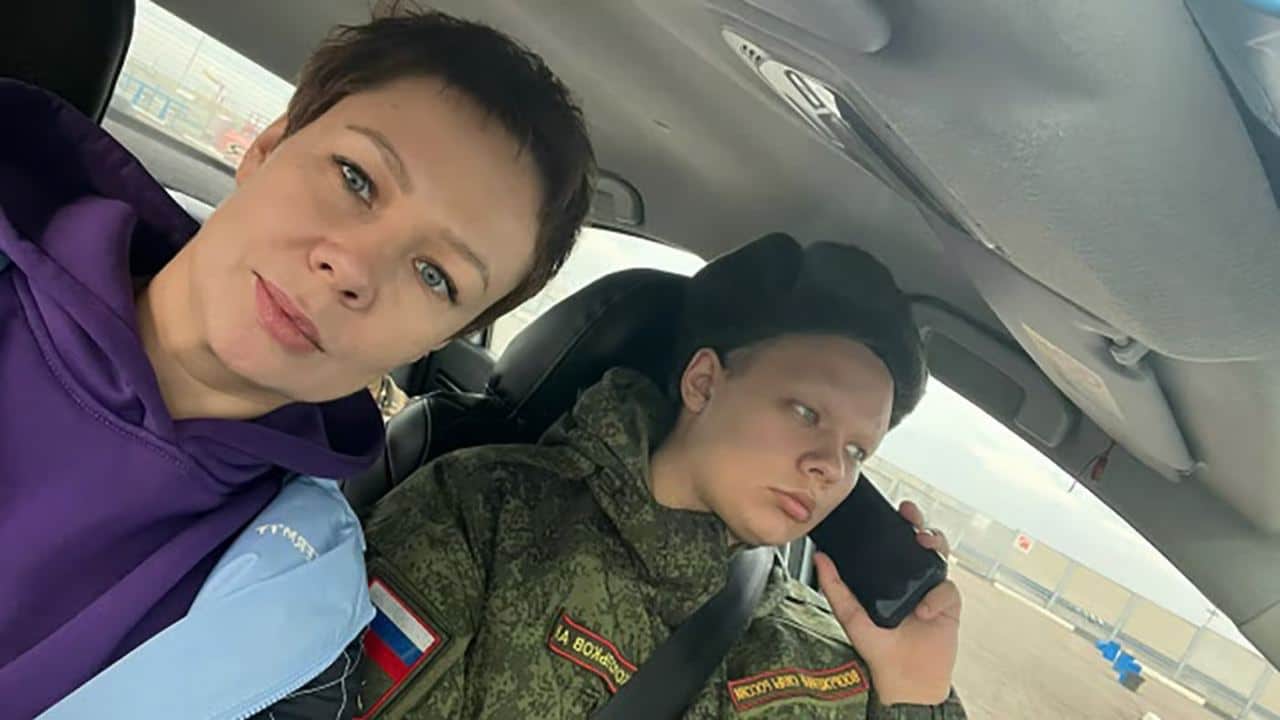

Despite a suicide attempt while on active service, Russian conscript Alexander Korolkov was sent by his commanding officers to fight in Ukraine. His mother, Maria, spoke to the independent Russian journalism project Veter about forged contracts in his unit, her visits to a Rostov morgue, and her relentless sense of guilt that she didn’t save her son.
‘Young boys are dying’
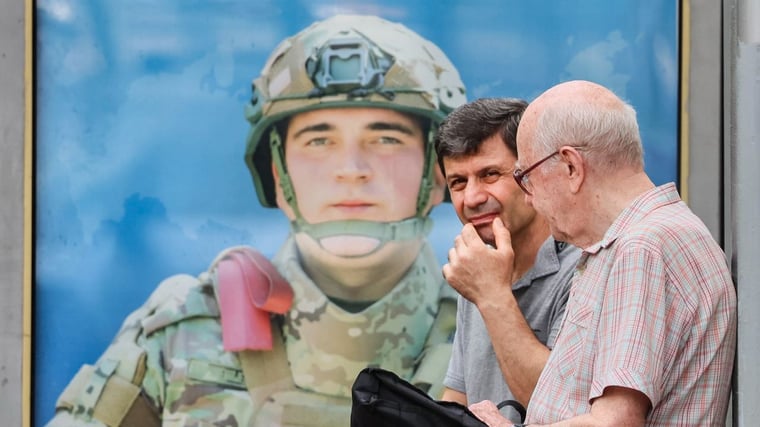
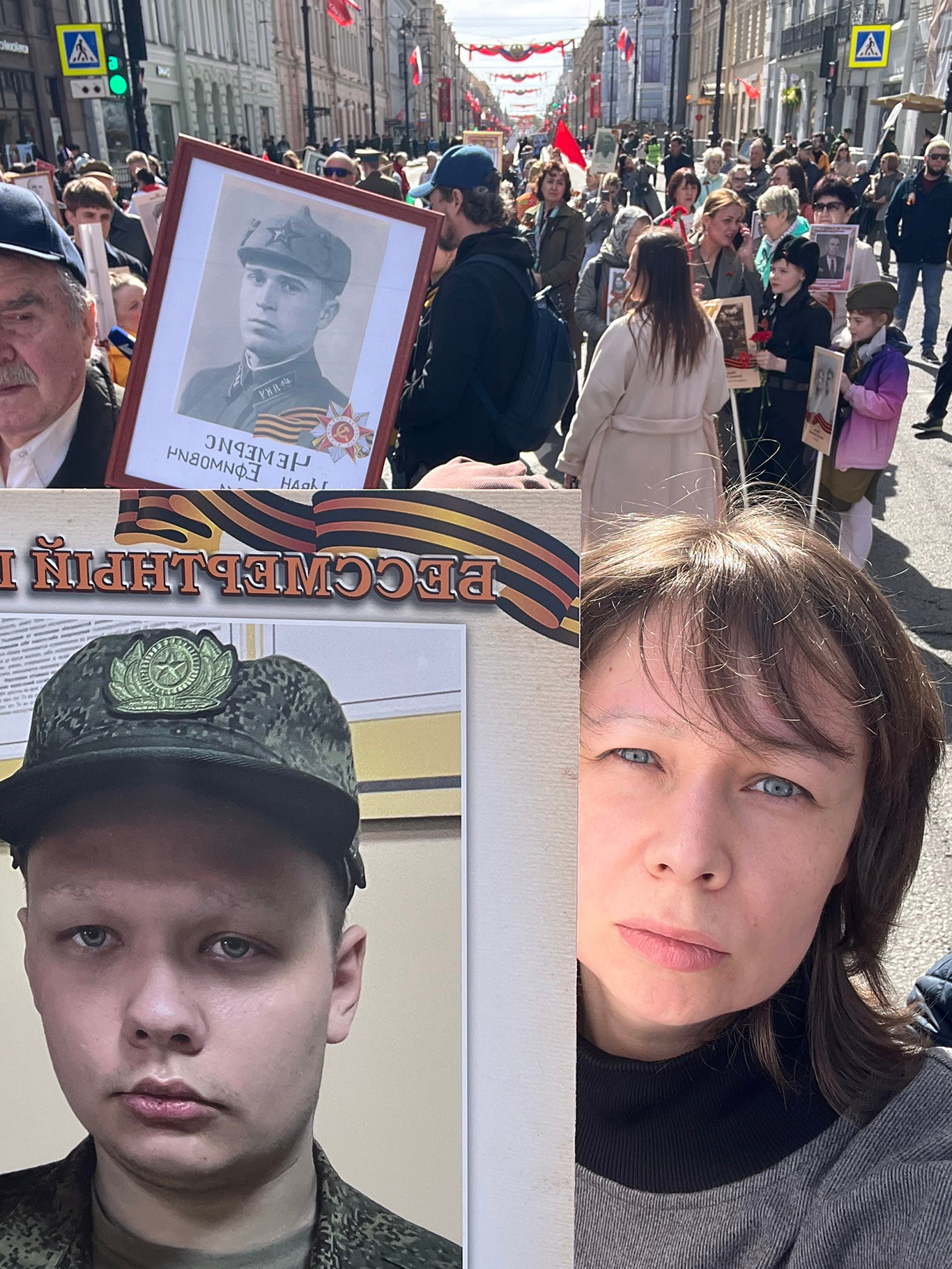
In May 2026, a woman appeared at the Immortal Regiment march in St. Petersburg carrying a portrait of her son, who had disappeared after being sent to fight in Ukraine. She was not alone. Though the procession was originally organised to commemorate World War II veterans, four years into the full-scale invasion of Ukraine, the event has turned into a memorial for contract soldiers and fighters from the Wagner mercenary group.
Maria Korolkova, a 41-year-old resident of Dmitrov, a town near Moscow, made a point of travelling to another city for the event so as not to attract attention to herself in the capital.
“I was afraid they wouldn’t let me in with a portrait of my son in Moscow,” she said. “He’s very young. It was more likely they’d let me through in St. Petersburg. Perhaps I was just overthinking. Relatives of dead and missing soldiers say that many cities are no longer holding an ‘Immortal Regiment’ march so that [people] don’t see the sheer scale of the fatalities in Ukraine. I went specially to draw attention to our problem.”
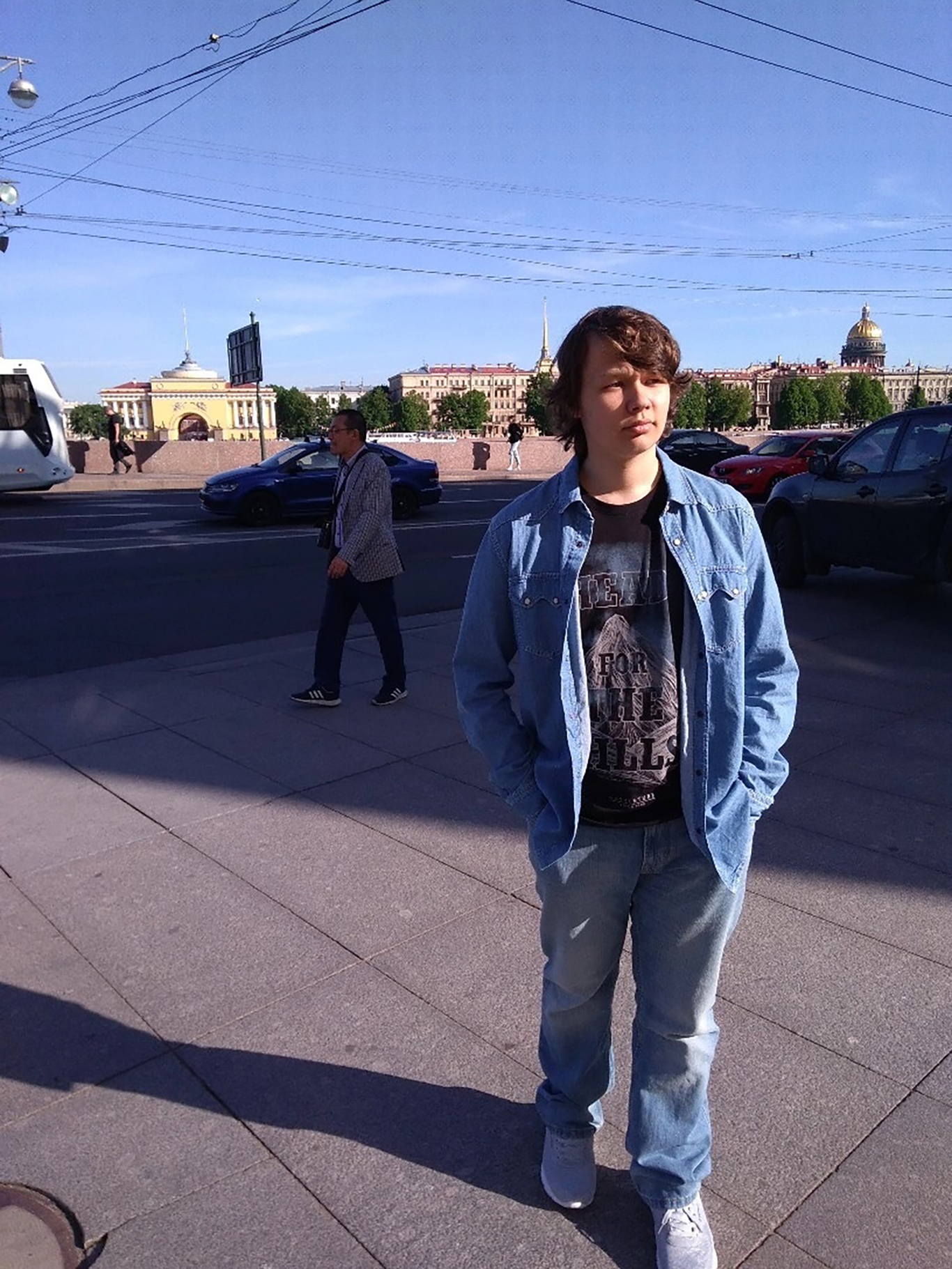
22-year-old Alexander Korolkov, or Sasha for short, was her son. He studied at the local technical college in Dmitrov, where he lived with his family mother, stepfather, and sister. He wasn’t particularly enthusiastic about his future career in food technology; instead, he wanted to work in computer games. He enrolled in college mainly on the advice of Maria, who works in the catering industry.
In the summer of 2024, Sasha suspended his studies and immediately received a summons to the military recruitment office.
“I didn’t want him to go. I was afraid of sending my son off to compulsory military service,” Maria recalled. “He was against it initially as well. Then he said, ‘Mum, I’ll sort it out myself.’ But he didn’t manage to. It was very hard for him to leave. ... Later, as part of the criminal case [against his military unit], investigators determined that the recruitment office in Dmitrov had failed to carry out a full medical examination of Sasha.”
The diagnosis
Sasha was diagnosed with a mixed personality disorder within a month of military service. This condition involves features of several disorders at once — paranoid, schizoid or antisocial personality disorders — but none of them is particularly pronounced. He attempted to take his own life at an engineering corps training centre in Nizhny Novgorod region.
“They didn’t let me in [to the military unit] straight away,” explained Maria. “He’d been in the infirmary for a month, and I spent a long time trying to find out what was going on. And then they told me, ‘Did you know your son attempted suicide?’”
When Maria was finally let in, she found her son in tears. “I think it’s all down to the army, because Sasha is a very good, trusting and sensitive person,” she said. “We’d never had any of the problems parents have with teenagers with parties or anything like that. He’d always preferred being at home. He probably couldn’t cope with the pressure there.”
Both Maria and Sasha expected that he would be discharged. “They promised that he would be sent to the Military Medical Commission, but that didn’t happen,” she said.
After his training, Sasha was sent to Military Unit No. 91711 in the small town of Boguchar in Voronezh region, 100 kilometres from the Russian-occupied Luhansk region. There, he was again admitted to a psychiatric clinic and prescribed medication.
Five days after being discharged from the clinic, Korolkov signed a contract for military service in Ukraine. Maria is convinced that the document was falsified. She has never seen the contract, and the unit has refused to show it to her.
“We told Sasha that under no circumstances should he sign a contract. Then he phoned me and said they’d pressured him into it. He’d had something of a difficult conversation with his commander,” Maria said.
Multiple cases of forged signatures of conscripts in military units in Boguchar came to light in 2026. The family of 21-year-old Rafael Karabakhtsyan, from the same unit where Sasha served, claimed that the reports on his deployment to Ukraine were not written in his handwriting. After news of this appeared in the press, his contract was terminated. In July, the mother of conscript Alexander Safonov said that her son, serving in Boguchar at Unit No. 91726, had signed a contract after “seven hours of psychological pressure.” She wrote an appeal to the military prosecutor’s office.
Reports have emerged on social media of forged military service contracts in other parts of Russia as well. In September 2024, it emerged that three conscripts killed in the war had taken legal action over falsified contracts. They were Viktor Baturin, Nikita Molochkovsky and Nikita Borisov. They had all served in Unit No. 71435 in Sakhalin in Russia’s far east. Signatures had been forged on the contracts for all three men. Their relatives took collective legal action against the unit’s command, but the court dismissed the case. The Investigative Committee’s Military Directorate announced that the criminal case had been closed.
In her petition calling for an end to unlawful actions in Boguchar’s Unit No. 91711, Maria Korolkova mentioned Stepan, a conscript from Saratov region, who was promised a veteran’s certificate and three million rubles ($36,000 USD) if he ‘served at the border’ for three months. According to the petition, which claims conscripts are being misled before being sent to fight, the unit is refusing to grant Stepan permission to resign.
Paying bribes to survive
Sasha was sent to Russian-occupied Ukrainian territory in January 2025. At first, he was tasked with digging trenches and managed on several occasions to avoid combat missions.
“He messaged me on Telegram saying he needed 300,000 rubles (€3,100) to avoid being sent to a combat zone,” Maria said. “There were further requests after that, but the amounts were smaller.”
The money in her son’s account soon ran out. At the end of April, he was sent on an assault mission.
“That’s when my health problems started,” Maria said. “I found out I had cancer. I had my first operation in January, followed by a second. Sasha submitted a request for leave on family grounds. He wasn’t allowed.”
The mother and son exchanged brief messages — “‘Are you alive?’ ‘I’m alive!’” — but often encountered technical problems. “When I was in hospital, I’d say [to him]: ‘Sasha, I’ll be out very soon and I’ll be alright,’” Maria said. “The truth is that I was feeling really unwell. … I blame myself that somewhere, somehow I missed something, that I didn’t do enough. I was afraid at times that I might harm my son.”
In the spring, Maria went into remission and Sasha was declared missing. He disappeared in the Svatove district of Ukraine’s Luhansk region, an area that’s been under Russian occupation since 2022.
“We know roughly where he died, but no remains have been found,” Maria said. “No one has been brought back from the group he went with. As I understand it, there’s no evacuation underway, nor any search operation. Right now, my priority is finding my son.
“All I can do here is wait for his body. Of course, I really hope this is some sort of mistake. I still have some hope. Even if they bring back his remains, I don’t think my mind will be able to process it.’
The morgue
In May 2025, Maria went to a morgue in Rostov-on-Don where the bodies of Russian soldiers killed in Ukraine are sent. She handed over her DNA test results and filled in a missing persons form detailing her son’s distinguishing features.
“It’s very civilised there,” she said. “There’s no smell. It’s not like you walk in and there are bodies everywhere. There are fully equipped portable units with offices inside where investigators are seated. There’s a waiting area. ... Going to a morgue to look for your own child is very hard to cope with emotionally.”
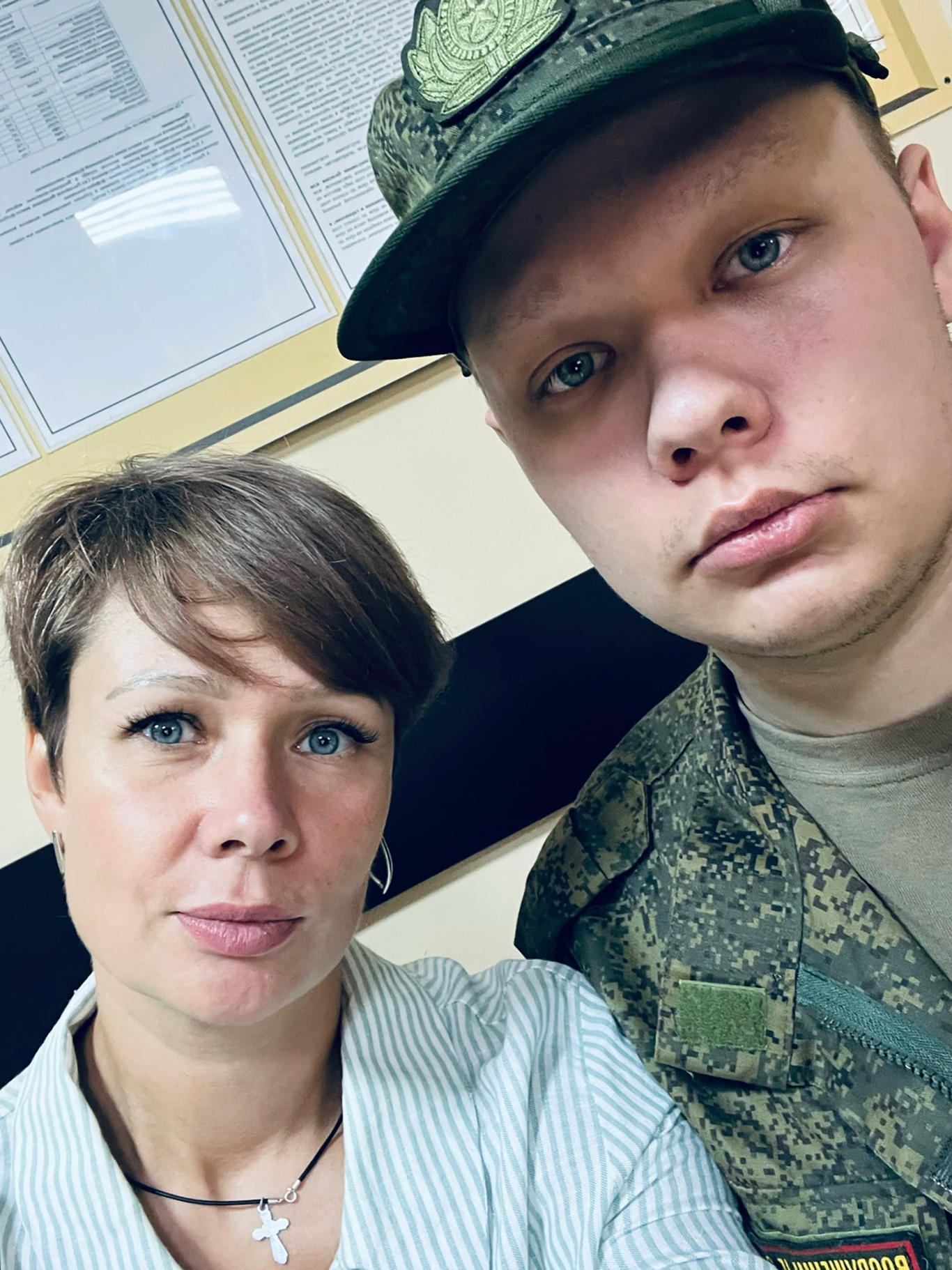
Sasha, with his blue eyes and cheerful looking face, was the spitting image of his mother. As for distinguishing features, he has a tattoo of an anchor on his hand, the same as the hero of the Japanese video game Dragon Quest. Fighting monsters, collecting weapons, this character was supposed to save the world, according to the plot. Maria has been to the morgue three times, but they have never found a match for Sasha.
The military unit applied to the court to have Alexander declared dead in June 2026. Maria was issued with her son’s death certificate.
“When I received the death certificate, well, it feels as though it’s happening all over again every time. My mind just can’t accept that my child has been killed. Right now, my only hope is that perhaps it’s a mistake, that perhaps he’ll be found,” she hoped.
Following her statement, investigators in Boguchar opened a case against the acting commander of Unit No. 91711 regarding the unlawful signing of a contract. Maria has opted not to name the acting commander until the trial begins. This military officer is still on the Ministry of Defence’s payroll, but he no longer holds the position of commander.
“We’re waiting for the indictment and for a court date to be set,” she noted. “I’ve been pushing for a criminal case for half a year.”
Maria is preparing an open letter from mothers of conscripts for the military prosecutor’s office and the President’s office, in order to hold officials of the 252nd Regiment, which includes Unit No. 91711, to account. She spoke carefully about her views on the war:
“How can I put it? I don’t want people to die. I don’t want conscripts to die. I don’t want children to die.”
Yulia Kulikova