Meet the Z-bimbo
How a new breed of Russian influencer combines tradwife aesthetics with pro-war propaganda

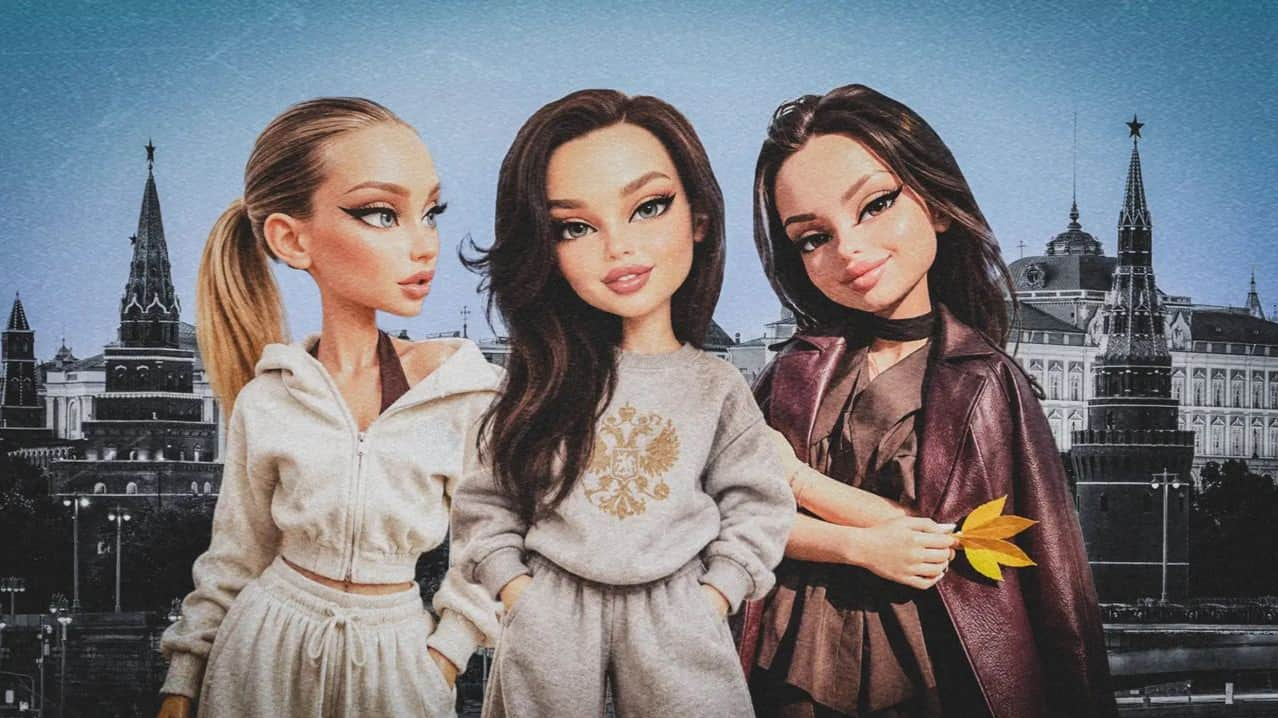
These days, the propagandists Russians encounter on social media are less likely to be government-approved experts from federal TV channels and more likely to be young women with business backgrounds and conventionally attractive looks. Marketers, event-agency owners and former makeup artists are churning out Reels about the “horrors of the 1990s” and “decadent Europe”, interspersed with ads for cosmetics and online courses. They cross-promote one another, creating an ecosystem of female influencers who have turned pro-war content into a lucrative means of self-promotion. Novaya Gazeta Europe explores the rise of Russia’s new Z-influencers.
‘I’m genuinely sad to see Europe in decline’
A blonde woman with long hair, dressed in an elegant black polka-dot dress, strolls through the corridors of the Uffizi Gallery in Florence. She poses in front of painting by Botticelli and Rubens and takes in the panoramic view of Florence from Piazzale Michelangelo.
The woman behind the Reel is 39-year-old Russian influencer Elizaveta Korchagina. A beauty and lifestyle blogger, she’s recently added political commentary to her repertoire. She runs several Instagram accounts. The first, Elizavetapremudraya, is devoted mainly to reviews of cosmetics, restaurants and events in Moscow. The second, Elizaveta Zanoza, focuses on politics — specifically on “exposing liberals” who left Russia after the full-scale invasion of Ukraine.
Korchagina started her lifestyle blog long before the full-scale war began. In all her photos and videos, she appears in professional makeup and stylish outfits. The thumbnails for her Reels often feature pictures taken in Paris, Milan, Valencia and other European cities. The blog is full of advertisements for Moscow restaurants, children’s activities and makeup. The account has 38,000 followers.
In one video, Elizaveta says she’s happy with her salary, which allows her to “avoid cooking and order delivery instead, eat out three or four times a week, and go on vacation five or six times a year, sometimes even more.” She doesn’t say where she works. Her husband, Dmitry Korchagin, previously worked for Region, a state research and production company that develops naval and aviation weapons. According to leaked records, his most recent job was at the Moscow city government’s healthcare information and analysis centre.
Korchagina’s political page is considerably more popular, with over 200,000 followers on Instagram and another 86,000 on TikTok. On that account, she echoes the Kremlin’s position on the war in Ukraine, talks exclusively about the positive aspects of life in Russia and brands critics of the country’s current situation as traitors who are “rocking the boat” and “want to break up the Russian Federation”. Most of her videos are devoted to these attacks.
The blogger’s standard “exposé” format goes like this: first, she plays a clip from a video by a particular “liberal”; then she adds her own disparaging commentary. On 20 October, for example, she reviewed a Reel by actress Varvara Shmykova, who left Russia out of opposition to the war. In the video, Shmykova recites “Russia Loves Serbia”, a poem by writer Dmitry Danilov that highlights the paradoxes and contradictions of this supposed love: “It's easy to love just like that / To love is so easy ... But in reality / We don't care.”
The poem is written in free verse. Korchagina apparently took it to mean that Shmykova was expressing her own views on Serbia.
“Varvara, you can talk all you like about betrayal, cynicism and loving thy neighbour. But before lecturing other people about loyalty, perhaps you should explain what you yourself are loyal to, and to whom,” Korchagina says. “And one more thing, dear: Crimea is Russia. Everything is Russia, except Kosovo, because Kosovo is Serbia.”
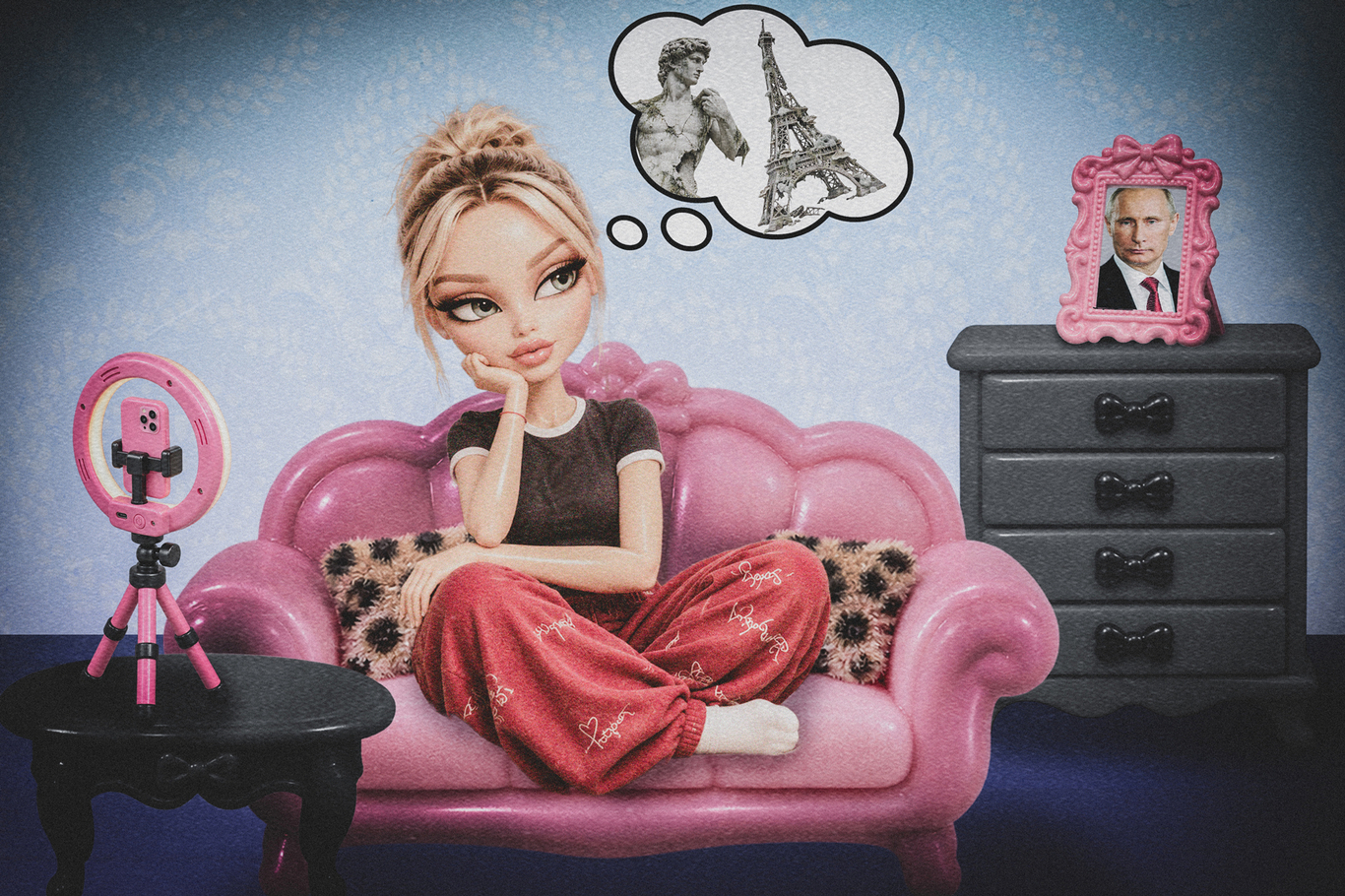
In the comments, Shmykova clarified that she had been reciting a poem, not expressing her personal opinion. But by then, Korchagina’s followers were already piling on. “Lisa wiped the floor with you!” one wrote.
Korchagina also regularly answers followers’ questions about Russian politics. On one occasion, someone asked why it was fine for Chechnya’s bid for independence to be crushed but not those of Abkhazia in Georgia or the Donetsk and Luhansk “people’s republics” in occupied Ukraine. Korchagina responded without taking her eyes off the screen:
“The Chechen campaign of the 1990s was a break with a sovereign state, accompanied by hostage-taking, bombings in peaceful cities, incursions into Dagestan and the involvement of international extremists. This wasn’t a struggle for freedom – it was an attempt to establish Ichkeria and impose Sharia law on the ruins of Russia, under field commanders who staged executions on camera.”
She posts three or four Reels a day. On average, they attract between 50,000 and several hundred thousand views. Some videos on her TikTok account have racked up millions. Yet she started out just over a year ago with videos that barely attracted 1,000 views, including tributes to Russia’s metro system and Moscow’s clean streets.
Her numbers began to climb in November 2025. Her first Instagram Reel to go viral attracted more than 200,000 views. In it, Korchagina responds to a follower who points out that the annexation of Crimea preceded the outbreak of fighting in Donbas. Rather than address the argument, she repeats the usual collection of Kremlin talking points about Ukraine, from alleged attacks against Russian speakers to claims about “biolabs”.
Korchagina’s work has not gone unnoticed. In June 2026, she joined a tour of Russian regions for foreign bloggers organised by Rossotrudnichestvo, Russia’s state agency for international cooperation, and its affiliated project The Way Home, which helps foreigners relocate to Russia by promoting it as a country of “traditional values”. Korchagina visited the Kurgan region and later the Kaluga region. Her fellow travelers were all foreigners, visiting from Canada, France, Japan, and Latvia.
Despite her political views, Korchagina also travels to EU countries frequently, posting videos about how dirty and expensive they are and how difficult it is to find hot water, among other complaints. She believes people should enjoy Europe’s culture and beauty while they still can — “while it’s still holding together”.
“Europe is beautiful,” she says in one video. “And I’m genuinely sad to see it in decline. Streets full of homeless people and drug addicts, trash, muggings. All this ‘freedom’, which has long since become a cover for rot.”
In 2024, while walking through the Jardin du Luxembourg in central Paris, she decided to explain what had drawn her into Russian politics. She says that at the start of the “special military operation” — the Kremlin’s term for the full-scale invasion of Ukraine — she was in shock and, like many others, became a “doomsayer”. But she decided to look into the matter. First, she began following people living in Donbas on TikTok. From their videos, Korchagina concluded that the people there were “the calmest and happiest of all” because “they were glad someone had stood up for them”.
Then she went even further. “I devoted an entire year to this,” she says. “A whole year devoted not to reading [independent news outlet] Meduza, [quasi-independent media personality Ksenia] Sobchak, [anti-war blogger Ilya] Varlamov], [independent journalist Yury] Dud, and those other fucking idiots, but to actually studying the information. I listened to presidents of various countries and what the fuck they had been saying at different times. I read history, documents. I studied geopolitics so thoroughly that nobody can change my mind or win an argument with me,” Korchagina says. She claims she now knows more about the subject than she does about makeup.
‘What’s Putin got to do with it?’
Korchagina isn’t the only influencer specialising in “exposing” Russian liberals. Novaya Europe has identified at least six other women doing similar work. All of them are conventionally attractive young women who also run businesses on social media or have direct links to state propaganda outlets, especially RT.
These bloggers make either Instagram Reels or YouTube video commentaries on the same general set of topics as Korchagina. The most frequently repeated message is that Russians who have left the country have “no moral right” to speak about Russia’s problems or maintain any ties with it because they “abandoned their country in its hour of need”. Other recurring themes include the crisis-ridden 1990s, which were supposedly the liberals’ fault; Europe’s decline; the merits of banning footage of drone strikes; and the achievements of modern Russia. Even the thumbnails of their Reels appear to have been generated by AI in the same exact style.
In their videos, the women rely on similar tactics: insults, mockery and exaggerated facial expressions. They repost and comment on one another's content, meet up from time to time and occasionally travel together for videos. They also heavily moderate their comments sections; their posts are filled almost exclusively with praise and expressions of support. However, the screenshots of comments that they occasionally display in their reels reveals they delete critical messages.
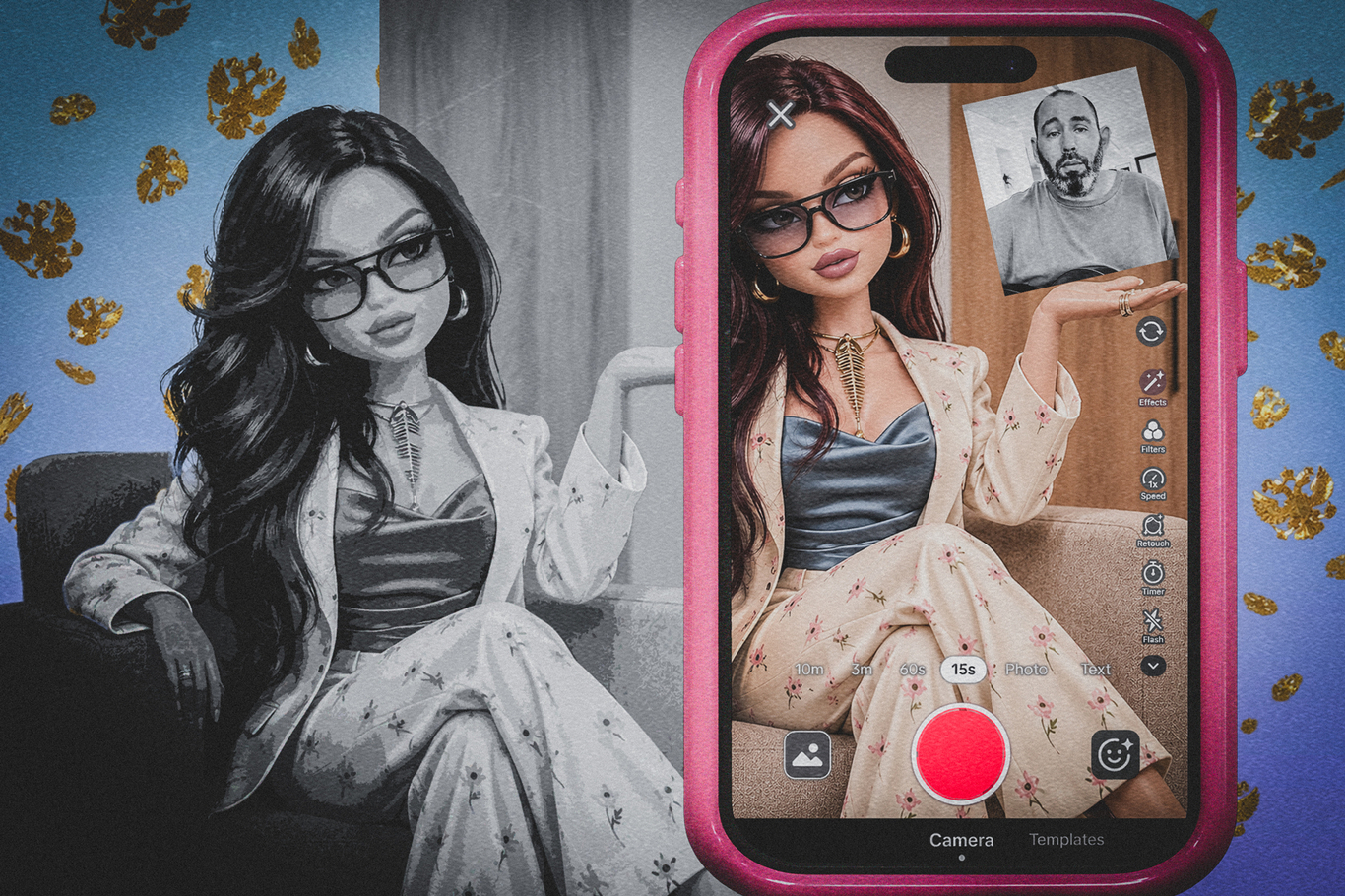
In early November, one of these bloggers, a former police officer from the Russian Far East named Yana Kovtun, launched a website called Info Slaughterhouse. Novaya Europe has determined that the site was built entirely using AI. It’s presented as a paid online training platform for bloggers who want to “expose” liberals and “fake news”; access is available only through a subscription. A free demo promises “tools to help users make sense of information”.
A Novaya Gazeta Europe journalist launched the Info Slaughterhouse demo and gained access to five sample dossiers covering various topics. One was titled “Yeltsin’s Betrayal: How Boris Yeltsin ‘Gave Away’ Crimea”. It contains two links to TV programmes intended to support this argument, but provides no links to documents or original sources. Another dossier claims that Ukraine occupied Sevastopol after the collapse of the Soviet Union. In reality, Soviet law placed the city under Kyiv's jurisdiction. Kovtun pushes the same claim on her own blog.
Another trait the bloggers share is their admiration for Vladimir Putin. On 7 October, almost all of them wished him a happy birthday, accompanying their posts with videos that were aggressively macho in tone. Their videos also repeatedly push the idea that the president is not to blame for Russia’s problems. In one example, Elizaveta Korchagina, standing in front of Rome’s Colosseum with an Aperol in her hand, addressed “all liberals who don't like Putin” with the following message:
Several factors help explain the rise of this new breed of pro-war influencer. In recent years, a younger generation of conservatives has increasingly turned to Instagram and TikTok to promote its values. The most obvious is the tradwife trend, in which conventionally attractive women portray themselves as ideal wives in traditional, patriarchal families. The trend originated in the US, but Russia has its own tradwives. But while other conservative influencers promote traditional ideas about sexuality, the “Z-bimbos” focus on politics.
At the same time, the Russian authorities are known to invest heavily in promoting the government's political agenda on social media. Their funding goes to foreign influencers, such as those who travelled around Russia with Elizaveta Korchagina, TikTok bloggers and entire networks of Telegram channels spreading pro-Kremlin narratives. Some Z-bimbos have direct links to official media outlets such as RT, and all of them are connected to one another in some way. However, Novaya Gazeta Europe found no direct evidence that the Kremlin funds these bloggers. In some cases, they may simply be trying to make money by tapping into patriotic sentiment and using it to attract customers for their own online products.
‘Business is business’
Novaya Gazeta Europe’s correspondent called a number of these bloggers and told them she was a journalist working on a story about them. Only two agreed to speak: Diana Bulatova and Tatyana Pop. Both confirmed that they were in contact with other bloggers, some of whom make money from their patriotic content.
Asked how she earned a living herself, Diana Bulatova replied that she “lives off [her] husband.” She added: “But as a normal, genuinely Russian woman, I’m not particularly happy with that arrangement. I’d like to have at least a little money of my own.”
Bulatova went on to explain the different ways her “colleagues” were trying to monetise their blogs.
“Yana Kovtun, for example, has launched an anti-fake-news portal where people can take courses, follow the news and learn to expose fake news,” she explained. “Some people sell merchandise. Everyone’s doing their own thing. Business is business.”
Bulatova says her videos attract viewers with their visuals, historical content and the chance to see others who share their views — people “who support the president”. She relies on AI to research her videos, saying it “quickly finds the right archival material”. Pop, meanwhile, says she does everything herself, often rushing to get her videos out while the news is still fresh. She describes her editing skills as “laughable”.
Diana Bulatova is an enthusiastic supporter of Vladimir Putin's policies. She even says that if “something were to happen to him”, she would have no choice but either to leave the country or “fight”, though she does not specify whom she would be fighting. She says she genuinely cannot stand the “liberals” targeted in the Z-bimbos' exposés.
“I think that if someone leaves the country and then talks shit about it, they should be punished. Maybe even stripped of their citizenship... I'm a very hard-line person. I'd be extremely harsh,” Bulatova says.
Pop, by contrast, says she simply feels sorry for Russians who have left, because “life has punished them enough as it is”. She compares loyalty to the state with loyalty to one's parents.
“Imagine you were born into a family that wasn't doing very well,” she says. “Your mother or father — something happens to them, maybe they get sick, maybe they lose their minds. These things happen. Would you disown your parents? Would you abandon them? No. You'd stay with them to the very end.”
Pop describes her own work as an “information war” that has become “the meaning of her life”.