StoriesSociety

Moscow’s man on the inside

Viktor Orbán is facing his biggest electoral challenge in years. Russia is doing everything it can to ensure his victory.

Moscow’s man on the inside

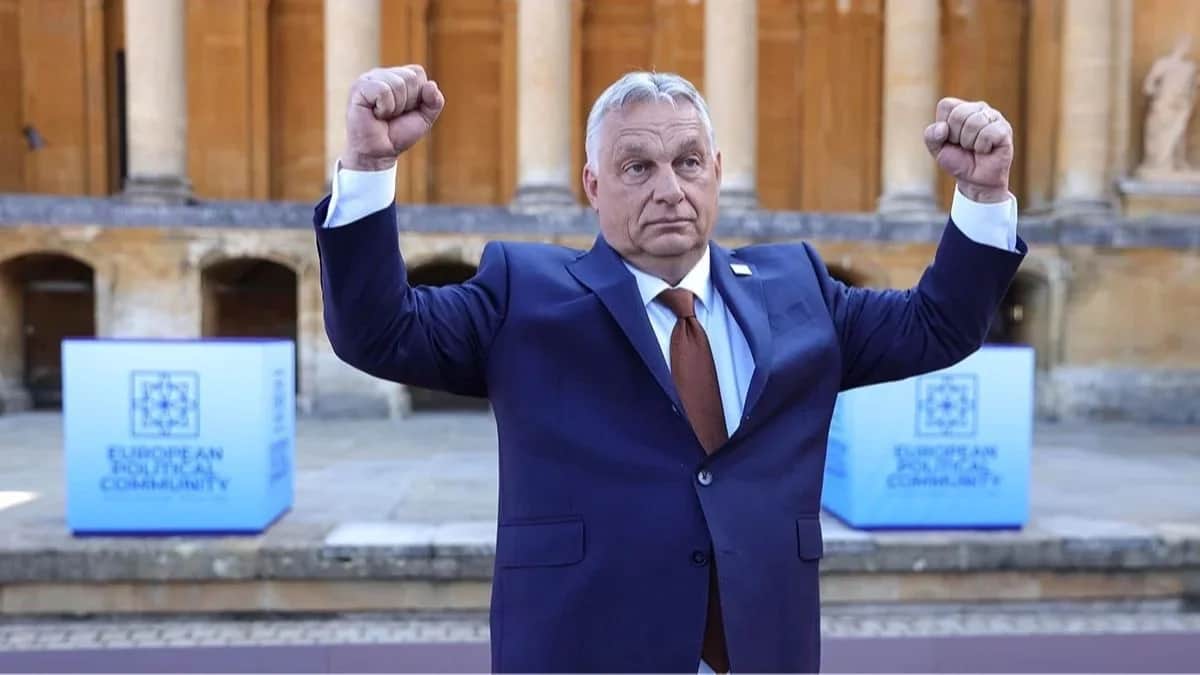
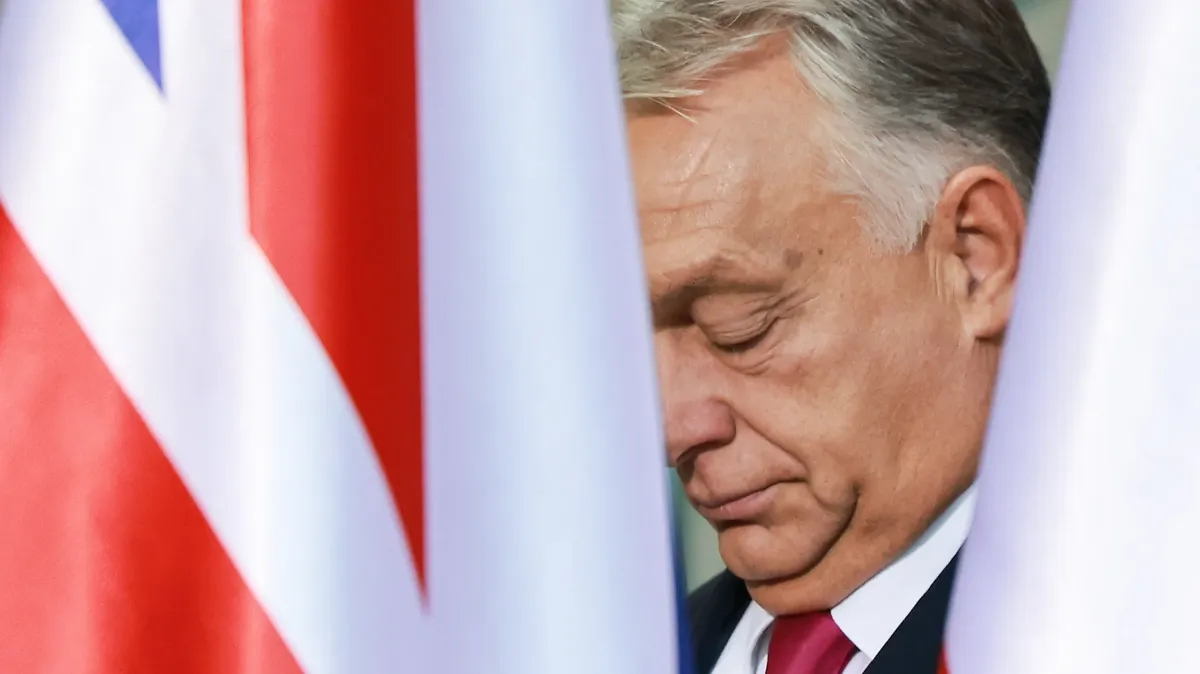
Hungarian Prime Minister Viktor Orbán at a meeting of the European Political Community (EPC) in Woodstock, Oxfordshire, U.K., 18 July 2024. Photo: Neil Hall / EPA

On April 12, Hungarians will go to the polls to decide the fate of one of the E.U.'s most Russia-friendly leaders. The vote comes amid a wave of bombshell reports detailing secret communications between Russian and Hungarian officials, leaving little doubt that Budapest's efforts to impede E.U. sanctions in recent years were made at Moscow's direct behest. The Kremlin has a lot to lose if the prime minister is voted out, and according to Hungarian media, it’s going to great lengths to secure his victory. But Orbán wasn't always the Putin-praising right-wing populist he is today; in fact, he began his career as just the opposite. Novaya Gazeta Europe traces Orbán’s transformation and details the Kremlin's bid to keep him in power.

Freedom vs. Oil

On June 16, 1989, a ceremony was held at Budapest’s central Heroes' Square to mark the reburial of Imre Nagy, the leader of Hungary’s 1956 anti-Soviet uprising. At the event, a 26-year-old Viktor Orbán addressed a crowd of thousands, demanding free elections and the immediate withdrawal of Soviet troops. The violent suppression of the 1956 rebellion had long been a defining moment in Hungarian national memory, and the young politician was building his platform on staunch anti-communism. His speech at the square established him as a politician of national prominence.

Up until the late 2000s, Orbán and his Fidesz party consistently criticised Moscow. Having served as a pro-European prime minister from 1998 to 2002, he then spent his years in opposition actively warning the country against drifting back into the Kremlin's orbit. In 2007, for instance, Orbán spoke out against allowing Hungary to become "Gazprom's happiest barracks”, a riff on the country’s former reputation as the Eastern Bloc’s “happiest barracks” due to its relatively high living standards. The same year, Orbán proclaimed: "Oil comes from the East, but freedom comes from the West." A year later, he condemned Russia's invasion of Georgia, describing it as "an imperialist act of pure power politics."

Orbán’s attitude toward Russia began to shift after Fidesz returned to power in 2010, in the aftermath of the global financial crisis. Political scientist Bálint Magyar, who has written about Orbán's Hungary as a "mafia state," has suggested that the pivot could have been triggered by the prime minister being shown compromising footage of himself during a visit to Saint Petersburg in 2009.
"I’ve heard that story, but I don’t buy it," Hungarian journalist and political analyst Gábor Stier told Novaya Gazeta Europe. In his view, Orbán is “not a pro-Russian politician, but a man who pragmatically defends Hungarian interests."

Maxim Samorukov, a fellow at the Carnegie Russia Eurasia Center, said he agrees that Orbán "has become neither anti-Western nor pro-Russian."

"It's one thing to be in opposition and criticise the government for 'selling the country to Russia,' and quite another to come to power and realise that gas and oil have been coming from there for decades, that nuclear technology is also tied to Russia, and so on,” he explained.

After securing a parliamentary supermajority, the Fidesz government initiated a fundamental revision of Hungary's foreign policy. In 2011, Budapest proclaimed the doctrine of "Eastern Opening", premised on the idea that Hungary could diversify its foreign policy while simultaneously retaining the benefits of EU membership. Official documents framed this as a need to expand exports and attract investment from China, Russia, Turkey, Saudi Arabia, Azerbaijan, and other countries.

In practice, it came down to cooperation with Moscow and Beijing — and the actual trade results were modest. Hungarian exports to Russia, for example, began declining as early as 2011, well before the first European sanctions were introduced in 2014.

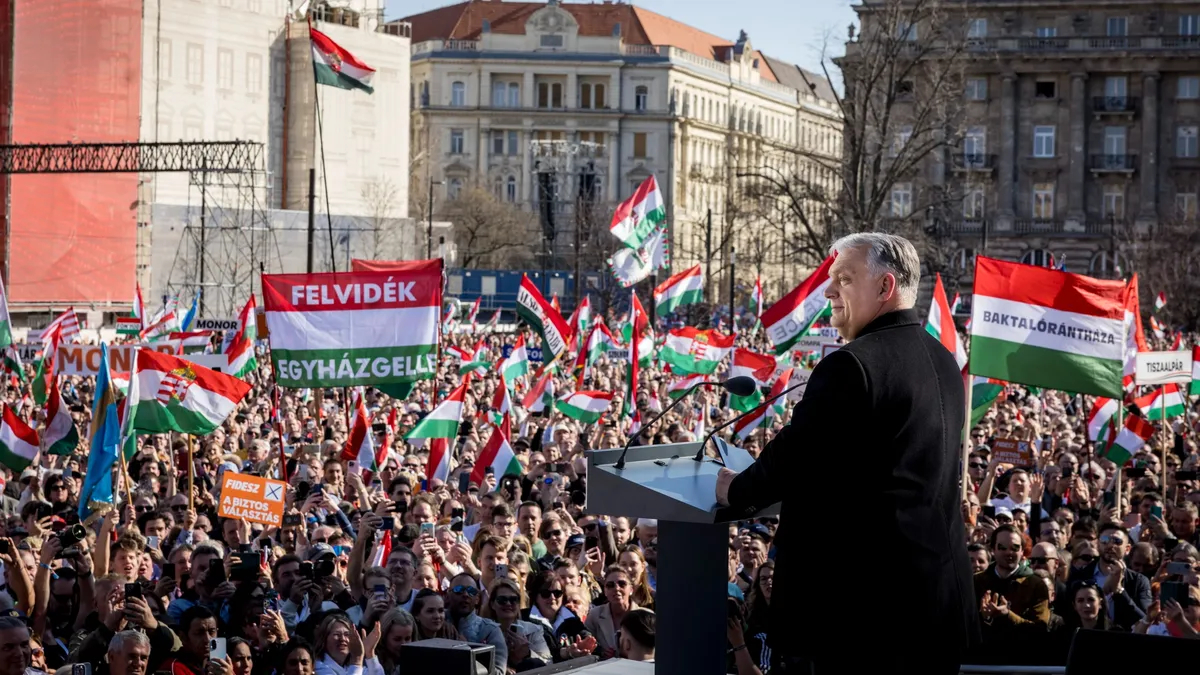
Supporters of Viktor Orbán attend a campaign rally in Pécel, Hungary, 28 March 2026. Photo: Tibor Illyés / EPA.

Supporters of Viktor Orbán attend a campaign rally in Pécel, Hungary, 28 March 2026. Photo: Tibor Illyés / EPA.

A client-patron relationship

Manoeuvring between West and East allowed Budapest to gain additional leverage in its relations with Brussels — which, by the early 2010s, the Hungarian authorities had come to regard as their main adversary.

Orbán laid out the ideological foundation for this course in the summer of 2014. Speaking before ethnic Hungarians in the Romanian town of Băile Tușnad, he rejected Western-style liberalism and announced the construction of an "illiberal state," citing Russia, China, and Turkey as models.

Orbán began openly praising Vladimir Putin as a strong national leader who stands up to "liberal rules" and defends "traditional values." As Bálint Magyar noted, the relationship between Orbán and Putin began to resemble a client-patron dynamic, with the Kremlin rewarding the Hungarian elite through various corrupt and semi-legal schemes, and Budapest repaying it with political services that undermine the unity of the EU and NATO.

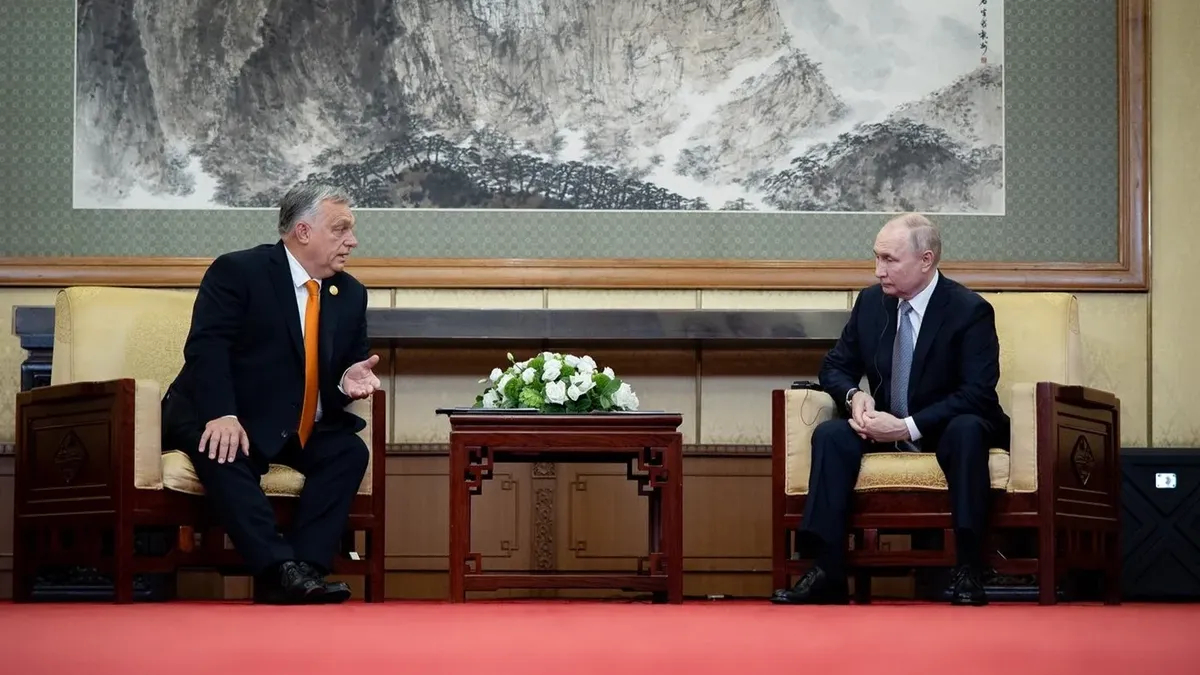
This dynamic became especially pronounced after February 2022. Orbán has met with Putin four times since Moscow’s full-scale invasion of Ukraine began. In 2024, he travelled to visit Putin while leading the country that held the EU's rotating presidency, provoking particularly sharp outrage in Brussels.

"Orbán’s current closeness to Moscow would have triggered big protests ten or 15 years ago. But people have got used to this and it no longer provokes shock or anger," a former senior Hungarian diplomat who had previously worked closely with Orbán told The Times. "When it comes to his approach to Russia, Hungary is like a frog that is slowly being boiled alive."

Vladimir Putin and Viktor Orbán at the Hungarian Parliament building in Budapest, 17 February 2015. Photo: Szilárd Koszticsák / EPA.

Vladimir Putin and Viktor Orbán at the Hungarian Parliament building in Budapest, 17 February 2015. Photo: Szilárd Koszticsák / EPA.

Energy dependence on Russia

Moscow and Budapest's mutual dependence is most visible in the energy sector. According to Maxim Samorukov, Hungary has long relied heavily on Soviet-era energy supplies, and successive governments kept that relationship with Moscow alive after the USSR's collapse. When Orbán returned to power in 2010, those contracts let him keep fuel costs and utility bills in check.

"The corrupt element is undoubtedly enormous: those who 'sit on the pipeline' in Hungary make insane money. But there’s a real economic benefit for the country, and every Hungarian feels it," Samorukov said.

Brussels, according to the experts interviewed by Novaya Gazeta Europe, has offered few viable alternatives to Russian energy. Between 2022 and 2025, Russia's share of Hungary's oil imports grew from 61% to an unprecedented 92%. While the European Union was attempting to restructure its logistics and gradually phase out pipeline deliveries, Budapest systematically carved out exemptions for itself.

The situation in the gas sector is similar. The European Commission plans for all EU member states to fully phase out Russian gas by early 2027. The Hungarian government, however, insists it cannot yet do without Russian energy, even as it continues a policy of supply diversification.

The flagship project that tied Hungary most firmly to Moscow is the expansion of the Paks nuclear power plant. The agreement to build two new reactors, a project known as Paks II, was signed in early 2014, behind closed doors and without an open international tender. The project is valued at €12.5 billion, of which €10 billion is provided as a state loan from the Russian federal budget. On February 5, 2026, Rosatom began pouring concrete for the foundation of the first of the two new reactor units. One of the key Hungarian subcontractors was an entity linked to oligarch Lőrinc Mészáros, a longtime friend of Prime Minister Orbán.

Still, there have been some efforts to reduce Hungary's dependence on Russian nuclear fuel. The potential alternative supplier is the United States, which is currently just as friendly toward Orbán; U.S. President Donald Trump has openly backed the Hungarian prime minister ahead of the upcoming elections. During Secretary of State Marco Rubio's visit to Budapest in February, an agreement was signed to purchase fuel from the U.S.-based Westinghouse Electric Company as a supplement to Russian supply. However, deliveries are not expected to begin for at least another three years.

Paks Nuclear Power Plant. Photo: Wikimedia

Paks Nuclear Power Plant. Photo: Wikimedia

No secrets here

Russia's influence over Hungary's affairs has gone well beyond industry and energy. In 2019, the Orbán government invited the International Investment Bank (IIB) — a Russian government-controlled financial institution and a relic of the Soviet-era Council for Mutual Economic Assistance — to relocate its headquarters from Moscow to Budapest. The bank was granted an unprecedented set of privileges, including exemption from financial oversight, zero taxes, and diplomatic immunity for its staff. Its leadership was also given the right to bring an unlimited number of guests into Hungary, who could then move freely throughout the Schengen Area without the standard security checks.

NATO allies openly described the IIB's Budapest headquarters as a base for Russian intelligence and a Trojan horse in the heart of Europe. Budapest brushed off its partners' concerns until the spring of 2023, when the U.S. Treasury imposed direct sanctions on the IIB and three of its senior executives. Only then did Hungary hastily announce it was pulling out as a shareholder.
In its willingness to sacrifice Euro-Atlantic security to preserve its exclusive ties with the Kremlin, Hungary has repeatedly put its own security at risk. As the Hungarian investigative outlet Direkt36 reported, hacking groups APT28 and APT29, both of which have ties to Russian intelligence, had constant administrative access to the IT infrastructure of Hungary's Ministry of Foreign Affairs and Trade for at least a decade.

The most significant breach involved the compromise of a secure external network that diplomats use to transmit encrypted NATO and EU documents classified as restricted and secret. Despite the scale of the intrusion, the Orbán government never publicly blamed Russia or reached out to NATO allies for emergency assistance. Instead, it adopted a policy of institutional silence, while diplomats continued using the compromised communications systems, putting Alliance data at risk.

When the scandal eventually broke into the political arena, Fidesz members did their best to kill it. In 2024, ruling party MPs simply didn't show up to a parliamentary session called to address the issue, dismissing it as a sham. Opposition lawmakers responded by placing small Russian flags on every empty seat.

Donald Trump and Viktor Orbán at the White House in Washington, D.C., 7 November 2025. Photo: Jim Lo Scalzo / EPA.

Donald Trump and Viktor Orbán at the White House in Washington, D.C., 7 November 2025. Photo: Jim Lo Scalzo / EPA.

Diplomatic fallout

These security failures were compounded by direct leaks at the political level. In March 2026, The Washington Post, citing European intelligence services, reported that Hungarian Foreign Minister Péter Szijjártó had been systematically using breaks during closed sessions of the EU Council to call his Russian counterpart Sergei Lavrov. Moscow was receiving real-time readouts on member states' positions, the details of sanctions packages, and the parameters of aid to Ukraine. Szijjártó initially dismissed the story as a "ridiculous conspiracy theory," then switched tactics and insisted such contacts were standard diplomatic practice.

Hungarian Foreign Minister Péter Szijjártó speaks at the Conservative Political Action Conference (CPAC) in Budapest, 21 March 2026. Photo: Zoltán Balogh / EPA.

Hungarian Foreign Minister Péter Szijjártó speaks at the Conservative Political Action Conference (CPAC) in Budapest, 21 March 2026. Photo: Zoltán Balogh / EPA.

This set off a crisis within the EU's Common Foreign and Security Policy. Politico, citing multiple EU diplomats, reported that in response to the revelations, decision-makers across the bloc have begun "limiting the flow of confidential material to Hungary,” with leaders “meeting in smaller groups". European diplomacy and defence planning have indeed shifted substantially toward narrower formats and coalitions — the E3 (Germany, France, the UK), the E4 (the same plus Poland), the E6 (Germany, France, Italy, the Netherlands, Poland, Spain), the Weimar Triangle (Germany, Poland, France), and the NB8 (the Nordic-Baltic states).

"The news that Orbán’s people inform Moscow about EU Council meetings in every detail shouldn’t come as a surprise to anyone. We’ve had our suspicions about that for a long time," Polish Prime Minister Donald Tusk wrote on X. He also revealed that back in 2019, Lithuania had asked for the Hungarian delegation to be excluded from a NATO meeting over fears of classified leaks. Former Lithuanian Foreign Minister Gabrielius Landsbergis, meanwhile, told Politico that Hungary's potential role as a leak source had come up at the 2023 NATO summit in Vilnius.

Hungary's function as a back channel to Moscow is reinforced by its systematic exploitation of the EU’s decision-making architecture in Russia’s interest. The unanimity requirement in Council votes has allowed the Orbán government to turn its veto into a tool of blackmail. In 2026, Budapest blocked the 20th sanctions package against Russia and vetoed a €90 billion macro-financial loan to Ukraine. Its official justification for the latter was Kyiv's decision to halt Russian oil transit through the Druzhba pipeline.

Budapest has also been quietly negotiating carve-outs from sanctions lists for members of the Russian elite. Hungarian diplomacy blocked sanctions against Patriarch Kirill and secured the removal of restrictions on the sister of oligarch Alisher Usmanov, businessman Vyacheslav Kantor, and Russian Sports Minister Mikhail Degtyarev. As researcher Dorka Takácsy of the Hungarian Center for Euro-Atlantic Integration and Democracy told Novaya Gazeta Europe in March 2025, at least 27 individuals avoided being sanctioned thanks to Hungary's efforts.
Brussels has long been searching for mechanisms and legal workarounds to get around the Hungarian veto, but so far no solution has been found that is both effective and painless for the EU as a whole. That search may not be needed for much longer, however. Péter Magyar — the leader of Tisza (Respect and Freedom), currently Hungary's most popular political party — is no unconditional pro-European, but he is far from the die-hard Brussels antagonist that Orbán has been.

Online influence efforts

Judging by the polls, Péter Magyar might already have cause to celebrate: 49% of voters support Tisza against just 39% for Fidesz. But in Hungary, only 93 parliamentary seats are allocated by party lists — 106 are decided in single-member constituencies. And there, partly thanks to gerrymandering in those constituencies, Fidesz is on stronger ground. The Nézőpont Institute think tank, for instance, claims that Fidesz and its junior partner, the Christian Democratic People's Party, could win 66 of those 106 constituencies, with Tisza candidates taking just 39. That said, Nézőpont is widely regarded as being close to the current government, so its figures should be taken with a grain of salt.

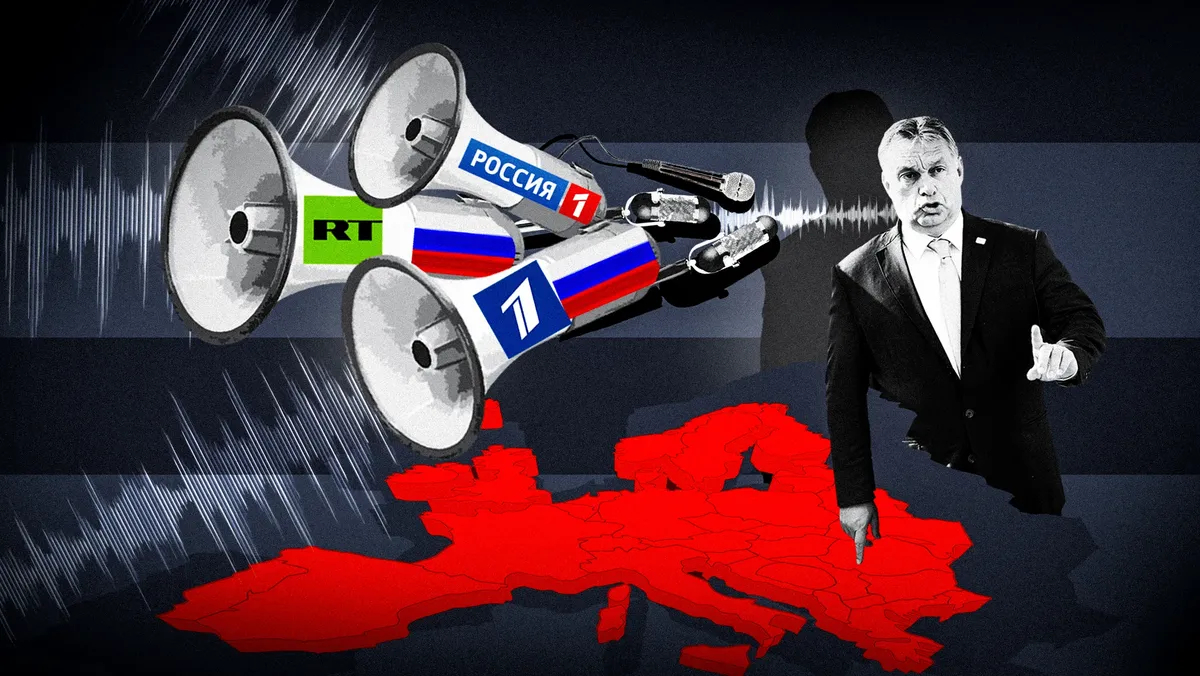
Losing a friendly government in the heart of Europe would likely be unacceptable to the Kremlin — and so, according to independent analysts and investigative journalists, Russia's leadership has launched an interference operation of unprecedented scale to maintain the status quo. The outlet VSquare, citing sources in several European intelligence services, reported that the operation is being overseen by Kremlin Deputy Chief of Staff Sergey Kiriyenko, who in 2025 road-tested similar tactics — bribery, bot networks, orchestrated protests, and the like — during the elections in Moldova. Operational control on the ground, the report alleged, lies with Vadim Titov, head of Russia’s Presidential Directorate for Strategic Partnership and Cooperation.

Péter Magyar, leader of the opposition Tisza Party, addresses supporters during the National March in Budapest, 15 March 2026. Photo: Tibor Illyés / EPA.

Péter Magyar, leader of the opposition Tisza Party, addresses supporters during the National March in Budapest, 15 March 2026. Photo: Tibor Illyés / EPA.

According to the Financial Times, a detailed plan to flood Hungarian social media with pro-government messaging and undermine Magyar was developed by the U.S.-sanctioned Russian firm Social Design Agency. The campaign focused primarily on Hungarian TikTok.

Journalists identified dozens of anonymous accounts involved, including a cluster of 34 profiles created within a 48-hour period that shared AI-generated content. For politically engaged audiences, the operation produced fabricated news-style broadcasts featuring AI-generated presenters and commentators criticising Magyar on various grounds. For less politically engaged users, it relied on deepfake videos of Hollywood actors, with clips depicting “Leonardo DiCaprio” and “Johnny Depp” warning Hungarians about rising energy costs if the opposition were to win.

Volodymyr Zelenskyy and Viktor Orbán shake hands at a joint press conference following their meeting in Kyiv, July 2, 2024. Photo: Sergey Dolzhenko / EPA.

Volodymyr Zelenskyy and Viktor Orbán shake hands at a joint press conference following their meeting in Kyiv, July 2, 2024. Photo: Sergey Dolzhenko / EPA.

Russia’s influence operation has put particular effort into exploiting tensions between Hungary and Ukraine. Fake videos have spread across X, including one carrying a Reuters logo that falsely claimed Volodymyr Zelensky had told Politico: "Only backwards people could vote for and support Orbán.” Content posted by accounts posing as Human Rights Watch alleged that Ukrainian refugees had carried out thousands of attacks on Hungarian citizens across various EU countries.

Orbán himself has played into this narrative as well. The most striking example was the March 5 arrest of a transit convoy belonging to Ukraine's state-owned Oschadbank, travelling from Vienna to Kyiv carrying $40 million, €35 million, and 9 kilograms of gold. According to VSquare, the original plan had been to intercept illegal weapons and manufacture a media scandal around a narrative of "terrorist threat" or "arms trafficking." When no weapons were found, those running the operation ordered a fabricated money-laundering case to be opened, and government propaganda began pushing the idea of a Ukrainian "military mafia."

Russian intelligence involvement

Russian intelligence services have been directly involved in the Hungarian election campaign, according to investigative journalists. According to VSquare's sources, several weeks before the April vote, a team of three career officers from Russia's military intelligence agency, the GRU, was deployed to Budapest. The operatives arrived under diplomatic cover, giving them de facto immunity from expulsion, and were reportedly tasked with managing networks of local agents of influence and coordinating information operations.

Opposition leader Péter Magyar took reports of this operation seriously enough to demand the officers’ immediate expulsion. An unnamed member of the parliamentary national security committee later told the Hungarian news portal Telex that such information had indeed come in from Western intelligence services, but said there were no Russian agents in Hungary.

A billboard featuring a portrait of Viktor Orbán with the slogan “Let’s unite against war” in Budapest, 27 March 2026. Photo: Attila Kisbenedek / AFP / Scanpix / LETA.

A billboard featuring a portrait of Viktor Orbán with the slogan “Let’s unite against war” in Budapest, 27 March 2026. Photo: Attila Kisbenedek / AFP / Scanpix / LETA.

Russia's foreign intelligence service, the SVR, has also been involved. In the summer of 2025, it issued a statement claiming that Brussels was “furious at Budapest's attempts to pursue an independent policy" and was "seriously considering scenarios for regime change in Budapest." Kyiv, the SVR added, had, "on Brussels' orders, actively joined the campaign to bring Péter Magyar to power." Hungary's state news agency MTI ran the statement without comment.

By March 2026, it was clear that the SVR had effectively joined the Hungarian election campaign directly. The Washington Post published details of an internal SVR report, intercepted and verified by European intelligence services, describing a plan codenamed Gamechanger. The strategy involved staging a fake assassination attempt on Viktor Orbán, with the goal of replicating the dramatic electoral effect of the real attempt on Donald Trump's life in July 2024. Kremlin spokesman Dmitry Peskov predictably dismissed the report as disinformation.

Supporters cheer as opposition leader Péter Magyar speaks during the National March in Budapest, Hungary, 15 March 2026. Photo: Boglárka Bodnár / EPA.

Supporters cheer as opposition leader Péter Magyar speaks during the National March in Budapest, Hungary, 15 March 2026. Photo: Boglárka Bodnár / EPA.

A turning point

Viktor Orbán himself has dismissed the entire idea that Russia is interfering in the election as "a pathetic spectacle" and "a fairy tale of rather poor quality." How it will end remains to be seen. If Fidesz manages to hold its parliamentary majority, Budapest's foreign policy will stay exactly as it is, and the country's isolation within the EU and NATO will reach new depths.

Politico reported that the EU is actively drawing up contingency plans for another Orbán victory. The options on the table include expanding the use of qualified majority voting to areas that currently require unanimity; leaning even more heavily than now on flexible formats such as informal coalitions of the willing and smaller groups of member states; stepping up pressure on Budapest by freezing or cutting EU funds; triggering procedures that could strip Budapest of its voting rights for systematic disregard of European values; and expelling Hungary from the EU altogether.

Every option carries risks and complications. The last one, for instance, is essentially off the table: the EU's founding treaties contain no mechanism for expelling a member state.

Magyar's team, for their part, has kept its focus throughout on domestic issues — the economy and corruption. That, according to analyst Maxim Samorukov, is precisely where its strength lies: "Tisza avoids getting drawn into active debate on the war in Ukraine, cooperation with Russia, or relations with Europe. And that is exactly why its ratings are where they are."
One thing that’s clear is that a Magyar victory would usher in a honeymoon period with Brussels. "Good relations with EU leadership will come regardless of who Magyar's allies actually are or what their real views turn out to be," Samorukov told Novaya Gazeta Europe. "Brussels will be ready to welcome them in, show them some warmth, and demonstrate that walking away from Orbán will bring Hungary clear dividends. And since Budapest's room for manoeuvre would be considerably wider in that period than it is now, it will be much harder for Russia to push anything on them."

At the same time, dismantling the "illiberal democracy" will not happen overnight. Over 16 years, Orbán has built an electoral autocracy in which Hungary’s courts, regulatory bodies, and media are all tightly bound to the Fidesz party machine. Even if Magyar wins, his cabinet could face institutional obstruction at every turn. Pushing through the deepest possible reforms would require a constitutional supermajority — two-thirds of seats — which is not a realistic prospect.

Whatever happens, the April 12 election is set to settle an enormous question: whether Hungary will remain Russia's Trojan horse inside the EU, or begin the slow and difficult journey back into the European mainstream.
shareprint
Editor in chief — Kirill Martynov. Terms of use. Privacy policy.