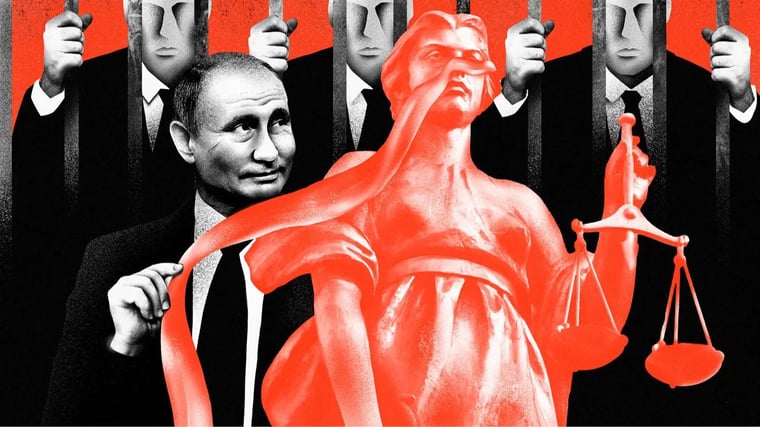
Telegram has long been more than just a messaging app for Russians — it’s a fully fledged media outlet, one of their main platforms for accessing news, discussing current events and publicly airing their views. The Russian state’s motives in trying to block the platform are clear, to make users switch to the state-backed — and state-monitored — “everything app” MAX and bring Russian society under total control in terms of its online consumption.
The blocking of Telegram in Russia from 1 April will inevitably worsen many people’s quality of life. At the same time, it will also disrupt the dissemination of Russian propaganda itself, as many pro-Kremlin media outlets actively rely on Telegram to get their message out, while many popular pro-war Telegram channels exist on the app and nowhere else. Perhaps most importantly, Russian troops fighting in Ukraine also use Telegram to communicate.
In this sense, the current situation is reminiscent of the Soviet era when the authorities attempted to jam Western radio stations. At the time, the Soviet leadership also sought to limit the influence of both Western information and culture, while weakening its own system of broadcasting propaganda in the process.
Whereas listening to the radio had once been a collective experience, it became an individual pastime, which was inevitably much more difficult to monitor or control.
The Soviet Union launched a campaign to bring radio to the masses in the decade after World War II. Though there were just 33 million radios in the country in 1955, that figure had doubled a decade later. These were no longer loudspeakers on the street, but stand-alone wireless receivers. So whereas listening to the radio had once been a collective experience, it became an individual pastime, which was inevitably much more difficult to monitor or control.
Furthermore, these receivers had a serious “drawback” in that they could receive shortwave transmissions, which as the head of the Soviet Council of Ministers’ Main Directorate for Radio Information complained, meant that people could now listen to foreign programmes spouting “heinous slander against the Soviet Union” in addition to Soviet output.
Nevertheless, the Soviet manufacture of shortwave radios continued as their roll-out was the most effective way to get radio to the masses, especially in villages without electricity or infrastructure, where shortwave receivers would still work.
A Soviet VEF Spidola-10 radio, intended for sale on the domestic market. Photo: Pudelek / Wikimedia
In 1958, the Central Committee of the Communist Party conducted an investigation which showed that as many as 85% of the shortwave radios in the country were in the European part of the USSR, where, as officials noted, “there was nothing to listen to except enemy radio”.
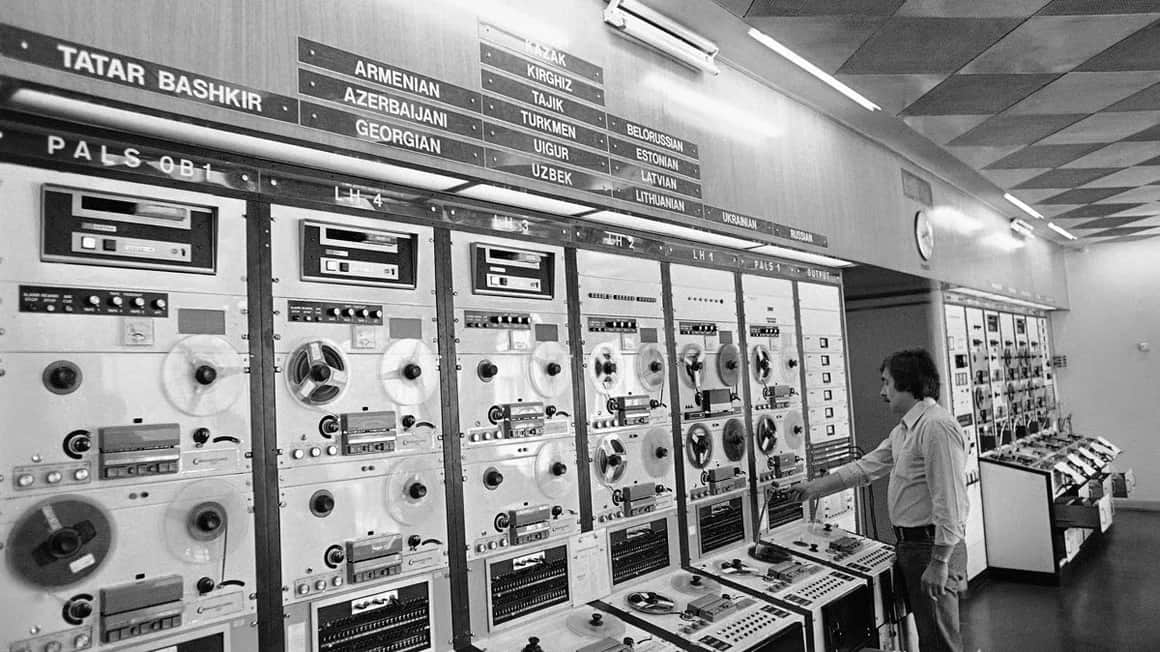
By the end of the 1950s, about 60 foreign radio stations could be received on Soviet territory, which the authorities went on to jam. Jamming was enormously expensive, though, costing the state “hundreds of millions of rubles”, according to Central Committee officials, and exceeding the total national expenditure on domestic and international broadcasting combined.
But despite these efforts, “enemy voices” could still be heard with ease in many places outside Moscow and Leningrad. Indeed, jamming often made Soviet radio inaccessible too, the system effectively working against itself. As a result, “enemy radio” was essentially all that was available, and collective farmers would listen to the Voice of America and the BBC in their villages.
“We even listened to Vatican radio, which gave a good overview of what was happening in the Soviet Union, and we weren’t bothered that the presenter said ‘God bless you’ at the end,” Russian historian Sergey Ivanov recalls.
In 1953 the Council of Ministers announced it would hasten the construction of radio jamming stations. In response, broadcasters from the US, UK and elsewhere developed effective ways to bypass blocks, such as broadcasting on wavelengths as close as possible to those used by Soviet stations. Although the USSR built an ever-increasing number of jamming stations, by the mid-1950s, it was clear the Soviet side was fighting a losing battle.
One Soviet official admitted that even given “unlimited funds” it would be impossible to isolate the USSR from foreign radio entirely, and jamming threatened to paralyse the Soviet Union’s own radio network.
Many Soviet citizens also actively tried to listen to foreign radio stations. In the 1960s and 1970s, many bought high-quality radios such as the Latvian Spidola or, when possible, German Grundig sets. People put the receivers on their side, turned them upside down, stuck antennas out the window and even drove out of the cities to their dachas where jamming was less effective.
“We even listened to Vatican radio, which gave a good overview of what was happening in the Soviet Union, and we weren’t bothered that the presenter said ‘God bless you’ at the end,” Russian historian Sergey Ivanov recalls.
When the Soviet army invaded Czechoslovakia in the summer of 1968, Soviet holidaymakers were able to hear the news while lying on the beaches of the Baltic Sea. Political scientist Masha Lipman, who was in Lithuania at the time, recalled: “That summer, antennas shot up all over the beach. And in the circles we mixed in, whenever anyone said they heard something ‘on the radio’, it meant the Russian-language programmes on Voice of America, the BBC or Deutsche Welle.”
Listening to foreign radio was not automatically a criminal act. It really depended on who was listening to what. Estonians, for example, listened to Finnish radio with impunity, just as people in Tajikistan listened to religious broadcasts from Iran, and Siberians could listen to programmes about the cultural revolution in Beijing.
A 1972 Latvian-made Radiola VEF radio. Photo: Vasily Kuzmichonok / Moskva
In 1957, a young Ukrainian plumber was arrested for retelling anti-Soviet poems from foreign radio to his colleagues, while in 1968, a man in Estonia accidentally broadcast a Voice of America report to the entire beach after accidentally connecting his receiver to a tannoy system. He was not punished.
The Soviet authorities didn’t know how many of its citizens were listening to overseas broadcasts. In the mid-1970s, the KGB referred to a study by the Soviet Academy of Sciences that concluded that 80% of Moscow-based students listened to foreign radio stations. Some students even posted transcripts from BBC programmes on the walls of their institutes for their classmates to read.
Others openly asked visiting officials what was wrong with listening to the BBC and quizzed them about who was responsible for jamming foreign radio broadcasts and why they did it.
In 1958, the Soviet Union stopped manufacturing shortwave radios with high-frequency ranges, and it was not until 1985 that the jamming of foreign radio stations ended when Mikhail Gorbachev rose to power and introduced his reformist policy of glasnost.