Ukraine finds itself at a delicate and dangerous moment. It will soon be four years since Russia launched its full-scale invasion; the town of Pokrovsk is about to fall after a long, bloody siege; and the recent shelling of the capital, Kyiv, was one of the heaviest since 2022.
Anna Husarska
former senior policy advisor at the International Rescue Committee and former senior political analyst at the International Crisis Group
And now US President Donald Trump has put forward a peace plan that is a sort of AI translation of the Kremlin’s demands for Ukraine: to surrender territory, cut the size of its army, and abandon many modern weapons systems.
Against this backdrop, it might seem that a corruption investigation focused on President Volodymyr Zelensky’s inner circle could not come at a worse time. But this may turn out to be just the scandal Ukraine needs to show why it deserves to survive with its sovereignty intact.
Public anger about the embezzlement of at least $100 million by a group led by a close friend and business partner of Zelensky is intense and widespread. But my Ukrainian friends — none of them a fan of the president — consider the investigation to be proof that anti-corruption measures are working even in the midst of war. Whatever the military balance on the frontline, the political balance is unambiguous: Russia, the aggressor, is a brutal autocracy, whereas Ukraine, the victim of the aggression, is a struggling democracy.
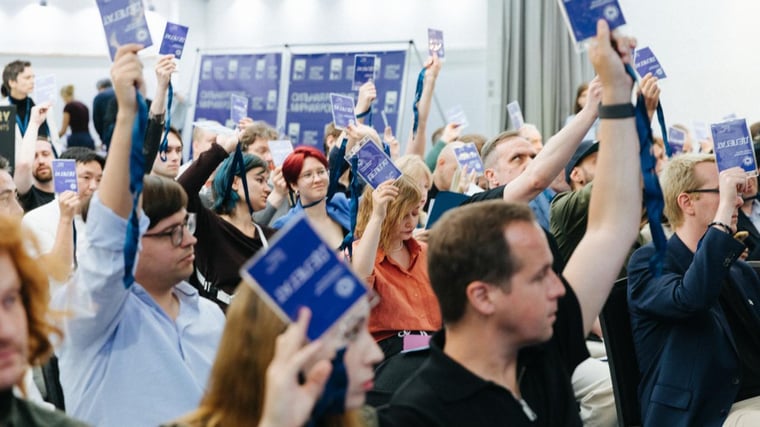
This summer, after Zelensky had parliament pass a law curtailing NABU and SAPO, thousands of young people carrying placards took to the streets in protest.
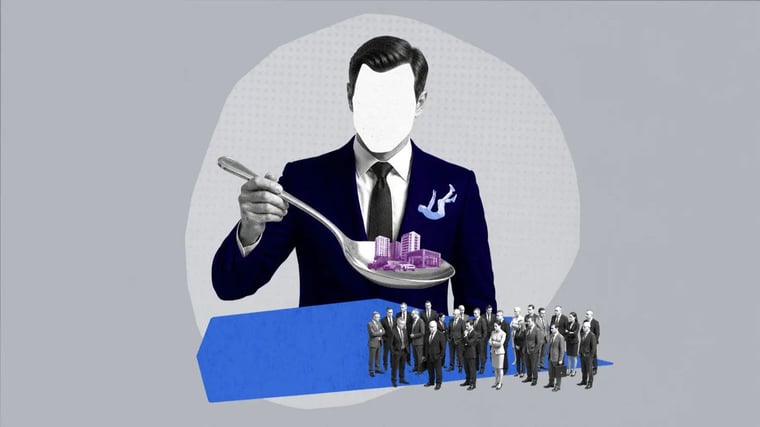
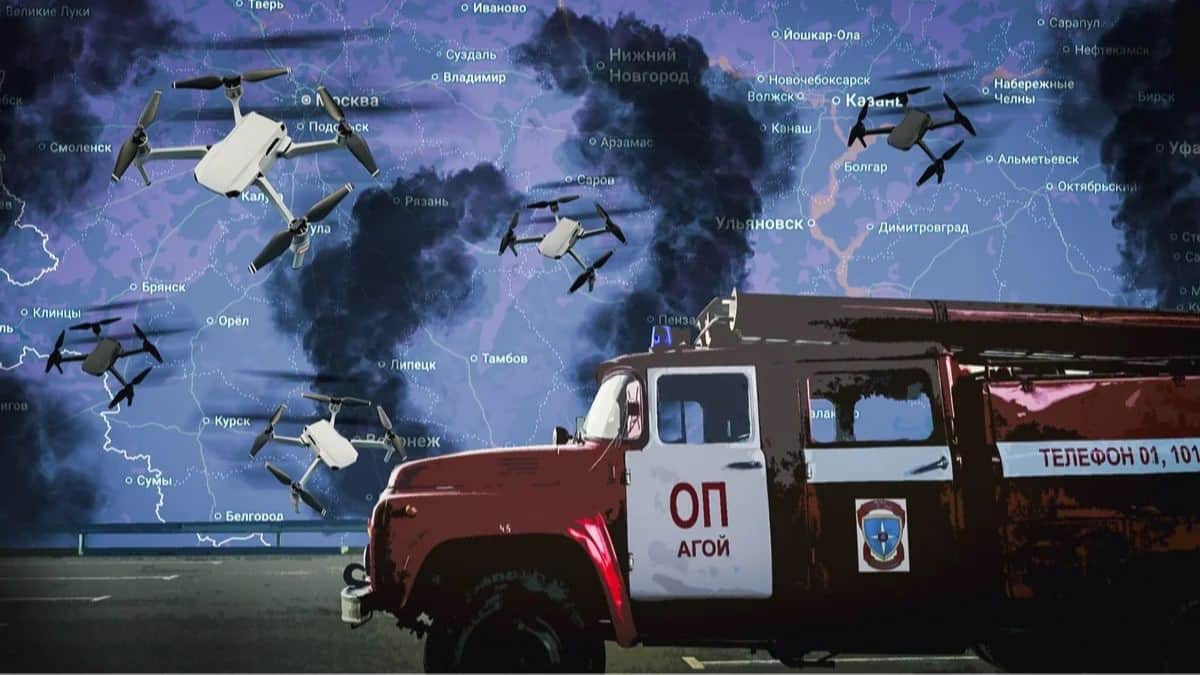
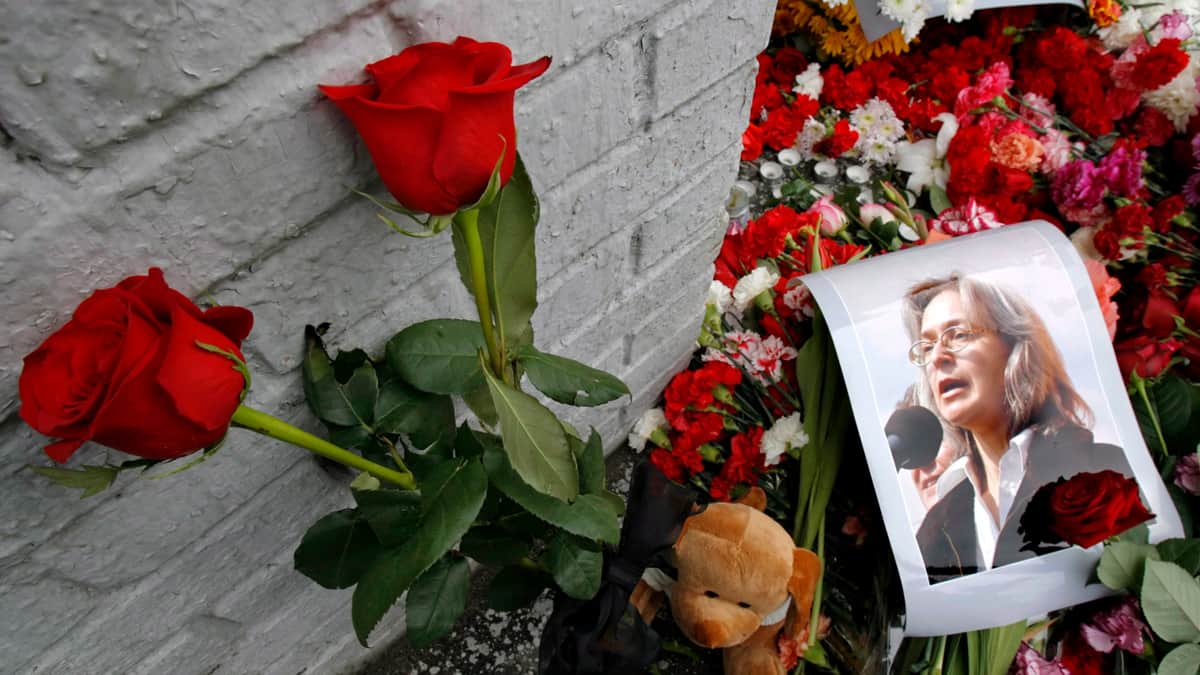
Russia’s most prominent anti-corruption activist, the late Alexey Navalny, was poisoned, incarcerated in Siberia, and probably murdered. The Russian state has no anti-corruption tools to speak of. High-ranking officials and managers of state-owned companies rarely face criminal charges, though they do fall from tall buildings at an above-average rate.
By contrast, Ukraine, at the insistence of its Western partners, established two anti-corruption organs in 2015. The National Anti-Corruption Bureau (NABU) and the Specialised Anti-Corruption Prosecutor’s Office (SAPO) investigate allegations of official wrongdoings no matter how close to the centres of power they must go. NABU recently released a series of slick videos about the current investigation, code-named “Midas”.
Ukrainians protest against ending the autonomy of the country’s anti-corruption agencies, in Kyiv, Ukraine, 30 July 2025. Photo: EPA / Sergey Dolzhenko
Intercepted conversations involving the main suspects, speaking in Russian, are punctuated by NABU’s explanations, in Ukrainian, of who is speaking and about what: mostly men — counting money, swearing, and badmouthing others. One such discussion has Madonna singing La Isla Bonita in the background.
This summer, after Zelensky had parliament pass a law curtailing NABU and SAPO, thousands of young people carrying placards took to the streets in protest. The slogans were spontaneous and direct. One MP carried a sign saying simply, “Ukraine is not Russia”. A veteran with both legs amputated above the knee carried one saying: “We fight for Ukraine, not for your impunity.” A young boy in Lviv changed the name of Zelensky’s party, Servant of the People, into Servant of Lawlessness. Nine days later, the law was repealed.
With Navalny silenced, there are no reports of corruption in Russia because there is nobody to report it.
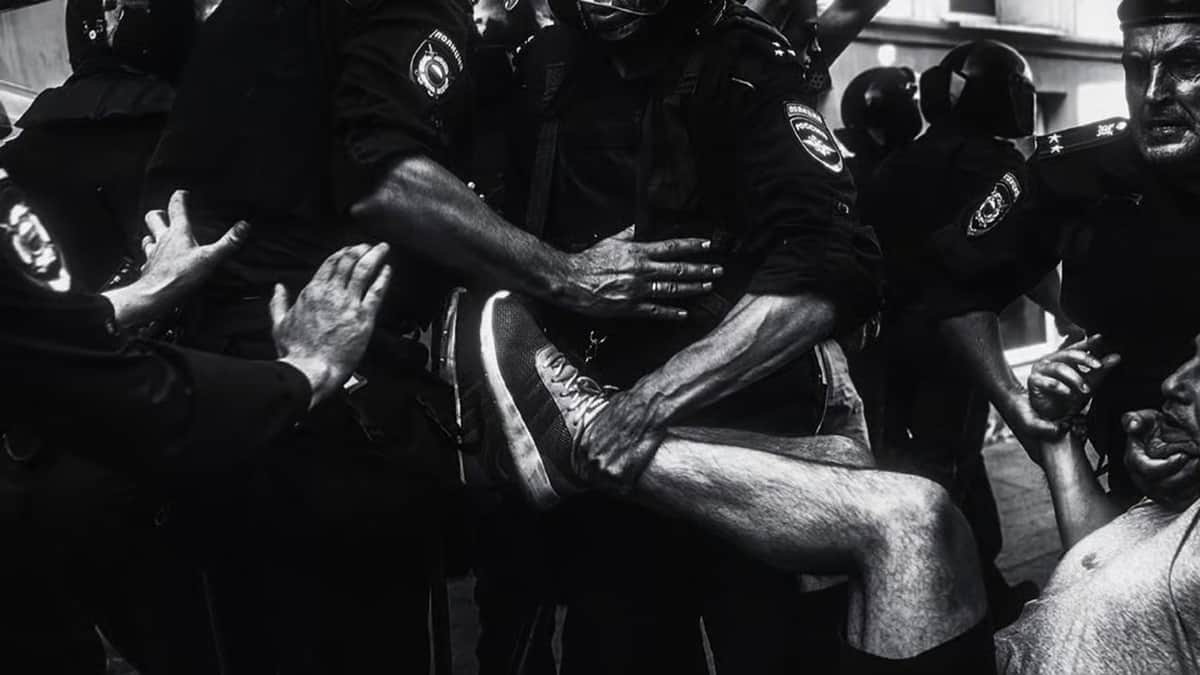
In Russia, there were mass protests in 2012 against electoral fraud by Vladimir Putin, and against corruption eight years ago. Since then, and especially since the start of Putin’s “special military operation” in Ukraine, even the minutest sign of dissent has been crushed. A woman in St. Petersburg who exchanged shop price tags for antiwar stickers was sentenced to seven years in prison. Accessing the wrong content on one’s smartphone can land one in jail as well. One can be arrested even for standing in the street holding up a blank piece of paper.
With Navalny silenced, there are no reports of corruption in Russia because there is nobody to report it, but also because there is no public opinion, no free media, and soon no internet as we know it, only an intranet system like in China or North Korea. WhatsApp and Telegram are gradually being blocked, and even pro-Russian bloggers who consider themselves war correspondents, or voyenkory, are not spared. Recently, some of these voyenkory and pro-Kremlin propagandists were branded “foreign agents”, a term carrying a treasonous connotation ever since the Stalin era.
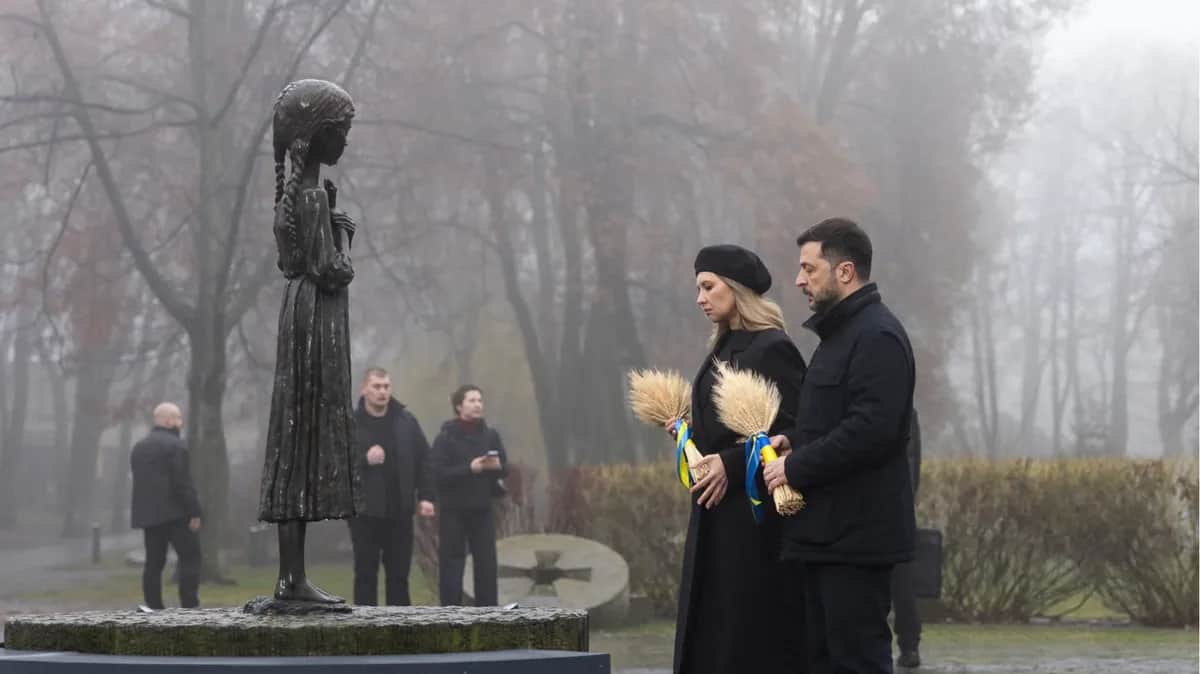
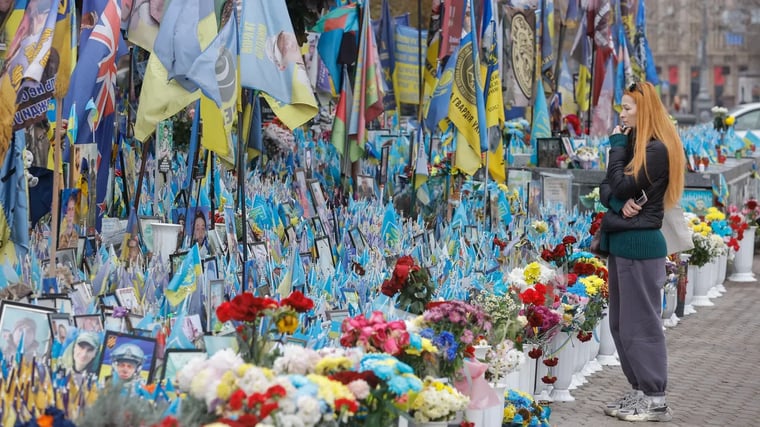
A man holds a Ukrainian flag at the National Museum of the Holodomor-Genocide in Kyiv, Ukraine, 22 November 2025. Photo: EPA / Sergey Dolzhenko
In Ukraine, the investigation of Zelensky’s circle is well documented because the country has these two state organs and a platter of watchdog agencies. All tenaciously uncover dirt and expose it through their own media, as well as online news outlets that anyone can access. Several news organisations broadcast on YouTube, while reports, commentaries, talk shows, and vigorous discussions populate Telegram channels, Facebook, and X. Suggestions of who is involved, and how deeply, abound, sparing no one.
The most prominent among online newspapers is probably Ukrainska Pravda. Its current editor is Sevgil Musayeva, a Crimean Tatar. Under her leadership, the paper’s coverage of the latest corruption scandal would make any Western outlet proud: daily reports in Ukrainian, Russian, and English, opinion pieces, plus Telegram, Instagram, and TikTok channels. A recent video investigation sought to uncover who may have tipped off the main defendant, who fled the country a few hours before his apartment was searched.
The fact that Ukraine aspires to democracy and the rule of law is precisely why Putin is determined to obliterate it.
Ukrainska Pravda also prepared a 20-minute video report on corruption. Viewed by almost 150,000 people in the first three days, it “collected all of Zelensky’s main statements about his attitude towards corruption [since 2019],” according to an accompanying text.
No matter where the corruption investigation leads, the fact that Ukraine is an example of a former Soviet republic that aspires to democracy and the rule of law is precisely why Putin is determined to obliterate it. A state that exposes its scandals and scoundrels, and a public that demands accountability regardless of who the rogues may be, is his worst fear.
This article was first published by Project Syndicate. Views expressed in opinion pieces do not necessarily reflect the position of Novaya Gazeta Europe.