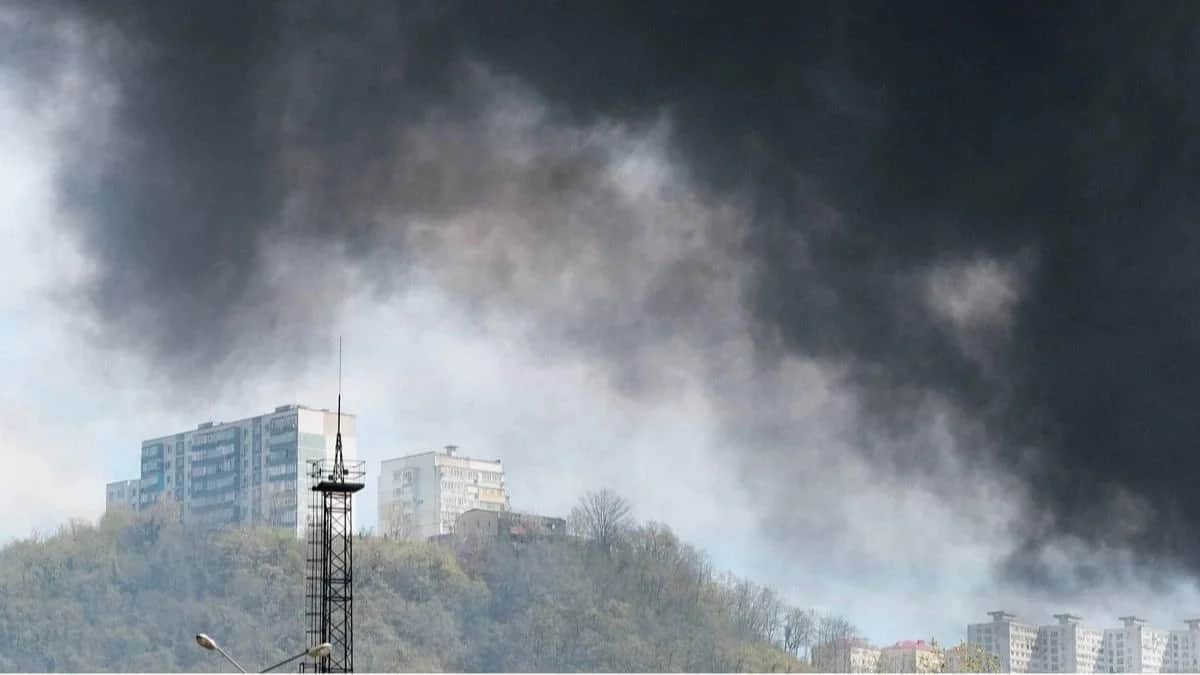
Drone strikes have sparked fires at Russia’s Tuapse oil refinery three times in recent weeks, most recently on 28 April. After each attack, thick smoke has risen over the city and residents have reported a strong smell of burning fuel. Meanwhile, dark streaks have appeared in the river and leaked oil has begun washing up on beaches. On socal media, residents have described air polluted with toxins, cars coated in black residue, and animals covered in petroleum products. Novaya Gazeta Europe reports on what’s currently happening in the city.
The third fire
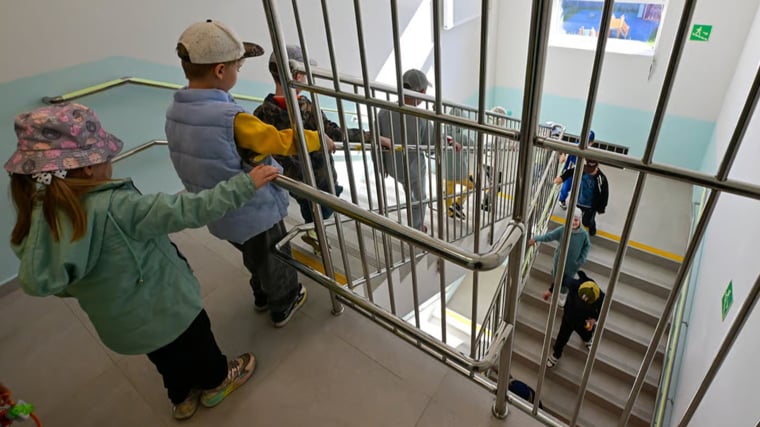
On Monday night, Russia’s Tuapse was hit by its third drone attack this month, sparking a new fire at the city’s oil refinery just days after the previous one was reportedly extinguished. Tuapse Mayor Sergey Boyko called on people living near the refinery to evacuate to a temporary shelter opened at a local school.
The morning after the attack, Krasnodar Governor Veniamin Kondratyev travelled to Tuapse and ordered additional personnel and equipment from neighbouring municipalities. He said that 31 people, including nine children, were at the evacuation point, and that nearby schools unable to receive children due to the fire would redistribute pupils to other facilities.
The strike also knocked out the power supply to a water-pumping station on the refinery site, cutting water to parts of the city. Mobile water tanks were deployed to affected areas.
Emergency Situations Minister Alexander Kurenkov, sent to the region by Vladimir Putin, reported on Tuesday evening that “the main threat [had] been neutralised” and described conditions as “serious, but under control”. By the next morning, regional authorities announced the fire had been localised.
Speaking at a security meeting, Putin said the drone strikes on Tuapse’s energy facilities created “serious ecological risks”, while noting that the governor had reported no major threats and that locals were “dealing with the challenges”.
Krasnodar Governor Veniamin Kondratyev during his visit to Tuapse, 28 April. Photo: Press Service of the Governor of Krasnodar Krai
‘They’ve simply abandoned us’
Tuapse residents have taken to social media to express frustration with the authorities’ response, complaining that officials seem more focused on the economic consequences of the attacks than on public health.
“People are breathing oil, cars are coated in black slime, we’re afraid to let the children outside — and they’re trying to silence us,” one resident wrote.
“This isn’t somewhere far away anymore, it’s right outside our windows. In four years they couldn’t even close the sky over one refinery. There is no protection. They’ve simply abandoned us — we’re like targets in a shooting gallery. And now they’re calling for ‘decisive measures’? Every one of their ‘decisive’ decisions just brings us a new round of hell.”

Some locals were particularly critical of Kondratyev for visiting only after the third strike. “What stopped him from coming the first time? Or the second?” wrote one commenter. “Let him explain what he’s done to prevent a fourth!”
Smoke over Tuapse, 28 April, 2026. Photo: Press Service of the Governor of Krasnodar Krai
Another resident said her niece had started coughing during the previous week’s attack, despite the family not having gone outside since 16 April. She described official air-quality reassurances as “a way of dodging responsibility ahead of a spike in scary regional stats”.
One resident said volunteers helping to clean beaches had been turned away by officials who said they would handle the cleanup themselves. “There are animals dying, sea creatures, children, pregnant women out there,” she wrote. “Are they going to bury it all under sand to be ready for the summer season?”
‘People just show up’
Volunteer groups began organising cleanup operations after the first strikes and have continued since the latest fire. Calls posted on social media recruited helpers for fuel-oil collection on beaches around Tuapse and the nearby settlement of Tyumensky, with equipment, respirators, and lodging for out-of-town volunteers offered at collection points.
Oil along the coast near Tuapse, 26 April, 2026. Photo: Igor Onuchin / TASS / ZUMA Press / Scanpix / LETA
Volunteers say there is no central coordination: “People just show up. They’re given uniforms and respirators, as well as shovels and other equipment.” Oil-containment booms installed on rivers have partially failed under rising water levels, causing a large spill now reportedly being addressed by official services, with volunteers barred from that site.
Two washing stations have been set up for oil-covered dogs and cats. Birds found on the shoreline are being taken to a temporary holding centre and then transported to a wildlife facility in Anapa by volunteer drivers. One volunteer reported that several animals washed and released the previous day had been found covered in oil again “There’s no shelter in the city and fostering capacity is exhausted,” she wrote.