‘Mannequins in the watchtowers’
Even as Russia sends prisoners to war en masse, its prisons face a staff shortage that is undermining inmates' rights

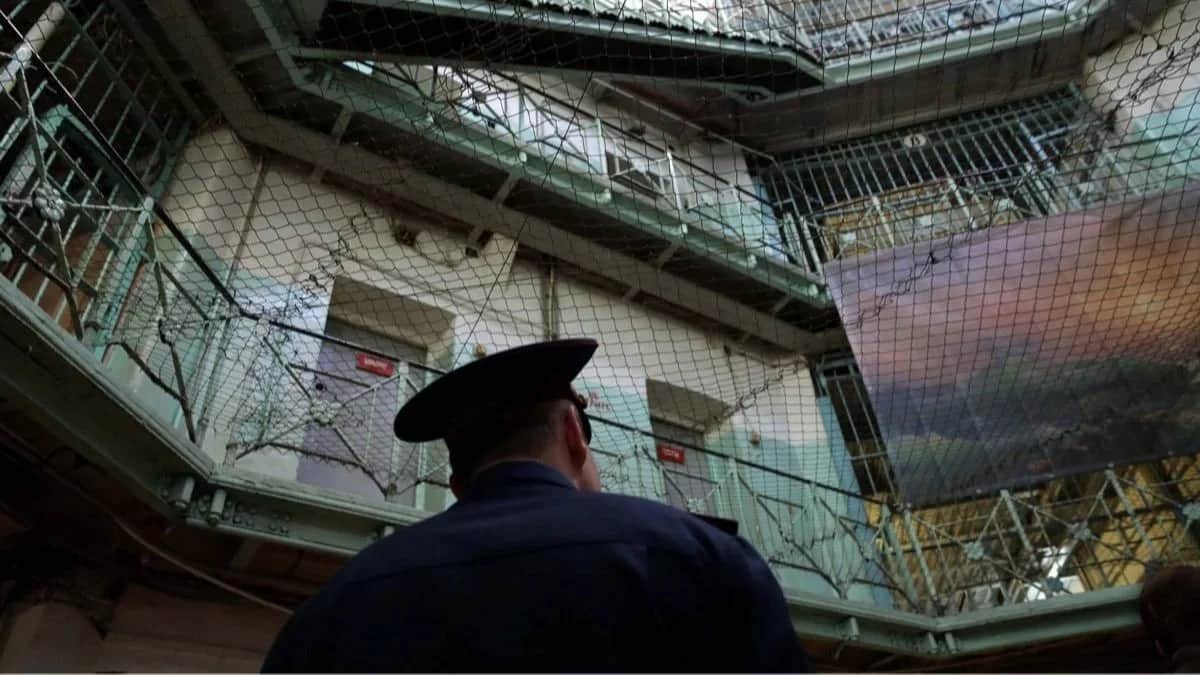
In mid-March, the head of Russia’s Federal Penitentiary Service (FSIN), Arkady Gostev, announced that the agency was experiencing a severe staffing shortage. Earlier, his deputy Alexander Rogozin had stated that the nationwide shortfall averaged 37%, while in some regions, the shortage of junior and mid-level personnel approached 70%. Novaya Gazeta Europe reports on how this lack of staff is affecting prisoners and the Russian penal system as a whole.
Since the Russian Defence Ministry began actively recruiting prisoners for the war in Ukraine, the country’s prison population has sharply declined. According to official statistics, there were 433,000 people held in detention facilities at the beginning of 2023; by 1 January 2025, that number had fallen to 313,000.
Despite this decrease in the number of inmates, the FSIN’s staffing shortage continues to grow.
In an effort to address the deficit, Russian authorities have even lifted the ban on employment in law enforcement agencies for individuals with prior convictions.
Since 2022, according to the human rights project Open Space, 88 detention facilities have been closed in Russia. However, shutting down penal colonies does not solve the problem; it merely leads to further loss of staff from the penitentiary system.
“One colony here was closed, and the inmates were transferred to two others in the same area. But that didn’t make up for the shortages in those two facilities, because the colony that was shut down was already severely understaffed,” Alexandra (name changed for security reasons), a doctor working for the FSIN in one of Russia’s southern regions, told Novaya Gazeta Europe.
According to former FSIN analyst Anna Karetnikova, the agency’s leadership would prefer to transfer staff from closed colonies to other facilities, but this often requires relocation to different towns. As a result, many officers choose instead to resign and find civilian work.
“Housing is one of the most pressing issues,” Karetnikova explained. “There’s simply not enough staff accommodation near the colonies to which employees from closed facilities are supposed to be transferred. But more often than not, people are unwilling to move, owing to family ties and established routines. Instead, they resign, preferring to forgo a salary of 20,000 rubles (€220) rather than leave the place they’ve always called home.”
‘Total chaos’
It’s detainees who suffer most from the FSIN staff shortage. “If a person physically cannot manage to do the work, then it’s obvious that prisoners will be deprived,” said Anna Karetnikova.
This is confirmed by a former political prisoner who was released in 2025. According to her, over the past year many employees of the kitchen and warehouse in the colony where she served her sentence have quit, which significantly worsened the quality of food. After the staffing shortage worsened, there was “total chaos” in the colony: inspectors frequently started working overtime, and “the management sometimes shouted at them even more harshly than at the inmates.” To make up for the lack of staff, the activist said, they began hiring “all kinds of random people,” who quickly quit after encountering the realities of working in a penal colony.
Employees of the FSIN system perform several tasks with different levels of priority, Karetnikova explained. The top priorities include everything connected with courts and investigations — for example, conducting searches of suspects. Work that involves serving prisoners — checking letters, organizing meals, escorting them to the bathhouse — gets pushed into the background.
“Naturally, understaffing in the FSIN affects prisoners’ rights, not their obligations,” Karetnikova said. “Letters are delivered more slowly, because if the censor is on leave, then an officer reads them. But obviously, he will first deal with all his primary duties — taking confessions, properly intimidating everyone — and only then check the letters.”
Karetnikova notes that prisoners are very sensitive to staff shortages. The atmosphere in an understaffed colony or detention centre becomes tense: first inmates begin to complain, and then “disturbances” may start — refusal to return to cells after inspections or to leave them when ordered by inspectors.
Salaries half the national average
For a long time, according to employees who spoke with Novaya Gazeta Europe, service in the FSIN was attractive due to high salaries, early retirement, and a one-time payment for housing. Today, however, the salaries of FSIN inspectors in Russian regions are about half the national average.
“There used to be queues of doctors and nurses wanting to work in the FSIN, but now they don’t come, because salaries in [civic] healthcare are much higher than ours,” said employee Alexandra. “Why would medical staff work with convicts for less money, when they can work with ordinary patients who will thank you for your help?”
According to Karetnikova, her doctor colleagues in the FSIN earn on average 30,000 to 50,000 rubles (€330–€550), while doctors with the same qualifications and experience in civilian clinics and hospitals in her region earn about twice as much: 80,000 to 100,000 rubles (€880–€1100).
She also believes that the main reason for the staff shortage in the FSIN is uncompetitive pay:
“For example, the head of a detention facility during the period when I worked earned 70,000–80,000 rubles (€770–€880), while a junior inspector working a 24-on/72-off schedule received far less — around 35,000–40,000 rubles (€385–€440), including bonuses for years of service and rank.”
According to the Russian statistics board, the average salary in Moscow at the beginning of 2026 exceeded 173,000 rubles (€1,900). Yet none of the vacancies currently advertised online for Moscow’s Butyrka pre-trial detention centre come close to this level.
The dangers of negligence
The staff shortage in the FSIN is becoming a serious ordeal for those who continue to serve in the penal system. While the salaries remain the same, the workload has only increased.
“It’s impossible to work there now,” said Veronika (name changed), a former employee of a prisoner transport unit. “The salaries are low, while the workload and demands are insane. There aren’t enough people — sometimes they even put mannequins on the watchtowers to hide the staff shortage from the prisoners. Convoy officers practically live at work, and on top of that staff are treated appallingly!”
When she began her service in the agency, her department had about 600 staff members; now the number barely exceeds 200.
Other sources said that overtime has become a fixture of FSIN employees’ lives.
“If you’re supposed to go home in the morning but don’t manage to finish what you have to do, you’ll go home in the evening instead. These extra hours are often not paid,” said Anna Karetnikova.
On multiple occasions, she added, she has observed a single employee covering two or three posts at once. According to internal regulations, each inspector is responsible for a certain number of prisoners.
“He has to look them in the eye, register their requests, open doors for them, close the windows…” Karetnikova explained. “And if his partner doesn’t show up, he’ll be covering two or even three posts simultaneously. But he simply cannot physically do everything that’s required. Because of this, the risk increases that he’ll miss something or show some negligence. Someone could, God forbid, hang himself or escape — and then the officer himself could end up being imprisoned for it.”
‘Defenders of the Fatherland’
In March 2025, FSIN Director Arkady Gostev stated that 3,592 current and former employees of Russia’s penal system had “joined the ranks of the defenders of the Fatherland” and gone to fight in the war in Ukraine. Of these, he said, 249 had been wounded, and 343 had been killed.
FSIN employee Alexandra said that several of her colleagues had signed contracts with the Defence Ministry and gone to the front due to low salaries.
"On one hand, prisons are closing — and in many regions of Russia, prisons are quite literally the lifeblood of their towns," Yuri Borovsky, a human rights advocate with Russland hinter Gittern (the German legal entity of the Russia Behind Bars bars foundation), told Current Time. "When your main employer disappears, what are your options? You can sign a contract and go to war. And ideologically, it even feels like the right thing to do — you're defending your homeland, paying your debt to it."
Anna Karetnikova, who worked in Moscow, had a different perspective: in the capital, she said, FSIN employees are more likely to be reluctant to be sent to the front, despite having official exemptions.
“I worked in a relatively well-off region,” she said. “No one there was particularly eager to go to war, and they were even quite wary of mobilisation, even though they technically had exemptions. But I can imagine that this depends greatly on the region. In some places and for some people, this is a lot of money, so a certain number probably do choose to enlist.”
According to Alexandra, when Vladimir Putin announced mobilisation in September 2022, there was hope that young people would fill vacant positions in order to obtain exemptions from being sent to the front — but those hopes did not materialise. A few people did join the colony, but soon quit when it became clear that mobilisation would not become universal.
The war has become not only an alternative source of income for FSIN employees, but has also fundamentally reshaped the nature of their work. As former FSIN employee Veronika explained, the workload of convoy officers escorting prisoners during transfers has increased significantly. Whereas their duties were once limited to transporting inmates between facilities, they are now responsible for delivering them from penal institutions to major border cities, such as Rostov-on-Don, where prisoners who have signed contracts are handed over to the Ministry of Defence.
“Now they have these ’heroic’ convoys every day,” she said. “They’re transporting these future front-line soldiers. The workload has increased dramatically.”
At the same time, relations with prisoners have become more strained. Previously, detainees were heavily dependent on FSIN personnel; now, however, they can secure release at any moment by signing a contract with the Ministry of Defence.
“It’s now difficult for staff to deal with inmates: before, you could take pride in being an officer, while the inmate was ‘just a convict.’ But today he’s a convict, and tomorrow he’s a ‘heroic defender of the Fatherland’—and he may remember some grievance against you,” Karetnikova noted. “You can’t even raise your voice at him anymore.”