Dissident tells Russia’s Supreme Court Putin is ‘new Hitler’ after his appeal is rejected

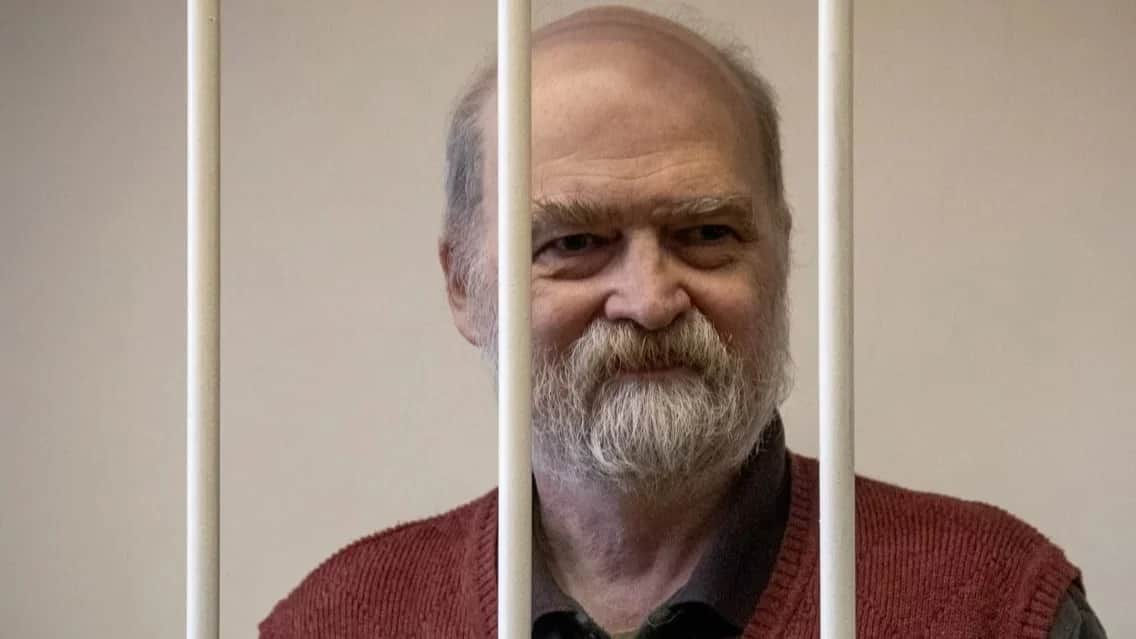
Dissident Alexander Skobov told Russia’s Supreme Court that Vladimir Putin was “the new Hitler” on Wednesday after it upheld a 16-year prison term handed to him last year for “justifying terrorism” in a Telegram post, SOTAvision has reported.
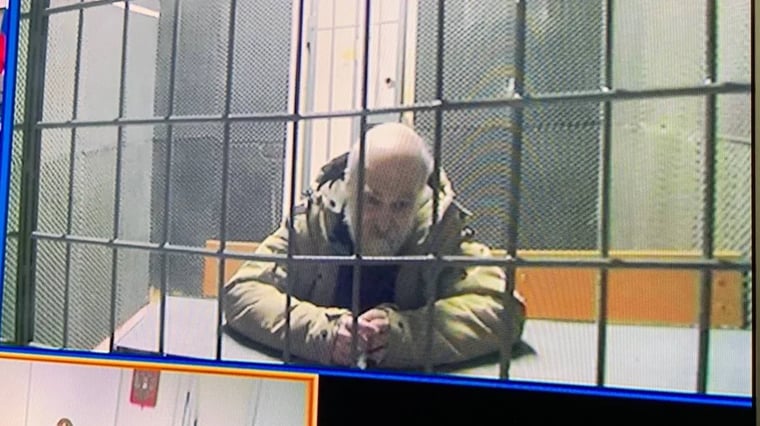
Attending the hearing by video-link from the penal colony where he is serving his sentence, Skobov, 68, told the court that he had lodged the appeal for the sole purpose of “calling on European countries to join the war and defeat the Russian Federation.”
During the hearing, Skobov shouted “Death to the Russian fascist invaders! Death to Putin, the new Hitler!”, before being cut off by the judge. He also told his wife, Olga Shcheglova, that he was doing “everything possible to meet the Ecuadorian frog”, a reference to the toxin used to murder imprisoned opposition leader Alexey Navalny.
The Supreme Court dismissed Skobov’s appeal, and upheld the 16-year sentence he was handed for “justification of terrorism” and “participation in the activities of a terrorist organisation” over a Telegram post Skobov wrote arguing that Putin could “not be overthrown with ‘wallets’” and calling for him to be hit with missiles instead.
Skobov, who was also found guilty of membership of the Free Russia Forum, a Russian opposition platform that has been deemed a terrorist organisation in Russia, has always maintained his innocence, and has used each one of his court appearances to criticise Putin and the war in Ukraine.
A well known Soviet-era dissident, Skobov was twice confined to three-year stints in a psychiatric hospital for his pro-democracy activism under communism, a common fate for political dissidents at the time.
Skobov refused to leave Russia when he was declared a “foreign agent” in March 2024, and was arrested the following month. Since his detention, his general health, and his eyesight in particular, have deteriorated significantly, and his family and supporters have warned that a long custodial term would effectively be a death sentence.
Shcheglova told SOTAvision that her husband was actually doing “quite well” in prison, and had been feeling less ill than he had been before he was imprisoned, adding that “the will to resist has a revitalising effect on people.”