StoriesCulture

One last dance

Kirill Serebrennikov brings his acclaimed ballet Nureyev to a new audience at Berlin’s Deutsche Oper

One last dance

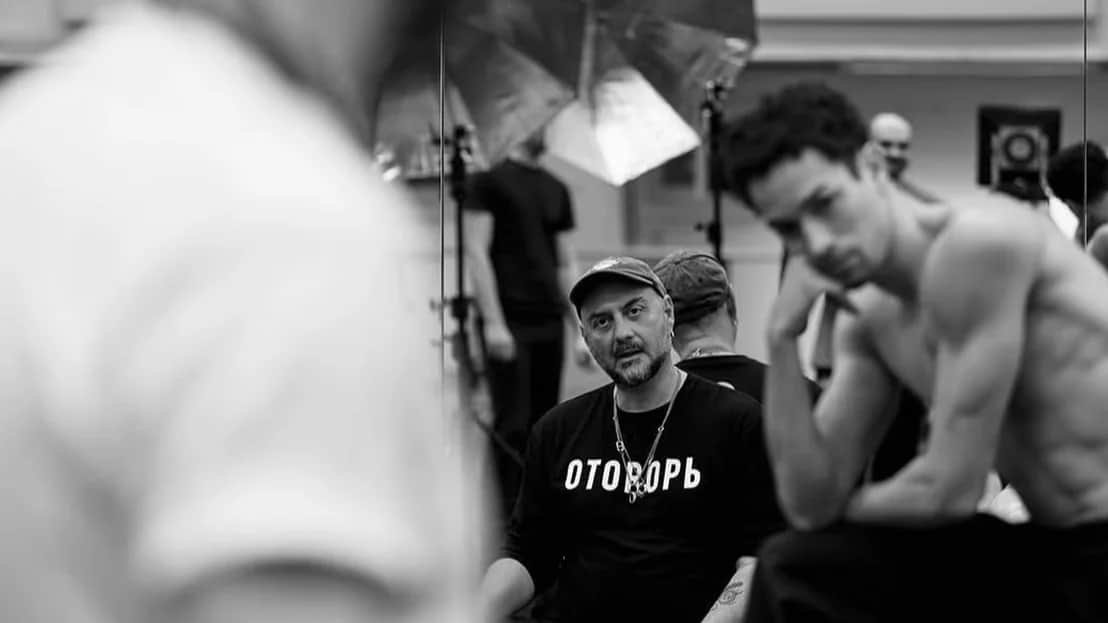
Kirill Serebrennikov during rehearsals for Nureyev. Photo: Carlos Quezada

More than eight years since Kirill Serebrennikov’s ballet Nureyev premiered at Moscow’s Bolshoi Theatre in 2017, the groundbreaking work has been given a revival in Berlin. The ballet, about an artist who fled his own country never to return, has ultimately followed the same path as its protagonist.

Despite initially being performed on Moscow’s most prestigious stage, Nureyev’s queer subtext was at odds with prevailing Kremlin orthodoxies, which led to the ballet all but being cast out of the Russian cultural sphere. Or, in the words of ultranationalist Russian film director Nikita Mikhalkov, “If you want to hang Nureyev’s cock on the back of the stage … why do it in the Bolshoi Theatre?”

Nureyev was quickly relegated to the Bolshoi’s repertoire and has not been performed since 2021, after Serebrennikov’s public condemnation of the invasion of Ukraine and the tightening of a law banning so-called “LGBT propaganda” saw all future performances cancelled.

However, almost a decade after its ill-fated first production, and after the seismic changes caused by four years of war in Ukraine, Nureyev’s revival in a very different cultural context outside Russia has been the cause of great excitement among both critics and audiences alike.

David Motta Soares as Rudolf Nureyev. Photo: Carlos Quezada / Staatsballett Berlin

David Motta Soares as Rudolf Nureyev. Photo: Carlos Quezada / Staatsballett Berlin

“We weren’t trying to predict anything; we were simply telling the story of a man — an artist fighting for freedom, for the right to be himself, for the right to live and work as he sees fit,” says composer Ilya Demutsky, who wrote the music for the ballet. “But art sometimes has a strange quality; it begins to reflect reality even before that reality has fully manifested itself.”

When Nureyev premiered at the Bolshoi Theatre in 2017, it was seen as the story of a Soviet dancer who, at Paris’s Le Bourget Airport in 1961, did something that changed not only his own life forever, but that of ballet as an artform itself.

The Berlin production tells the story not only of a ballet legend, but also that of a country that has once again come to mistrust anything that is free, uncomfortable or uniquely talented. A migrant like its protagonist, Nureyev the ballet became a sensation in the West even before its premiere, much as Nureyev the man did, and the Berlin production is already the hottest ticket in town, with performances selling out faster than the posters promoting them can be put up.

Staging a ballet about the Soviet Union’s most famous dancer was the brainchild of the Bolshoi’s former director, Vladimir Urin, whose readiness to push the envelope artistically was the product of a very different cultural climate in Russia. The powers that be have always had a complicated relationship with Nureyev, who though undoubtedly the greatest dancer of the 20th century and cultural icon, was also a defector and an unashamed homosexual who died of AIDS.

Former Bolshoi Theatre director Vladimir Urin speaks to the press at the premiere of Nureyev in Moscow, 8 December 2017. Photo: EPA/YURI KOCHETKOV

Former Bolshoi Theatre director Vladimir Urin speaks to the press at the premiere of Nureyev in Moscow, 8 December 2017. Photo: EPA/YURI KOCHETKOV

Nevertheless, Urin pushed ahead with the project and invited Russian theatre’s enfant terrible Serebrennikov to direct it, and Yury Possokhov to choreograph. However, as the storm clouds closed in on the relatively tolerant cultural climate of the 2010s in Russia, the ballet’s premiere was postponed several times on orders from above, with one statement put out by the Bolshoi saying simply: “The production is not ready.”

The rot truly set in during the summer of 2017, when Serebrennikov was placed under house arrest after being accused of embezzling approximately $1 million in state funds for the Gogol Centre, the contemporary theatre he ran at the time. Nevertheless, Serebrennikov continued to direct the ballet from his apartment, sending written and video feedback on rehearsals to the performers and crew.

When the premiere was finally given the go-ahead in December 2017, it became one of the most politically charged and surreal events in Russian cultural history. Members of the Kremlin elite, including Putin’s press secretary Dmitry Peskov and director of Russian state TV, Konstantin Ernst, gave the performance a standing ovation that Serebrennikov was unable to receive in person, his request to attend the premiere having been denied.

Tellingly, Bolshoi Theatre prima ballerina Svetlana Zakharova, who danced in the original production, spent the evening of the ballet’s Berlin premiere last Saturday giving interviews about how Russian culture had been cancelled in the West, while the audience at the Deutsche Oper awarded the revival with a standing ovation, one that Serebrennikov was able to accept this time.

Kirill Serebrennikov gestures to well wishers after being placed under house arrest by a court in Moscow, 23 August 2017. Photo: EPA / SERGEI ILNITSKY

Kirill Serebrennikov gestures to well wishers after being placed under house arrest by a court in Moscow, 23 August 2017. Photo: EPA / SERGEI ILNITSKY

The story of the ballet’s revival begins with German choreographer Christian Spuck’s decision to fly to Moscow especially to attend the 2017 premiere of Nureyev. Spuck recalls being stunned by the production and moved to tears by the performance, resolving then and there to bring it to Germany one day. A few years later Spuck found himself in a position to make that happen when he was appointed artistic director of the Staatsballett Berlin — the ballet company of the Deutsche Oper, on whose stage Nureyev once danced.

“I realised straight away that I wanted to bring this ballet to Germany, even before all the events that unfolded involving both the ballet and Kirill. I wanted to stage it on this very stage, where Rudolf Nureyev himself had danced,” Spuck told Novaya Europe.

“The German public adored Nureyev. When I became artistic director, we set about making this project happen. … this ballet had to live on. Now, when this ballet is banned in Russia, when homophobic laws have been passed, and artists are forced to leave the country, this production has special significance for both us and the audience. It helps us understand what it means to be free, what it means to make a choice and remain true to oneself, and what the price of freedom is,” Spuck said after the first performance.
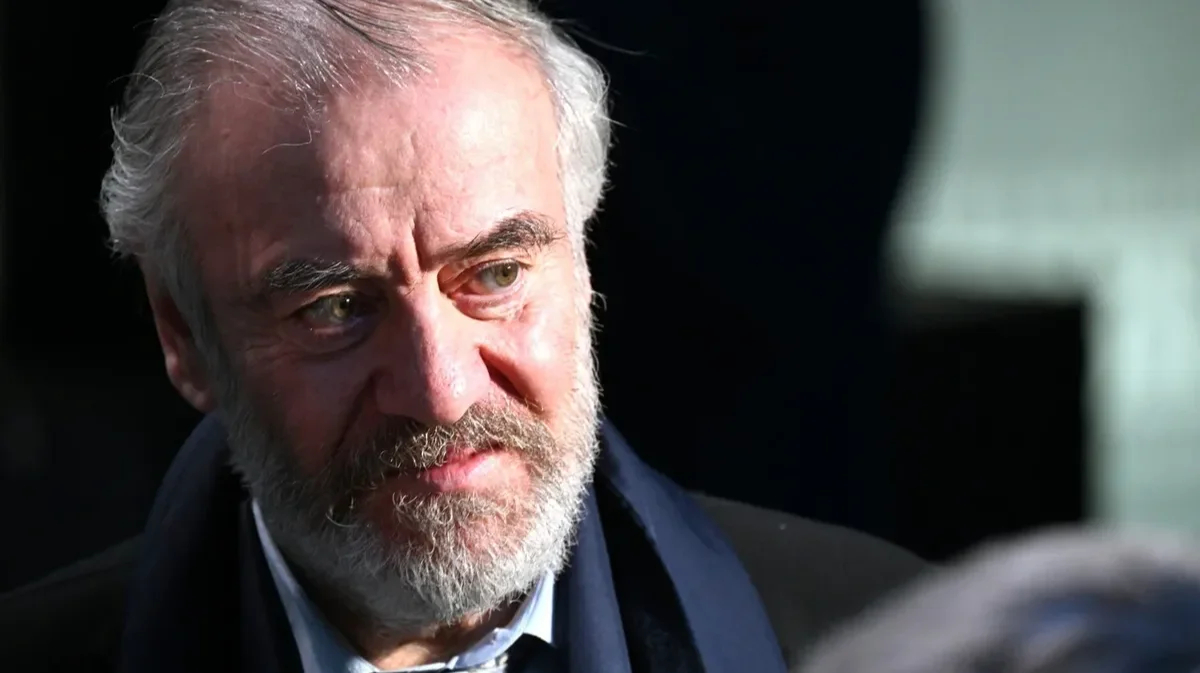
Finally able to attend the premiere of his work, Serebrennikov told Novaya Europe how important it was to him that he recreate the ballet that moved Christian Spuck to tears in Moscow. “That’s why we decided to create a sort of time capsule, to stay as close as possible to that production at the Bolshoi Theatre. It’s a reflection on dance. A ballet about ballet. About an artist who overcomes his own ego, about a man who is fragile, yet whose art outlives his body.”

Restaging his ballet in a foreign city with an international troupe of dancers also proved to be an eye-opening experience, Serebrennikov says. “They are very young people. For them, our tragedies of emigration or the drama of a banned performance are almost history. They’ve grown up in freedom. For them, queerness isn’t a problem, and emigration isn’t a tragedy either. They’re all from different countries. They simply moved to where it’s interesting to work.”

“I told them about the rehearsal at the Bolshoi Theatre, when everyone already knew that this would be the final performance and it would never be staged again. At the end of the rehearsal, the ballet dancers gave themselves a standing ovation, in tears,” Serebrennikov recalls.

Both on stage and in the auditorium, there are many present who also had their own personal Le Bourget Airport moment in 2022.
“A few officials were sitting in the empty auditorium, and the dancers shouted obscenities at them from the stage. It was practically a mutiny, which is completely out of character for ballet dancers. Ballet is a very disciplined environment. But at that moment, it was a genuine human reaction. And I realised just how important this performance had become to so many people.”

In its Berlin iteration, Nureyev has become a formula for life. Both on stage and in the auditorium, there are many present who also had their own personal Le Bourget Airport moment in 2022 and leapt into the unknown.

Fittingly, Rudolf Nureyev is played by Brazilian dancer David Motta Soares, himself a former principal dancer at the Bolshoi who left Russia after the invasion of Ukraine and is now a principal with the Staatsballett Berlin. “He is absolutely incredible,” Serebrennikov says, “The audience holds its breath when they see him on stage. His Nureyev combines natural nobility, explosive passion and an inner sensuality. He is 100% Rudi.”

David Motta Soares. Photo: Stattsballett

David Motta Soares. Photo: Stattsballett

Approaching the role with great single-mindedness, Motta Soares says that he read books and watched documentaries about Nureyev for three months straight to prepare himself for the role. “Sometimes I couldn’t tell whether I was performing a role or experiencing my own emotions,” he says.

What made Serebrennikov, who is known for his aversion to revisiting old productions, make an exception for Nureyev? “Yes, I don’t like doing that. I feel we must move forward, rather than dwelling on the past. Productions are a reflection of what we’ve experienced, of who we were a few years ago. And all that is gone now. No man ever steps in the same river twice.”

“But Nureyev has, in some miraculous way, become a historical fact. A whole mythology has sprung up around it: stories, legends, gossip. Its revival is a separate feat of immense collective effort,” Serebrennikov continues, adding that he sometimes feels that Nureyev himself “really wanted this production to be revived. He did everything to make it possible, from some realm of his own. Rudy always lives where there is freedom. That is his true homeland.”

shareprint
Editor in chief — Kirill Martynov. Terms of use. Privacy policy.