Just desserts
Do Russian former combatants who claim asylum in Europe really pose a risk to EU security?

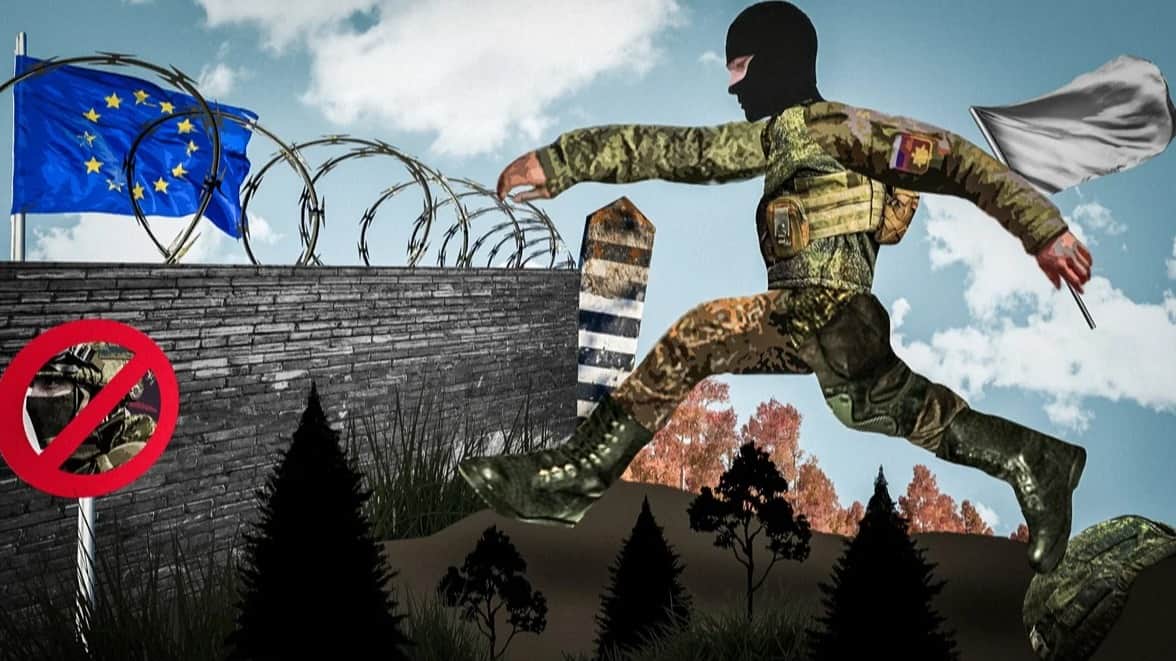

In recent years, only a few dozen deserters from the Russian military have been granted political asylum in the European Union. However, if the leaders of eight EU countries who have called for stricter visa rules for all Russians who have taken part in the war in Ukraine get their way, Europe may no longer be an option at all.
Earlier this month, eight EU member states publicly called on the bloc’s leadership to tighten visa regulations for Russian citizens who served in the country’s war in Ukraine. In a letter to European Council President António Costa and European Commission President Ursula von der Leyen, leaders including German Chancellor Friedrich Merz and Polish Prime Minister Donald Tusk warned that the war was creating longer-term internal security risks for the Schengen free-movement area, and argued that once demobilised or rotated out of the war zone, Russian soldiers might attempt to travel to the EU, where they could potentially contribute to a rise in organised and violent crime.
“Individuals who have participated in the war as part of the armed forces of the aggressor state pose serious internal security risks, including through violent crime, organised criminal networks, extremist movements or hostile state activity in the broader context of Russia’s hybrid action,” the letter said. “Among them, there are more than 180,000 previously convicted criminals who were recruited from Russian prisons and sent to the front.”
Indeed, the number of visas being issued to Russian citizens continues to rise despite the war in Ukraine, with 80% of the approximately 670,000 Schengen visa applications made by Russian citizens last year being granted, a figure that makes Russians one of the five nationalities granted the largest number of EU visas.
“Any entry may therefore have serious consequences for the security of a Member State or the entire Schengen area,” the open letter continued, before its authors urged the European Commission to prepare “targeted amendments” to the EU’s Visa Code “or other appropriate instruments with a view to enabling a coordinated European approach”.
That said, the EU has significantly tightened access to the bloc for Russian citizens since Moscow’s full-scale invasion of Ukraine in 2022, and most Schengen visas are now issued for shorter periods and with more limited validity.
Military personnel in Russia generally don’t hold foreign passports — either they’ve never been issued one, or they surrendered it to the authorities upon enlisting.
On 24 February, he found himself crossing the Ukrainian border with his unit and being on the front line, where he says he immediately realised that the Russian military was totally unprepared to fight a war. Assigned to work in military communications, Polyakov was constantly moving between positions under fire and narrowly escaped death on multiple occasions. After several months of the war, he decided to leave the army for good and, having been granted leave, returned to Russia.
When mobilisation was announced in September 2022, it became clear that he would soon be sent back to the front, and so Polyakov bought a flight to Kazakhstan, where he lived in fear for the next two years. Being wanted by the Russian authorities, Polyakov only used cash and rarely went outside, fearing arrest or extradition.
During that time, however, he got to know human rights activists and other deserters, and began helping to verify the stories of Russian soldiers who had also fled the army. Eventually, he began to speak out publicly against the war and got involved in various human rights initiatives alongside a group of deserters from the Russian military.
After a year and a half of negotiations, Polyakov and five other deserters from the Russian army were eventually granted laissez-passer documents allowing them to fly to France, where they applied for political asylum upon arrival.
Polyakov’s case is not unique. Before the war, Kamil Maksimov* was studying to be an astronomer, worked as a technician and had no plans to join the military. That all changed in 2023, however, when he was detained on drug charges. According to him, he was given a choice: go to prison or enlist to fight. He reluctantly agreed to sign a military contract, hoping that he’d have the opportunity to desert once deployed.
After completing his basic training, Maksimov was sent to the front in the Donetsk region, where he was soon wounded and transferred to a unit he describes as a “suicide battalion” for troublemakers. Realising he would soon be sent back to the frontline, Maksimov decided to desert and shot himself in the foot. After recovering from his injury at a hospital in Russia, he absconded to the city of Kazan once he got wind that his redeployment was imminent.
Still recovering from his self-inflicted injury, Maksimov spent several months in hiding during which he barely left the house. As soon as he was well enough, he fled Russia through Georgia, where he decided to claim asylum in France. Upon arrival in Paris, he told his story to an immigration officer, applied for political asylum and was given a temporary document allowing him to live in the country, access healthcare and receive benefits.
Noting that around 85% of those supported by Get Lost never saw active combat in Ukraine, and weren’t even in the occupied territories, Sverdlin wonders whether those reviewing asylum applications in Europe will consider such details or simply refuse anybody who has ever been in the Russian army. He suspects the latter approach is more likely to prevail.
“It would be right to create a separate track for Russian deserters and conscientious objectors to obtain refugee status. These people risk being imprisoned in Russia, and if they’re found to have deserted their units they face up to 15 years behind bars,” Sverdlin says. “Establishing a working procedure for deserters to obtain political asylum would increase the number of deserters from the Russian army and thus help Ukraine.”
Earlier this year, InTransit, an organisation that assists Russians being persecuted for political reasons to leave the country, told Novaya Europe that attitudes towards Russian deserters in Europe had noticeably hardened even since the early years of the war in Ukraine. Northern Europe in general and the Baltic states in particular don’t generally accept Russian military deserters, and have even, in some cases, forced them back across the border, InTransit said.
Only a few countries — such as Germany, France and Spain — consider asylum claims made by deserters in a relatively objective manner, according to InTransit, though there are only a few dozen cases of this happening, while the majority of Russian deserters remain in transit countries such as Armenia.
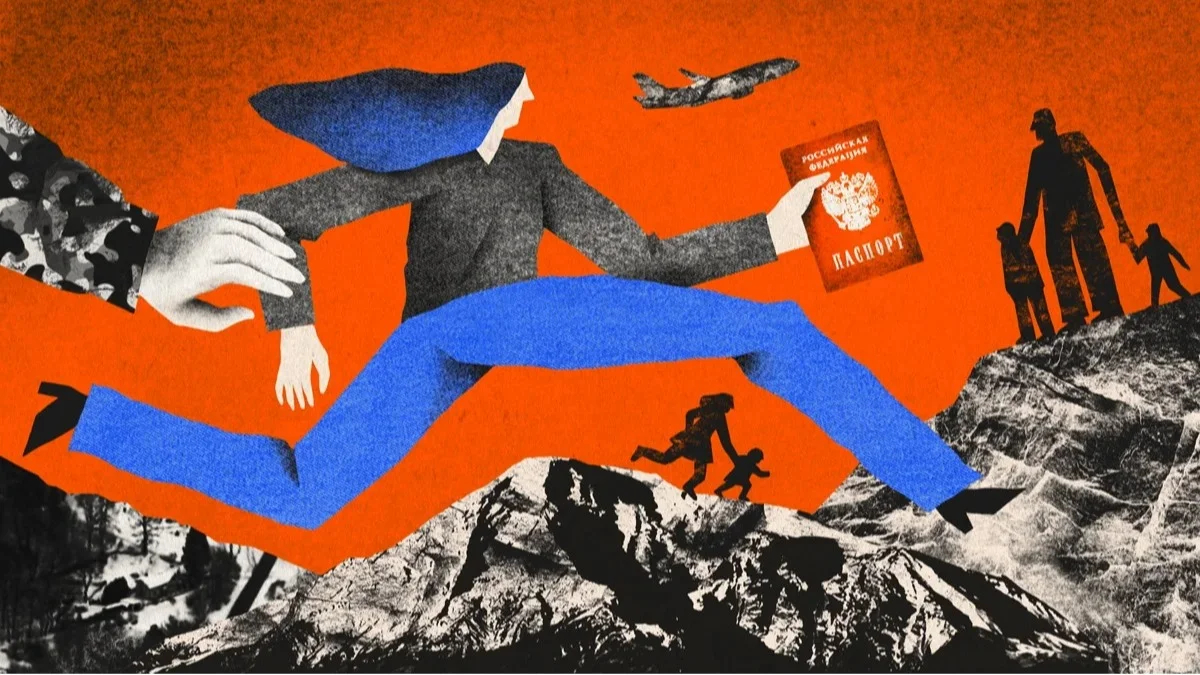
According to Anastasia Burakova, the founder of The Ark, an NGO that supports anti-war Russians living in exile, Estonia has already introduced a ban on issuing visas to Russians who fought against Ukraine. “Last summer, the Baltic and Nordic countries met to discuss such a measure. Overall, this is a step towards individual, rather than collective, responsibility and an assessment of the danger to society. I think other EU countries may soon adopt this approach,” Burakova warned in January.
At the same time, The Ark and Get Lost are currently discussing proposals to allow exceptions to be made for former Russian soldiers who did not commit war crimes and often didn’t even reach the front line, and for those who fled the country before they could be drafted, or were conscripted against their will. “Such people often become key witnesses in investigations into war crimes,” Burakov notes.