Russia launches first batch of satellites in bid to create Starlink rival

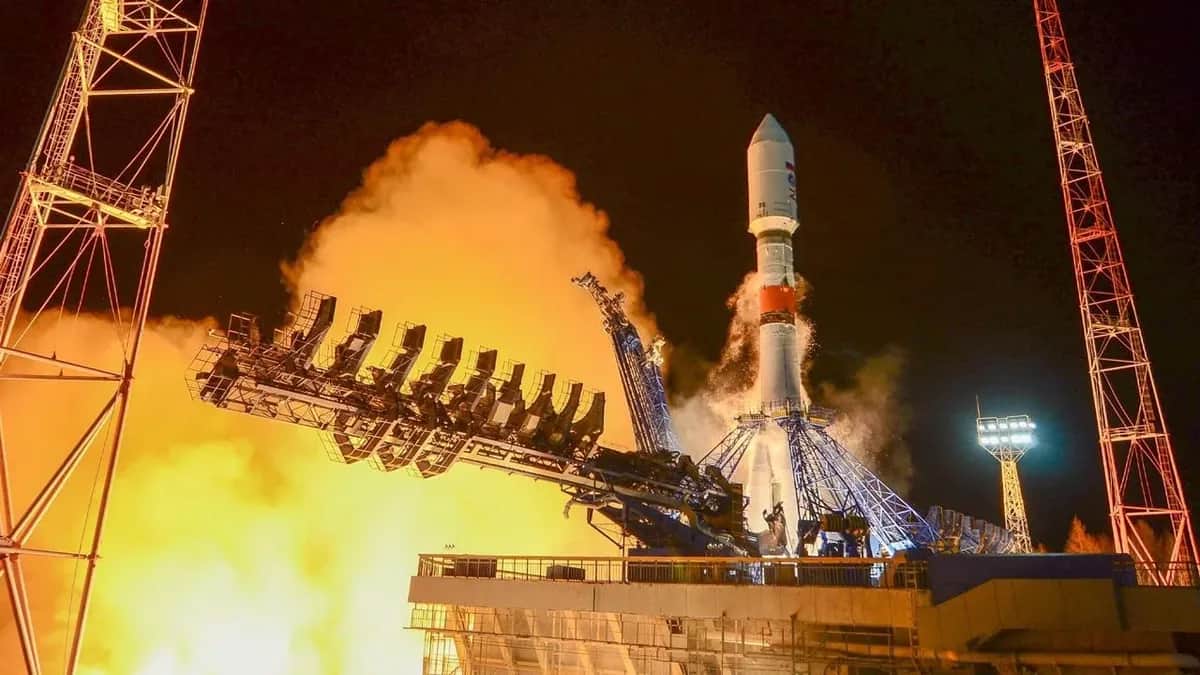
Russia launched its first 16 high-speed internet satellites into orbit on Monday evening as it attempts to develop Rassvet (Dawn), its own version of SpaceX’s Starlink network, according to aerospace company Bureau 1440.
Bureau 1440 said that the launch marked the “transition from the experimental phase to the development of a communications service”, after two previous test launches for the project in 2023 and 2024.
The satellites were transported into space by a Soviet-developed Soyuz rocket that took off from the Plesetsk Cosmodrome, in northern Russia’s Arkhangelsk region. “Dozens of launches and hundreds of satellites in Russia’s low-Earth orbit constellation are to come, enabling communications on a global scale”, Bureau 1440 added.
The Kremlin plans to invest over 100 billion rubles (€1 billion) in Rassvet by 2030 as part of its Data Economy and Digital Transformation project, Russian business daily Kommersant reported.
The satellite internet system is officially intended for civilian use, providing internet connections to passengers on flights and train journeys, oil and mining operations in remote areas, as well as to emergency services. However, experts now believe that the Kremlin is now more interested in the project’s military applications.
In February, Elon Musk restricted the use of his SpaceX Starlink satellite communications system in Ukraine to exclude terminals acquired illegally by the Russian armed forces, depriving Moscow of a key communications tool on the front lines. Over 50,000 Starlink terminals have been provided to Ukraine since the start of the war.
Rassvet has suffered various delays, and Monday’s launch had originally been scheduled to take place late last year. According to the official project timeline, 172 satellites are to be launched by the end of 2026, but it is unclear whether this can still be achieved.
According to Russian space commentator Vitaly Egorov, approximately 250 satellites would need to be launched before Rassvet could become a functional communications system. By comparison, over 10,200 satellites are currently used by SpaceX to run Starlink.