CommentPolitics

New Russia, old problems

How a reclaimed imperial term came to represent something far more than a mere territorial claim for Russian soldiers

New Russia, old problems

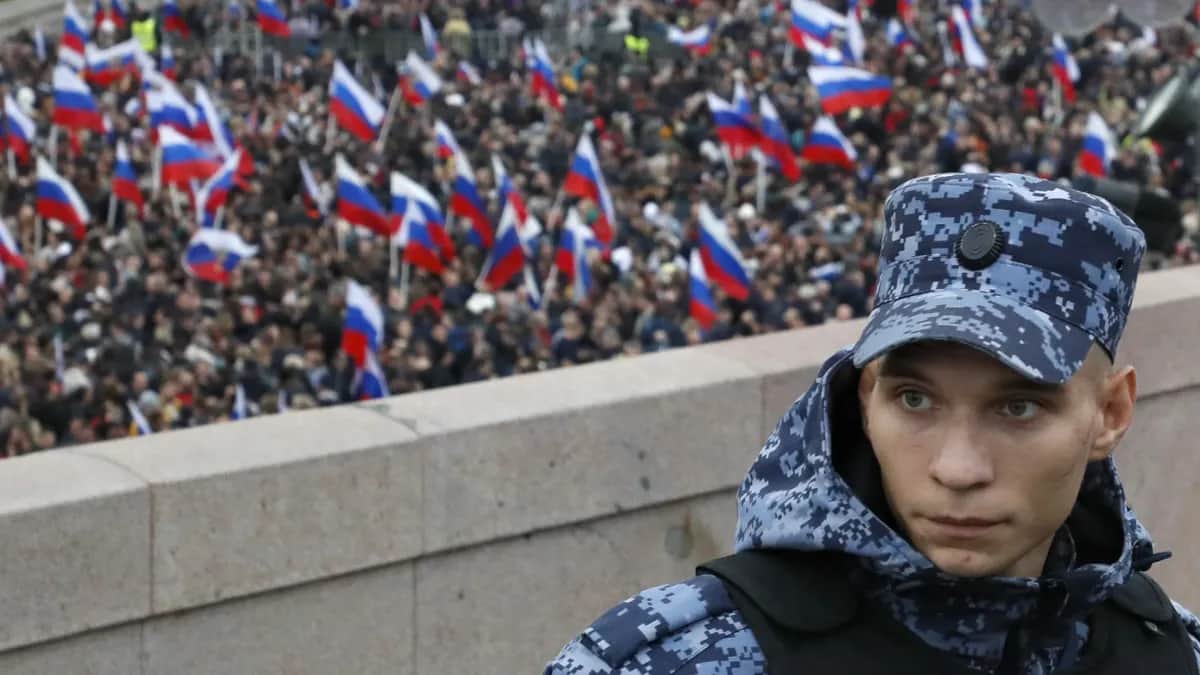
A riot police officer looks on amid celebrations in Moscow to mark the illegal Russian absorption of Ukraine’s Donetsk, Luhansk, Kherson and Zaporizhzhia regions, 30 September 2022. Photo: EPA / Yuri Kochetkov

The future of Ukraine’s eastern Donbas region lies at the heart of the current peace negotiations, and while its importance for Ukraine is obvious, it’s less clear why Donbas matters so deeply to Russia — not only to the Kremlin, but also to those Russians choosing to fight there.

Maria Kurbak

Postdoctoral Associate in Global Studies at Washington University in St. Louis.


To understand that, it’s necessary to return to the concept of Novorossiya (“New Russia”), a term dating back to the 18th century, when Catherine the Great used it to describe the lands her armies conquered along the northern Black Sea. Vladimir Putin revived the term as a territorial claim in 2014 to justify Russia’s intervention in southeastern Ukraine, presenting these territories as historically Russian.

Once introduced into the war, however, Novorossiya took on a life of its own that was beyond the control of the Russian state. For those Russians who volunteered to fight in Donbas, the war was less about restoring imperial borders and more about escaping the political paralysis of Putin’s Russia for somewhere their actions had consequences, where they could act freely and give their lives meaning.

Their own words make this clear. Though Russian paramilitary volunteers, combatants, and their ideological supporters have produced hundreds of memoirs, diaries, poems, and novels since 2014, very few of them actually dwell on Ukraine. Instead, again and again, they hark back to life in Russia before the war, which is dominated by feelings of stagnation, humiliation, and powerlessness.

A Russian serviceman on patrol in the Luhansk region town of Schastia, eastern Ukraine, 11 June 2022. Photo: EPA / Sergei Ilnitsky

A Russian serviceman on patrol in the Luhansk region town of Schastia, eastern Ukraine, 11 June 2022. Photo: EPA / Sergei Ilnitsky

One of them, Russian alt-right nationalist Yegor Prosvirnin, described that state with unusual clarity, writing after the failure of Russia’s anti-government protest movement in 2012: “My name is Yegor Prosvirnin, and I’m bored.” This was not a confession of private fatigue but a diagnosis of political suffocation, his recognition that public life offered no role for people like him.

Just two years later, however, the ill-fated Prosvirnin markedly changed his tone while observing the war in Donbas as editor of the far-right publication Sputnik i Pogrom, writing that what had been impossible inside Russia — the experience of personal agency — was suddenly within his grasp. “I captured this reality by the throat,” he wrote. Prosvirnin died in Moscow in 2021 after falling from a balcony.

The annexation of Crimea in 2014 did not offer the same possibility as Donbas. Despite generating a surge in nationalist pride in Russia, the annexation itself was a swiftly concluded military operation that left no room for individual initiative. Russians could celebrate the outcome, but they were unable to contribute to it themselves.

An exhibition at the Moscow State Historical Museum entitled Novorossiya, 5 September 2023. Photo: EPA / Yuri Kochetkov

An exhibition at the Moscow State Historical Museum entitled Novorossiya, 5 September 2023. Photo: EPA / Yuri Kochetkov

By contrast, in Donbas Russian paramilitary volunteers crossed the border freely, chose their commanders and roles, and entered and left the war zone at will. For many, it was this freedom, rather than the territory being fought for, that was the real prize.

Journalist and nationalist activist Alexander Zhuchkovsky, who has been publicly associated with the Russian Imperial Movement, which the US has designated as a terrorist organisation, went to Donbas in 2014 to fight for the self-proclaimed Donetsk and Luhansk People’s Republics. In his memoir 85 Days of Slovyansk, he describes encountering people acting of their own free will and prepared to defend their choices by force:

“Here I saw what I hadn’t experienced in Crimea… In Luhansk, I saw the risen Russian people — the people I had dreamed about all my life, the people I longed to see in our cities.”

Since the early 2000s, independent political initiative in Russia was gradually suppressed. Nationalist and liberal opposition figures alike faced surveillance, harassment and even prosecution. Donbas presented individuals with an opportunity to gain personal agency that had disappeared inside Russia itself.

Celebrations in central Luhansk to mark the accession of the so-called ”new territories” of Donetsk, Luhansk, Kherson and Zaporizhzhia to Russia on 30 September 2022. Photo: EPA

Celebrations in central Luhansk to mark the accession of the so-called ”new territories” of Donetsk, Luhansk, Kherson and Zaporizhzhia to Russia on 30 September 2022. Photo: EPA

To justify the emergence of Russian-backed paramilitaries in southeastern Ukraine in 2014, the Kremlin began to use the term Novorossiya, though it quickly went on to develop a life of its own, and quickly exceeded its original political purpose.

From the beginning, Novorossiya existed in two forms. The first was the official version, articulated by Vladimir Putin through imperial terminology. This Novorossiya was geopolitical and could be adjusted — or even abandoned — according to political necessity. By 2015, however, the Kremlin had already started using the term less and less.

Faced with uncertain support from the population of Donbas and the risks of open confrontation with the West, it moved away from the expansive rhetoric of Novorossiya towards the more limited goal of sustaining the two separatist republics of Donetsk and Lugansk without formally absorbing them. Indeed, when Russia launched its full-scale invasion in 2022, the term Novorossiya was largely absent from official rhetoric.

This did not mean that Putin had abandoned his broader imperial project, he simply clothed it in the language of the “Russian World” — the idea that Russia has a historical right, and even a civilisational obligation, to protect and assert its authority over Russian-speaking populations beyond its borders.
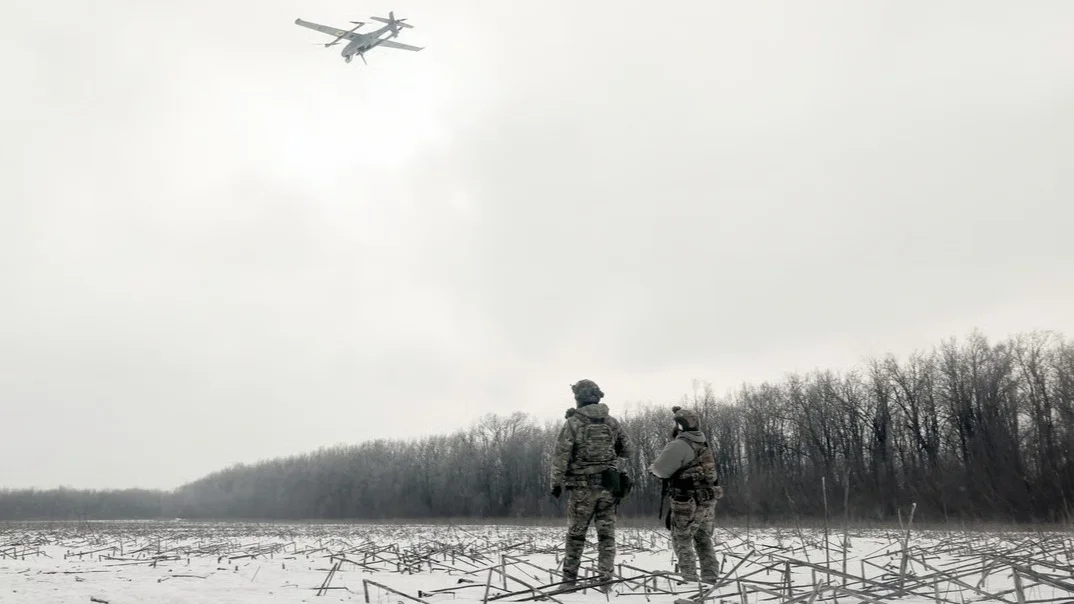
For the Kremlin, Ukraine remained an object to be controlled: its land absorbed, its people politically redefined as Russian. But the other Novorossiya, the one that existed in the minds of those who went to fight, had never been primarily about Ukraine. It was about them, the agency they experienced there and the personal transformation that ensued.

This second Novorossiya — the one forged in lived experience — never disappeared and remained an imagined alternative to both the West and Putin’s Russia, a space defined by the intoxicating freedom to dream, to choose, and to act.

Pavel Kukhmirov, a volunteer fighter, described the devastation he felt when he was forced to leave Donbas in 2015: “Giving up Donbas means giving up everything best in me — giving up love. Giving up my soul. The war in Donbas is not a territorial war, it is a battle for our souls. It gave us meaning.”

Pro-Russian locals wave the flag of Novorossiya as they celebrate the Donetsk People's Republic’s six-month anniversary in downtown Donetsk, Ukraine, 4 October 2014. Photo: EPA / Photomig

Pro-Russian locals wave the flag of Novorossiya as they celebrate the Donetsk People's Republic’s six-month anniversary in downtown Donetsk, Ukraine, 4 October 2014. Photo: EPA / Photomig

His words reveal why this war cannot be understood solely as an extension of Kremlin policy. It is also sustained by individuals attempting to recover a form of existence they briefly experienced and then lost, something for which the “Russian World” could never replace.

What ended politically in 2015 did not end psychologically. The Kremlin may have been able to suspend the project, but it couldn’t revoke the experience. For those who had lived inside Novorossiya, even briefly, it had already altered how they understood themselves.

Peace negotiations now focus on Donbas as territory. Borders are discussed. Control is measured. This framework assumes the conflict can be resolved through territorial settlement.

Territorial goals can be adjusted. But experiences that reorganise a person’s sense of purpose are not easily reversed.
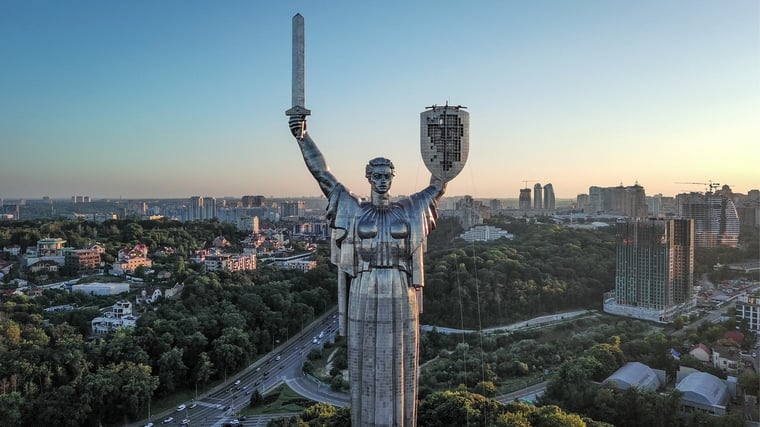
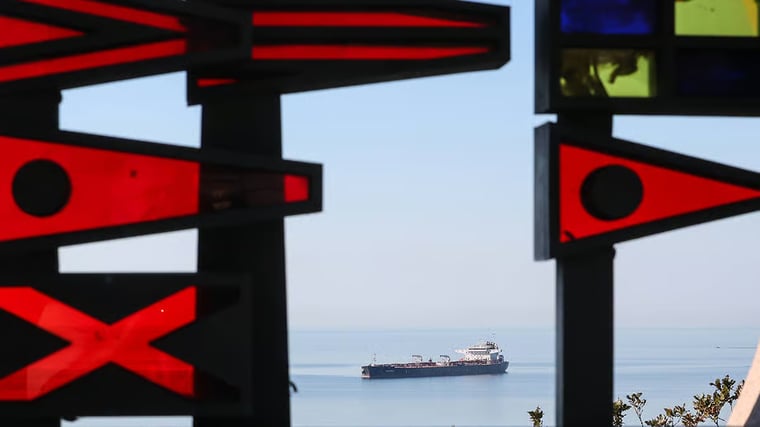
But Donbas was never only territory. It was the place where Novorossiya became real— not as doctrine, but as a lived possibility. The Kremlin has since shifted to the broader language of the “Russian World,” a civilisational claim used to justify continued expansion. Yet for many combatants, Novorossiya remains the more intimate reference point. It names the moment when their lives acquired direction and consequence.

This distinction helps explain why the war persists even when its official justifications evolve. Political language can change. Territorial goals can be adjusted. But experiences that reorganise a person’s sense of purpose are not easily reversed.
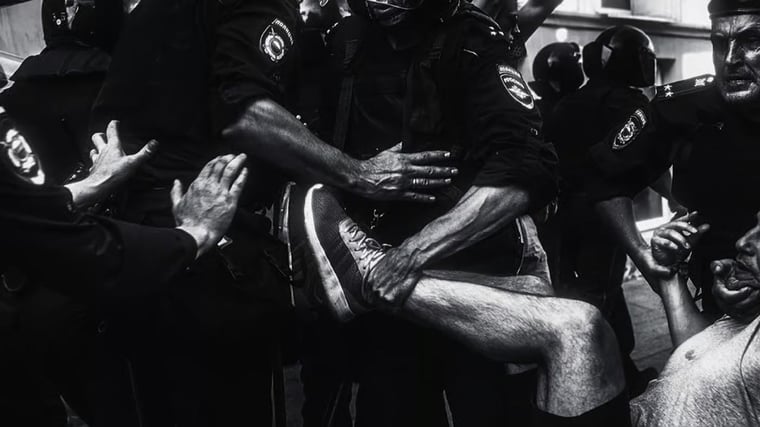
Understanding this does not legitimise Russia’s aggression in Ukraine, but it does explain its persistence. Wars driven by political calculation can be ended through political agreement, but wars sustained by lived experience are far harder to resolve.

The Kremlin introduced Novorossiya as a claim on land. Those who inhabited it turned it into a claim on meaning — and meaning can not be surrendered as easily as territory.

Maria Kurbak’s book, Destructive Imagination: Male Fantasies and the Emotional Roots of Russia’s War in Ukraine, will be published by Palgrave Macmillan later this month. Views expressed in opinion pieces do not necessarily reflect the position of Novaya Gazeta Europe.

shareprint
Editor in chief — Kirill Martynov. Terms of use. Privacy policy.