AnalysisSociety

Slippery slope

How Russia’s journey into fascism began with the weaponisation of homophobia

Slippery slope

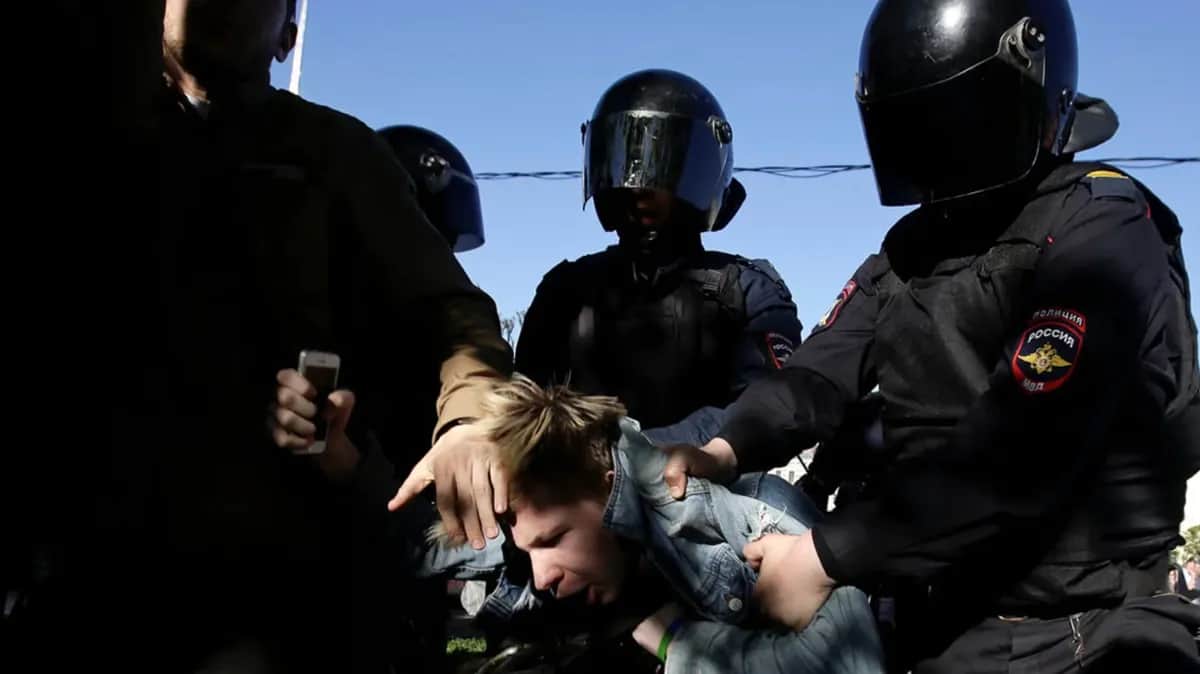
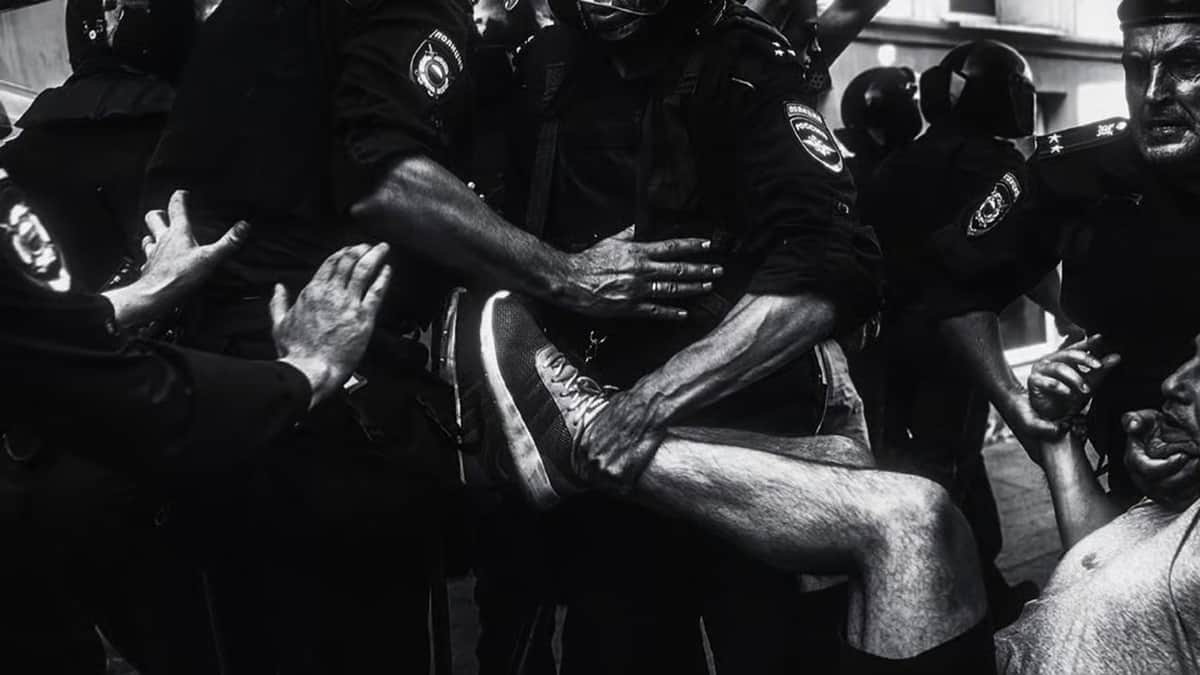
Police officers detain an LGBTQI+ activisit in St. Petersburg, Russia, 17 May 2019. Photo: Anton Vaganov / Reuters / Scanpix / LETA

In February 2006, Moscow Mayor Yury Luzhkov announced that pride parades would never be allowed in the Russian capital. His ludicrous reasoning, something about the societal ruin sodomy threatened to rain down on Russian society, could hardly be taken seriously, and was indeed taken as a joke by many. But it was, in fact, a trial run, testing the waters and gauging popular opinion for what was to come.

Only a month later, the first piece of post-Soviet anti-gay legislation was passed by the regional government in Ryazan, outlawing “homosexual (sodomite and lesbian) propaganda to underage persons”. This legislation would become the basis for several similar laws across Russia’s regions, culminating, in June 2013, with a federal law “protecting children from propaganda advocating for non-traditional sexual relations”. The now notorious “gay propaganda” law came into effect immediately.

Though the law made no mention of paedophilia, politicians and agitators were quick to start conflating the two. Everyday discrimination against queer people was normalised, and the incidence of hate crimes increased. State ideology once again began to infiltrate interpersonal lives, and for the first time since the collapse of the Soviet Union, sexual norms were being dictated from above.

As it turned out, the gay propaganda law was also an excellent tool for arbitrary persecutions, since practically anything could be deemed “gay propaganda” if it suited the government’s needs. Though human rights and LGBTQI+ activists protested against the law, their relatively small numbers meant that such pushback had very little impact nationally.

Police officers surround an LGBT rights activist who was injured during clashes with anti-gay protesters during a Pride rally in St. Petersburg, Russia, 29 June 2013. Photo: EPA / Anatoly Maltsev

Police officers surround an LGBT rights activist who was injured during clashes with anti-gay protesters during a Pride rally in St. Petersburg, Russia, 29 June 2013. Photo: EPA / Anatoly Maltsev

The reaction from the West consisted of little more than a few statements expressing “deep concern”; otherwise, it was business as usual, and European countries happily sent their athletes to take part in the Sochi Winter Olympics the following year.

Russia’s first steps towards criminalising an entire group of citizens on the basis of their identity were therefore a roaring success, and the lack of Western backlash confirmed what Moscow had already come to suspect, that Russia’s vast petrochemical wealth would always overshadow concerns about the civil liberties the Kremlin afforded its citizens.

In April 2017, Novaya Gazeta first reported that gay men in Chechnya were being kidnapped, subjected to torture, and murdered by the authorities in the autonomous republic. The official response of the Chechen government was simply to maintain that there were no gay people in Chechnya, as though claiming this loudly enough would make them all disappear.

New vocabulary

In 2008, the Russian government elected to replace the imported Anglo-Saxon tradition of celebrating Valentine’s Day with a far more Russian equivalent named the Day of Family, Love and Fidelity. Though this changed little in itself, it did see several new toxic expressions being introduced into public discourse, such as “spiritual bonds”, “Russia’s special path” and “the nuclear family”, in what was effectively the soft launch of the government’s forthcoming campaign to bring back so-called “traditional values”.

The specifics were soon to follow. Policies were conceived that sought to define the family, and to defend citizens from the “decadent West”. Years of repetition gradually gave rise to the mantra: We are Russians, God is with us, we will lay down our lives in defense of our traditional values.

Society reacted to this development in different ways. While the conservative electorate accepted it as a necessary defensive measure against the terrible, liberal, West, younger people in big cities generally ignored it, or ridiculed it. Crucially, though, most of them remained silent as they were not personally affected.

A police officer during the Pride parade in St. Petersburg, 3 August 2019. Photo: Anton Vaganov / Reuters / Scanpix / LETA

A police officer during the Pride parade in St. Petersburg, 3 August 2019. Photo: Anton Vaganov / Reuters / Scanpix / LETA

Most importantly, few believed that any of this political posturing was serious. It was obvious to anybody paying attention that those most loudly advocating for family values were also the ones living entirely incongruent lives characterised by messy divorces, mistresses, second families in London, and children with multiple partners. But nor did they care that their inconsistency was so obvious. The project worked not because it was plausible, but because it provided an excuse to vilify certain groups of people, allowing the majority to feel that they belonged to something “greater”.

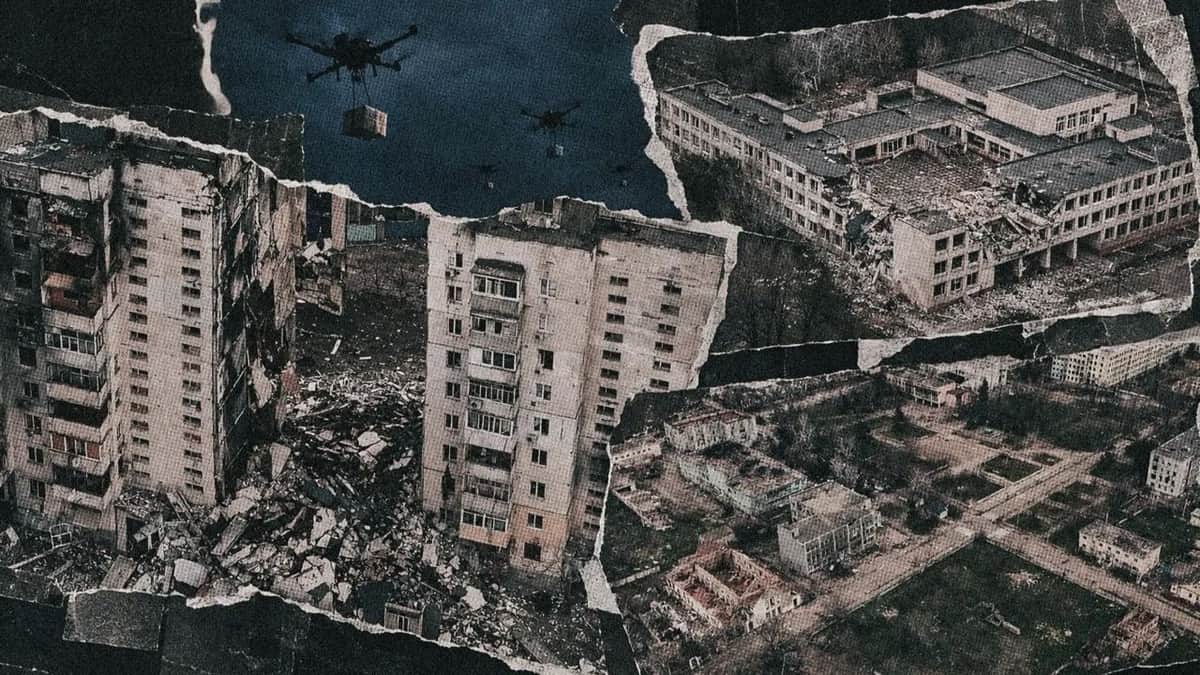
Everything changed with the full-scale invasion of Ukraine on 24 February 2022, which quickly led to the full-scale militarisation of society and the normalisation of hatred. Once Russia was at war, the LGBTQI+ community became an ideal domestic enemy and a neat justification for Kremlin aggression. Militaristic rhetoric, which worships self-sacrifice and traditional values, glorifies so-called “real men” who defend the Motherland, and requires women to be submissive and in the home, is, of course, incompatible with queerness, decency, equal rights, feminism, and critical thought.

In December 2022, the law against gay propaganda was extended to apply to people of all ages rather than just to minors. In practical terms, any and all public mention of queerness in Russia became a criminal offence.
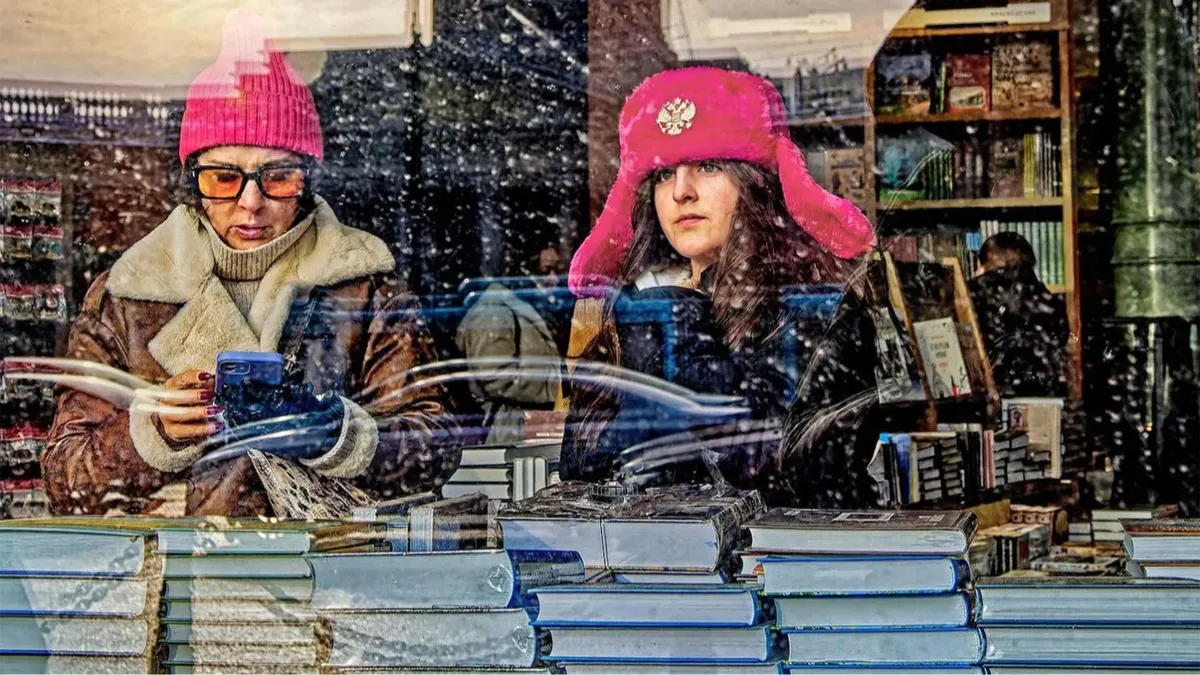
But even this was not enough, and less than a year later, Russia’s Supreme Court ruled the nonexistent “international LGBT movement” to be an extremist organisation. By using an intentionally vague term, all organised support for LGBTQI+ individuals could effectively be deemed criminal, including life-saving healthcare, mental health support and legal advocacy.

Today, the Russian government can take whatever it likes and declare it extremism. Drag shows, books with LGBT characters, social media posts, private chats, doctors who prescribe hormones, tour agencies marketing holidays to queer people — these are all examples of extremism in contemporary Russia.

The liberal island that sank

Paradoxically, until 2023 Russia actually boasted one of the most progressive systems of gender affirming healthcare in Europe, making it legal in 1997 to change gender markers in passports without first being forced to undergo sterilisation, a requirement that was still imposed by many Western countries at the time. Both hormone therapy and gender reassignment surgeries were available to transgender Russians, thousands of whom lived normal lives with documents that reflected their gender identity.

This was all brought to an abrupt end in 2023, when gender affirming care and surgeries were banned, the right to determine one’s own gender was withdrawn, and adoption by transgender people was ended, which saw trans parents have their children taken away from them. This left anybody who had not already managed to change their gender marker in legal limbo.

The new policy had immediate and catastrophic effects. Many trans Russians who had undergone gender-affirming surgeries were left having to source hormones on the black market, or were simply forced to stop taking them altogether. Doctors refused to help, fearing they too could fall foul of the “gay propaganda” law.

Anti-gay protestors picket an LGBT rights rally outside Russia’s State Duma in Moscow, 11 June 2013. Photo: EPA / Sergei Chirikov

Anti-gay protestors picket an LGBT rights rally outside Russia’s State Duma in Moscow, 11 June 2013. Photo: EPA / Sergei Chirikov

Trans people were plunged into a state of constant fear. Fear that hospitals could turn them away, or refer them to the police. Fear of the police, who might decide to open a crimimal case against them, beat them up, or worse. Fear of even leaving the house with documents that didn’t match their appearance.

All this has led to a horrifying surge in suicides among trans Russians, although exact figures simply don’t exist, after all, who is collecting data on the deaths of those whose very existence is now a crime?

Nobles and commoners

Recently, I had an opportunity to discuss the persecution of LGBTQI+ people in Russia off the record with a Russian security official (one of the good ones, as much as they can be said to exist) in a third country. One of the more surprising things he told me was that there’s actually a sprawling “gay lobby” across all the structures of the state from the Presidential Administration to the FSB, whose members have their own private clubs, meeting places, and even escort agencies.

When, perhaps rather naively, I asked him why they would so willingly participate in persecution of their own, he explained that there’s a “them and us” mentality at play here, with LGBTQI+ people being divided into two distinct classes. The first one being the “nobility”, which is made up of politicians, power brokers and entertainers with money, power, and friends in high places who can do whatever they want as they are useful to the Russian state. Their sexual orientation is their own private business, and everyone understands that.

As well as the elite themselves, the nobility includes those around them who are in proximity to money, power and patronage. They are protected as long as their status doesn’t change, and as long as it doesn’t become expedient to make scapegoats out of them. Rumour has it that the louder you support the war, the more you will be helped. But the number of people falling foul of this system is growing.

The other class is the “commoners”, made up quite simply of everybody else. Here you’ll also find a few “demoted nobles”, who must go into hiding, flee the country, or hope that they can avoid the worst of the repression by licking the right boots.

The entire system is built on fear. Members of the in-group can, at any moment, find themselves cast out. It is a brilliant trick: the elite is kept constantly on edge, and so constantly in line. Those who don’t are either forced to flee the country, end up being declared “foreign agents” or placed in detention centres.

One could well ask whether LGBT activists should try to help these people at all, since they are complicit in their own repression. But many of those who make up the “nobilty” are hostages of the system: paying for privilege with their lives, feigning loyalty but never actually believing. These are the people who will one day bring the system to its knees.

Resistance and survival

Homophobia in the Russian context, then, is not an absolute moral position, but a tool for political control. When the economy is stagnating, the authorities can offer citizens “spiritual bonds” instead of any meaningful prosperity. Anti-queer legislation is little more than a cheap way to demonstrate that the government is “protecting national interests”.

LGBTQI+ people are safe targets: they lack the numbers to mobilise large crowds, and are largely disconnected from the economic interests of the elite. But the greatest advantage of this process is that it has dismantled the logic of human rights entirely.

When sexual orientation and gender identity become the basis for “extremism”, the goal is not regulating behaviour; it is part of a strategy to destroy civil society. LGBTQI+ organisations are just the beginning. Others will inevitably follow.

We must stop being afraid of angering those who are doing their best to destroy us. Because if you are invisible, then you don’t exist at all.
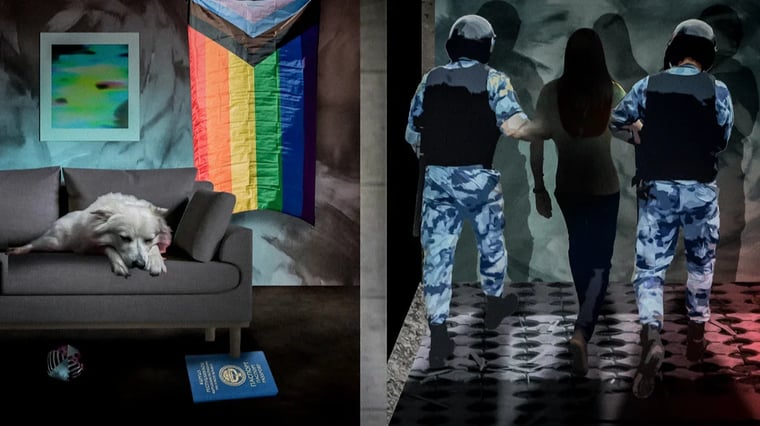
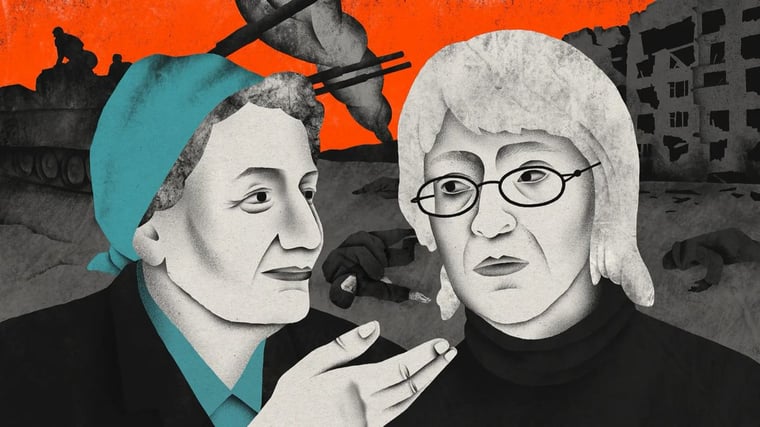
Can the queer community defend itself? I think so. It already does, to a large degree. We are a force to be reckoned with, and Putin knows it — why else would we be seeing so much concerted effort, so many laws passed, so many resources wasted?

Many of us were the first to experience what today’s Russian government truly stands for. Since childhood we have been used to standing up for ourselves, we are used to being different from the majority and as such it’s harder to make us fall in line. All this makes us a threat to any authoritarian regime.

The machine of oppression will not grind to a halt by itself. It will grow, persecute new groups, tighten its tendrils of control. But it is not omnipotent.

All of us, especially those who have left Russia, who have a voice and an audience, must stop being invisible. We must stop being afraid of angering those who are doing their best to destroy us. Because if you are invisible, then you don’t exist at all.
We do exist. And the more the regime tries to eradicate us, the stronger we will become. Queer people can and will play an important role in a future democratic Russia. Not as a separate “interest group”, but as a group of citizens who understand better than anyone: everybody must have human rights, or nobody will.

Evi Chayka is a human rights and LGBTQI+ activist, and the founder of EQUAL PostOst, which helps queer people facing persecution in Eastern Europe and Central Asia.

shareprint
Editor in chief — Kirill Martynov. Terms of use. Privacy policy.