The Russian army is continuing to pile on the pressure on the frontline near the southeastern Ukrainian city of Zaporizhzhia, which will soon be within artillery range from recently captured territory. Novaya Gazeta Europe asked experts about the latest battles in the region, the threat facing the Armed Forces of Ukraine (AFU), and whether a summer offensive could be on the cards.
Countering offensives
In late January, media cited Vladyslav Voloshyn, the spokesperson for Ukraine’s Southern Defence Forces, as saying the Russian army was actively transferring airborne troop units from areas closer to Dnipro and Kherson to staging grounds in the Zaporizhzhia region around the city of Orikhiv to maintain the pace and intensity of Russian assault operations.
Earlier still, on 17 January, the media also cited Voloshyn, on that occasion saying the Russians were transferring elite paratroopers to near Hulyaipole. Voloshyn claimed the Russians had been gathering personnel at the front for a long time to begin assault operations near Orikhiv, a main focus for the Russians in 2026 as they intensify their offensive in the Zaporizhzhia region.
On 30 January, the Russian military claimed it had captured the Zaporizhzhia region village of Ternuvate, about 12 kilometres from the line of contact, something that Kyiv was quick to refute, saying that it remained under Ukrainian control.
A National Police of Ukraine artillery unit fires a D-30 howitzer on the frontline in southeastern Ukraine’s Zaporizhzhia region, 7 March 2025. Photo: EPA / Oleg Movchaniuk
“The enemy used their favourite infiltration tactic here,” Voloshyn told reporters. “A few days ago, an enemy sabotage group, taking advantage of difficult weather conditions, secretly entered the village”, he continued, adding that the Russians had even managed to film several spots with a drone where they had unfurled the Russian flag, though Ukrainian defence forces were in the village an hour later. Reconnaissance and search operations in the settlement led to some of the Russian sabotage group being liquidated, with their remains collected by robots.
On 8 February, Andriy Kovalenko, the head of Ukraine’s Centre for Countering Disinformation (CPD), posted footage of Ukrainian servicemen waving a Ukrainian flag in Ternuvate. The following day, independent news outlet Ukrainska Pravda reported that Ukrainian forces had cleared the nearby village of Prydorozhnie of a Russian sabotage and reconnaissance group.
Liberated villages
“A recent video showing Ukrainian servicemen in the west of Ternuvate suggests that Russia’s claim that it’s in control is greatly exaggerated,” Russian military researcher Kirill Mikhailov told Novaya Europe. “But Russian fighters do regularly enter the settlement to try to gain a foothold there. And there’s reason to believe that the Russian army has almost complete control of Hulyaipole.”
“The Ukrainians are forming lines of defence, building positions and boundaries, as they prepare to defend Zaporizhzhia,” says Oleksandr Kovalenko, a Ukrainian military and political observer with the Information Resistance Group, which counters Russian misinformation.
“The Russian offensive hasn’t let up for a minute since the autumn of 2023 but there’s no question of them capturing Zaporizhzhia yet.”
“And where possible, the AFU are going on the counteroffensive. Ternuvate was cleared of small tactical groups of Russian troops and is now fully controlled by Ukrainian forces. The small village of Prydorozhnie near Ternuvate hasn’t come under full Russian control either, though there was fighting on its outskirts.”
Military analyst and former Ukrainian military intelligence officer Ivan Stupak told Novaya Europe that the AFU had made use of Russians units being disconnected from the Starlink satellite internet network to counterattack in some areas, Prydorozhnie and Ternuvate being successful examples.
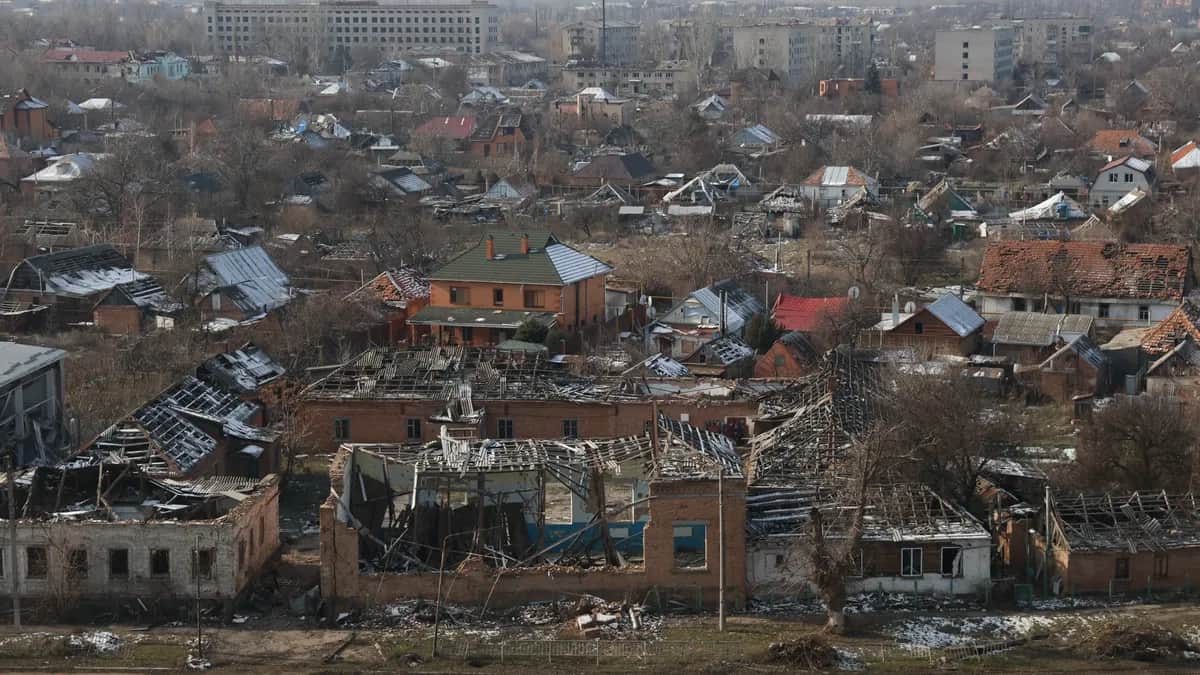
According to Oleksandr Kovalenko, the Russian army will attempt to form a bridgehead to attack the city of Zaporizhzhia itself later this year. However, they may not have the reserves to storm such a large industrial centre, though they will soon be able to terrorise the city with artillery and drones.
Military expert and reserve AFU colonel Roman Svitan also believes that the Russians are likely to start shelling Zaporizhzhia from the heights of Stepnohirsk, though he adds that he’s sure they won’t have sufficient resources to storm the city this year.
Emergency workers inspect the damage at a maternity hospital after a Russian airstrike on Zaporizhzhia, Ukraine, 1 February 2026. Photo: Oleg Movchaniuk / EPA
“The Russian offensive hasn’t let up for a minute since the autumn of 2023,” Stupak tells Novaya, “but there’s no question of them capturing Zaporizhzhia yet. It’s a very large city, which had a population of over 700,000 people before the invasion in February 2022. There may still be up to 500,000 people living there.”
Stupak believes the Russian army will systematically raze Zaporizhzhia to the ground with glide bombs, drones and artillery. Given that it took the Russians over a year and a half to storm the Pokrovsk agglomeration, which had a pre-war population of about 100,000, the capture of Zaporizhzhia would take at least five years by the same logic. Stupak doesn’t even believe the Russians have the resources to launch a full assault on the city this year, let alone complete one.
Oleksandr Kovalenko says Stepnohirsk, not Orikhiv, will be the Russians’ main target in the Zaporizhzhia region. Russia’s 58th Guards Combined Arms Army has been trying to take Stepnohirsk for more than a year and a half, but those forces are clearly insufficient to start fighting for the regional centre.
Kovalenko believes the Russians are trying to capture Hulyaipole and gain a foothold on the right bank of the Haichur River. Russia’s 5th Combined Arms Army has already seen 20,000 personnel killed or wounded in the area. The 5th Army has since been reinforced by units from the 29th and 36th Armies, who have had to slow their offensive in the Dnipropetrovsk region as a result.
Russian servicemen during combat training in the Zaporizhzhia region, Ukraine, 16 January 2023. Photo: RIA Novosti / Sputnik / Imago Images / Scanpix / LETA
Strategic reserves
“Another threat to the AFU on the southern front was the Russian offensive along the Haichur River and R-85 highway to the village of Pokrovske in the Dnipropetrovsk region,” Oleksandr Kovalenko continues. “Russian military command plans to create a bridgehead here fed by highways and a railway in order to attack Zaporizhzhia. They could concentrate about 100,000 Russian servicemen there,” he says “but would need three times more men than that to advance on Zaporizhzhia, and Moscow doesn’t have them”.
“Now that the AFU has more or less been squeezed out of Hulyaipole and Stepanohirsk, the Russians continue to … expand the land corridor to Crimea,” Svitan told Novaya Europe. “On the Zaporizhzhia front, the Russians are moving both near Orikhiv and around Pokrovske.”
“This year, Russian generals probably intend to strike one last decisive blow.”
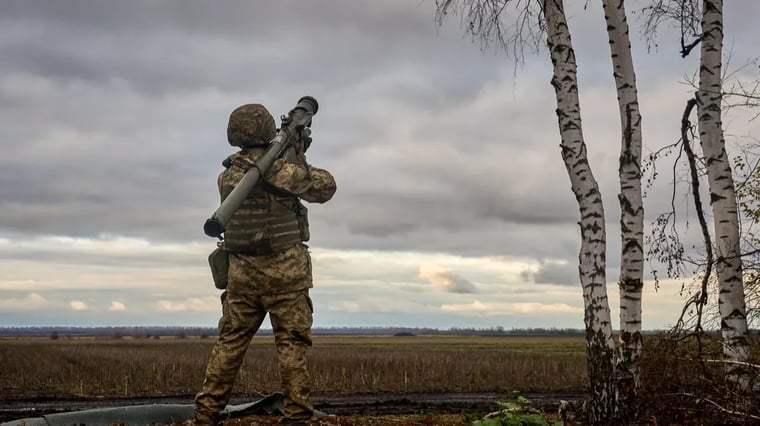
Svitan says the Zaporizhzhia front is the most difficult for the Russian army in terms of supplies as the nearest bases and warehouses are near Rostov-on-Don or on the Taman Peninsula, both in southern Russia, about 500 kilometres from Zaporizhzhia.
Earlier this month, the US-based Institute for the Study of War (ISW) reported that Russia’s high command was planning to deploy its strategic reserves in the south and/or east of Ukraine for an offensive planned for this summer, with one Ukrainian military observer telling the ISW the operation could begin as early as late April. The main focus of any eventual offensive is likely to be the Slovyansk-Kramatorsk agglomeration and Orikhiv in the Zaporizhzhia region.
“Russia most likely does have some strategic reserves. The question is how to train and equip them,” Mikhailov says. “It’s unlikely that they would lead to a decisive victory within a year, but if things go badly for Ukraine, it could lose towns such as Kostyantynivka or Orikhiv. I doubt that Russian troops could reach Zaporizhzhia by the middle of the year, unless the front collapses.”
Fire fighters tackle a blaze caused by Russian shelling of a residential building in Zaporizhzhia, Ukraine, 29 September 2024. Photo: EPA / Kateryna Klochko
“The Ukrainians are doing everything to prevent that from happening: creating barriers along the road to Zaporizhzhia and ‘kill zones’ to stop any Russian advance. The situation there is already quite perilous,” Mikhailov continues. “Russian troops are trying to gain a foothold on the Konka River, which would allow them to strike Zaporizhzhia with tactical drones and artillery. Russia’s high command also hopes to capture Orikhiv, breaking through from the east via Hulyaipole.”
“Russia is very serious about this year’s offensive,” says Oleksandr Kovalenko. “The Kremlin will try to create a bridgehead for attacks on Slovyansk and Kramatorsk, but also to expand areas under its control in the Zaporizhzhia region to increase pressure on Ukraine and Western countries in the negotiation process and demonstrate Russia’s ability to continue the offensive indefinitely.”
“This year, Russian generals probably intend to strike one last decisive blow,” Oleksandr Kovalenko continues, “because Russia may not have the economic means or will within society to continue the war for much longer”.