CommentPolitics

Electoral illusion

Claims that Kyiv is preparing to go to the polls to end the war in Ukraine are far-fetched to say the least

Electoral illusion

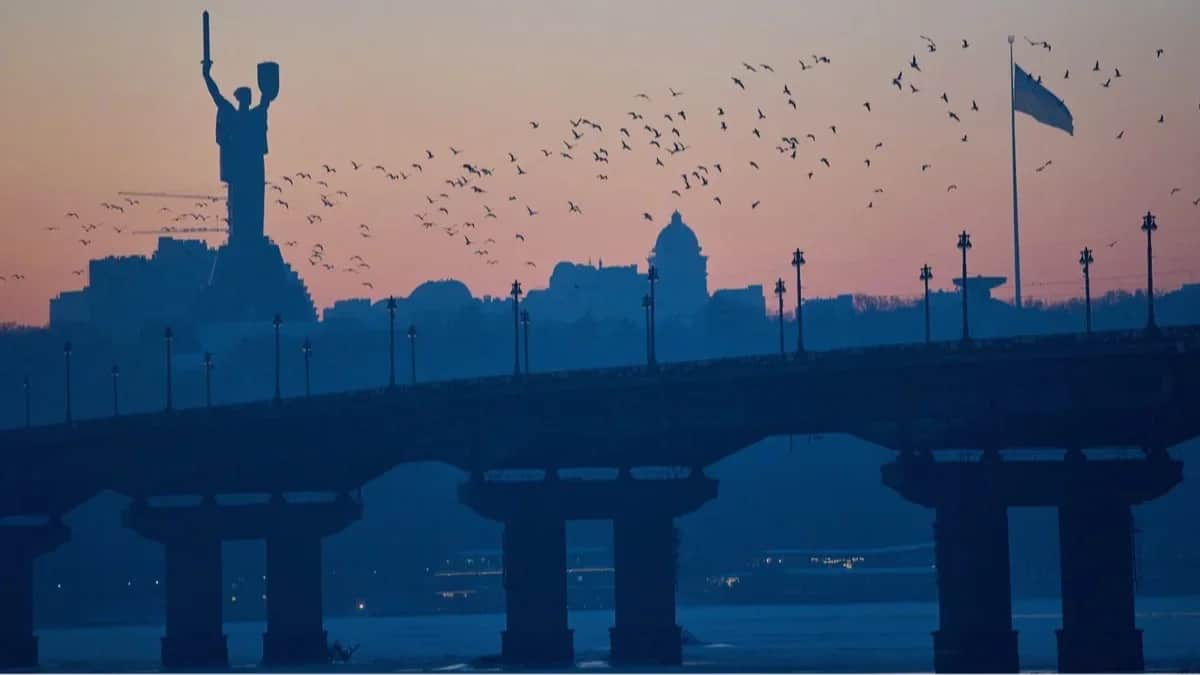
The Dnipro River in central Kyiv. Photo: Efrem Lukatsky / AP / Scanpix / LETA

The Financial Times published a sensational scoop last week, informing its readers that on 24 February — the fourth anniversary of Russia’s full-scale invasion — Ukrainian President Volodymyr Zelensky would announce May elections in Ukraine to be combined with a referendum on a peace agreement with Russia.

According to the FT’s sources, the vote was going to take place by 15 May, which it said was the deadline the Trump administration had set for Kyiv to hold both ballots if it wanted to obtain Washington’s security guarantees. Though few publications in the world have such an outstanding track record for breaking stories as the Financial Times, this story arguably demonstrated how little it understands Ukraine and what’s currently going on there.

Responding to questions from journalists later the same day, Zelensky said that he had first heard about his plans for 24 February from the Financial Times, and reiterated his oft-stated position that there could be no talk of elections until security guarantees were finalised and in place. What’s more, the anniversary of the full-scale invasion would be a wildly inappropriate date to discuss politics, as it simply means too much to Ukrainians.

Last month, at Zelensky’s request, the Ukrainian parliament agreed to extend martial law for another 90 days, until 4 May. Understandably, the country’s constitution prohibits the holding of elections under martial law, as ensuring a truly democratic, competitive process or its security in wartime is effectively impossible.
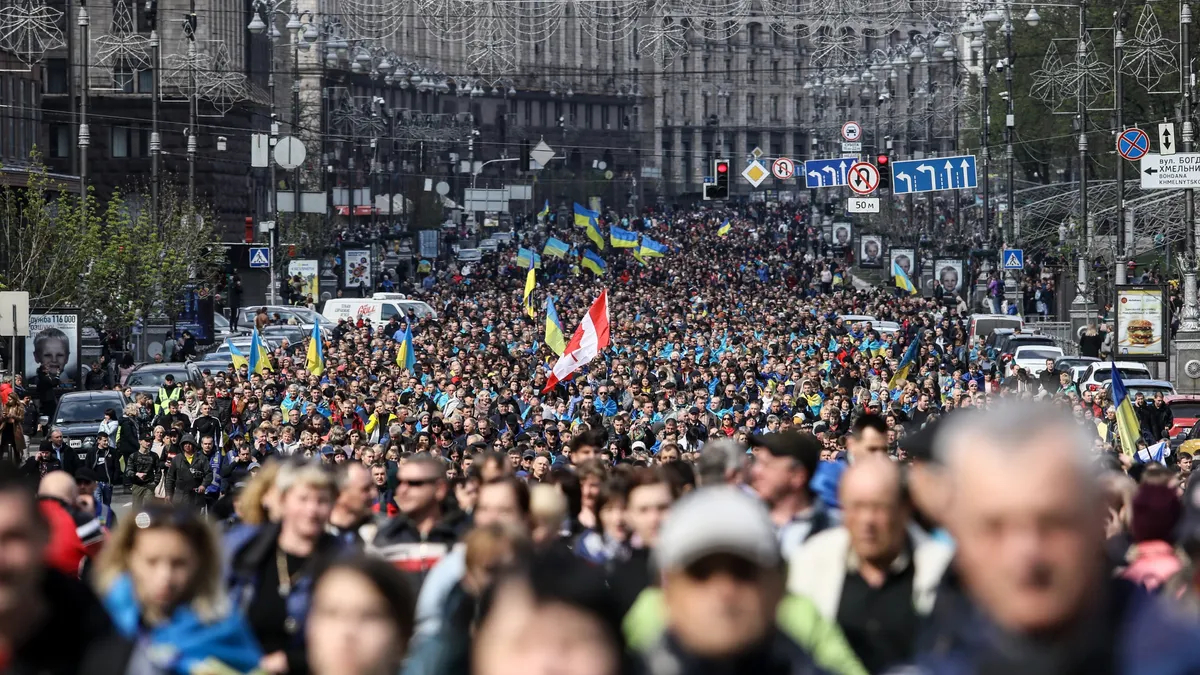
Moreover, experts estimate that it would take at least six months to organise elections once a ceasefire is reached. Just recompiling voter lists and setting up polling stations both at home and overseas, where millions of Ukrainians now live, will require vast organisational and material resources and simply cannot be completed in a matter of weeks.

Of course, the Kremlin will also be able to simply dismiss any result it doesn’t like as illegitimate. Putin has long been making the argument that as Zelensky’s presidential term expired in 2024, he’s currently in office illegally, despite the fact that the Ukrainian constitution provides for him to continue as acting president as long as martial law continues.

The obvious hypocrisy of Putin describing a democratically elected leader as illegitimate aside, it’s not Zelensky’s endurance in office that the Kremlin objects to, but the fact that this untested political neophyte turned out to be an utterly implacable opponent against all expectations.

Emergency heating points provide emergency relief amid freezing conditions in Kyiv, Ukraine, 25 January 2026. Photo: EPA / Maxym Marusenko

Emergency heating points provide emergency relief amid freezing conditions in Kyiv, Ukraine, 25 January 2026. Photo: EPA / Maxym Marusenko

That said, even among Zelensky’s would-be opponents, it’s impossible to find a single Ukrainian politician who would be prepared to give the Kremlin what it wants in the country — those days are long gone, and likely gone forever.

Russian attempts to influence the outcome of the next Ukrainian election by setting up polling stations in Russia for Ukrainians who have fled east from the war zone are also total pie in the sky, as it’s unthinkable that Kyiv would ever agree to such a step. This, incidentally, will be used as grounds for Russia’s non-recognition of the Ukrainian elections whenever they are finally held.

US Special Envoy Steve Witkoff, who can always be relied upon to discreetly convey the Kremlin’s thinking on any matter to the White House, is responsible for planting the idea that Zelensky is hanging on to power into Donald Trump’s head. Trump has even raised the issue of Zelensky’s extended stay in office himself, to which Kyiv has always provided the same rebuttal: once there is a guaranteed peace, there will be guaranteed elections, so what’s the problem?

To avoid being seen as an obstacle to peace by Washington, the Ukrainian leadership felt obliged to come up with an accelerated election schedule to show willing.

All the same, Putin’s contention that Zelensky lacks the democratic mandate necessary to sign a peace deal has never been accepted by the White House, which has made no official demands that expedited elections be held in Ukraine before a peace deal can be finalised. Nevertheless, the issue has clearly received some attention from Washington, as a clause requiring elections to be held once a peace deal is reached was included in the notorious 28 points of the so-called Witkoff-Dmitriev peace plan, which allots just 100 days for everything.

To avoid being seen as an obstacle to peace by Washington, the Ukrainian leadership felt obliged to come up with an accelerated election schedule to show willing. But just as nine women cannot give birth to a single child in one month, there are clear limits to what can possibly be achieved within such a narrow timeframe.
It’s possible that it was these perfunctory brainstorming sessions carried out in a fit of noblesse oblige that reached the ears of FT journalists, allowing them to believe that this had become Zelensky’s actual position.

In Ukraine, a highly politicised and passionate population yearns to vote again and the long absence of ballots has resulted in widespread withdrawal symptoms, which can only partly be alleviated by debates on social media.

An engineer works to repair a Ukrainian power plant after it suffered severe damage in a Russian missile strike in an undisclosed location in Ukraine, 23 January 2026. Photo: EPA

An engineer works to repair a Ukrainian power plant after it suffered severe damage in a Russian missile strike in an undisclosed location in Ukraine, 23 January 2026. Photo: EPA

First and foremost, they want elections because they will mean that the long-awaited and hard-won peace has finally arrived. Ultimately, having endured and come through a monstrous ordeal at the hands of Russia, Ukraine will somehow have to figure out how elections might look, which parties will nominate which politicians, and whose list will be radically different to that put forward in the pre-war era.

The very entity demanding elections in Ukraine is also, of course, the main obstacle to those elections being held. Not only won’t Russia end the war, but it won’t even agree to a ceasefire to allow peace negotiations to take place. As Putin put cynically in December: “We are ready to consider ensuring security during the elections in Ukraine, by at least refraining from striking deep inside its territory on election day.”

During his last meeting with Donald Trump in Anchorage, Putin managed, as only he knows how, to convince him to drop the US demand for an immediate ceasefire in Ukraine. That immediately rendered all the American president’s subsequent bluster moot and his threatening ultimatums powerless.

That in turn gave Russia time to continue its offensive in Donbas, which its military chief Valery Gerasimov assured his Führer would be successful this time, as well as allowing Russia to cut off much of Ukraine’s power supply during an unseasonably cold winter, another objective the Kremlin war machine was counting on. The already obvious failure of these plans has not made Putin any more peaceful, nor Trump any more demanding of him.

With this in mind, it’s clear that an imminent Ukrainian election can be safely ruled out, no matter how much the sources briefing certain foreign correspondents in Kyiv assure us otherwise. As such, we can also say with some certainty that 24 February won’t mark the start of an election campaign, but the fifth year of a brutal war.

Views expressed in opinion pieces do not necessarily reflect the position of Novaya Gazeta Europe.

shareprint
Editor in chief — Kirill Martynov. Terms of use. Privacy policy.