Rubio says US believes new Navalny poisoning findings dismissed by Russia as ‘necro-propaganda’

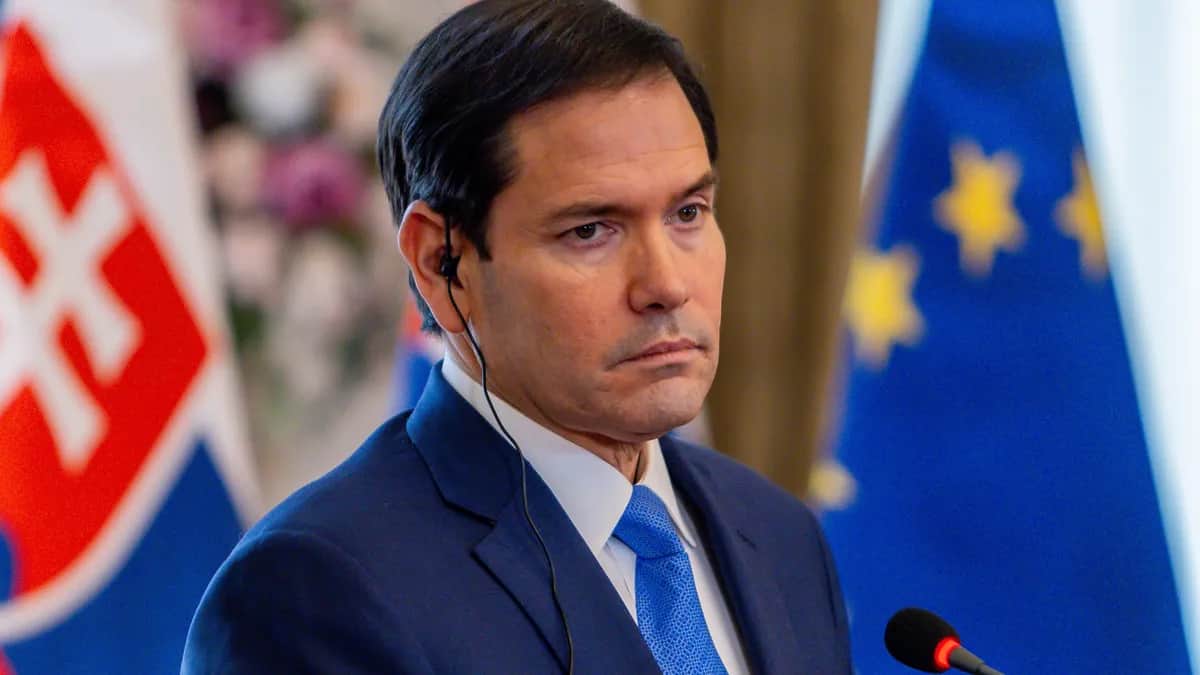
US Secretary of State Marco Rubio said on Sunday that Washington had “no reason to doubt” the veracity of new findings published by five European countries on Saturday showing that Russian opposition politician Alexey Navalny was killed using a rare poison extracted from a South American tree frog.
Rubio also said that the US not being part of the joint statement by Britain, France, Germany, Sweden and the Netherlands announcing the investigation’s findings didn’t mean that Washington disagreed with its conclusion, Reuters reported.
“We obviously are aware of the report. It's a troubling report. We're aware of that case of Mr. Navalny and certainly … we don't have any reason to question it,” Rubio told reporters at a press conference in the Slovakian capital Bratislava.
“We're not disputing or getting into a fight with these countries over it. But it was their report, and they put that out there,” he added.
Rubio’s comments came a day after a joint statement was issued by the five European countries announcing that the high-potency neurotoxin epibatidine had been discovered in biomaterials secretly taken from Navalny’s body after his death and smuggled out of Russia for analysis.
On Saturday, Russian Foreign Ministry spokesperson Maria Zakharova dismissed the findings as “fake news,” according to Russian news outlet RBC, likening them to what she described as the West’s “sensationalist stories” about the 2018 Salisbury poisoning of former Russian military officer Sergey Skripal and his daughter Yulia — an attack the UK has determined was ordered by Vladimir Putin.
In a similar vein, the Russian Embassy in London also dismissed the claims as a “political pageant,” criticising Western politicians for engaging in what it termed “necro-propaganda”.
“We have become accustomed to the feeble-mindedness of Western fabulists. One must ask what kind of person would believe this nonsense about a frog,” the embassy statement read.
“This is not a quest for justice but a mockery of the dead. Even after the death of a Russian citizen, London and European capitals cannot allow him to rest in peace — a fact that speaks volumes about those who instigated this campaign,” the embassy continued.
Monday marks two years since Navalny suddenly died in his cell shortly after returning from a walk at the remote Arctic penal colony where he was serving multiple custodial sentences on politically motivated charges, according to the official version of events.
Last year, Navalny’s widow Yulia Navalnaya publicly accused Russia of poisoning her husband, citing “foreign laboratory findings,” though she did not specify at the time which toxin had been detected or which laboratory analyses had been conducted.