StoriesCulture

Censory overload

As the Kremlin declares war on queer literature, Russians are still finding ways to read and publish transgressive fiction

Censory overload

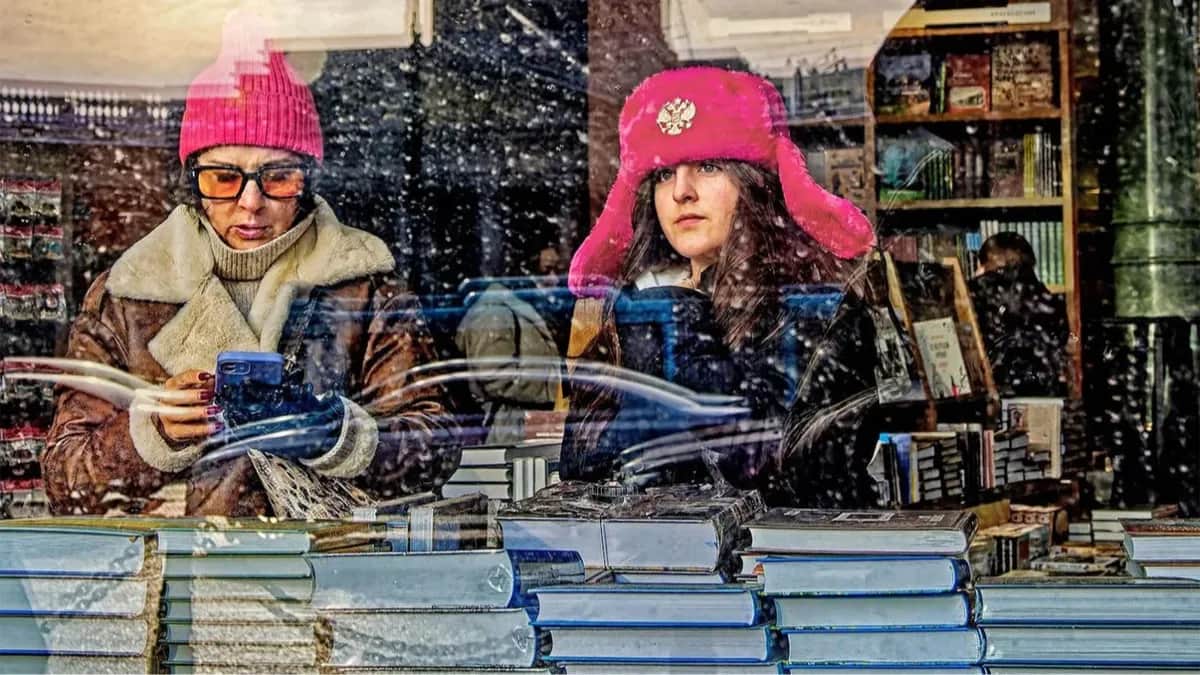
People browse in a St. Petersburg bookshop. Photo: Alexander Petrosyan / Kommersant

Any mention of a snail’s hermaphroditic reproduction legally constitutes “propaganda of non-traditional relationships”, according to one Russian publishing house which recently demanded that a book it was publishing about the sex life of animals be censored.

The claims, which were made earlier this month by Viktor Kovylin, the editor-in-chief of Russian science magazine Batrachospermum, about an unnamed publisher, caused widespread amusement among what’s left of the country’s chattering classes.

“Neutral scientific descriptions of homosexual behaviour that do not express disgust or criticism henceforth count as propaganda of non-traditional relationships! Hermaphrodites are also now victims of censorship,” Kovylin wrote, adding that snails, (as well as slugs and planarians) would now have to issue an apology if the title was ever expected to see the light of day.

Jokes aside, publishing houses in Russia now face prosecution, book stores risk denunciation, and any hint of queer content in books can be redacted with thick black lines. When did queer literature become so shocking to the authorities and why do so many Russians nevertheless continue to seek out literary “forbidden fruit”?

Closing without closure

Since 2018, Russian publishing house Popcorn Books has been producing young adult and queer fiction that frequently made the bestseller list, including the hit 2025 gay novel Pioneer Summer by Ukrainian-Russian duo Kateryna Sylvanova and Yelena Malisova, about a love affair between two teenage boys in a Soviet summer camp.

However, amid the ever darkening skies over Russian artistic freedom, Popcorn Books announced last month that it would be ceasing its operations, a move that queer columnist Konstantin Kropotkin called a “humanitarian catastrophe” for Russia’s LGBT community.

The front and back covers of Pioneer Summer. Photo: Popcorn Books

The front and back covers of Pioneer Summer. Photo: Popcorn Books

“The state fights queer literature because it’s fighting individuality,” writer Maxim Sonin, whose books were among those published by Popcorn, told Novaya Europe. “It wants to simplify control over the population as much as it can. School, university, work, death. And if not university, then army, war and immediate death.”

“You see this clearly in attempts to make students join the army straight after university,” Sonin continued, adding: “In this sense, the fight against queer literature is no different from the fight against Roblox,” a reference to a popular American gaming platform that has also found itself in the Russian authorities’ crosshairs in recent months.

Queer literature is one of the most obvious targets for “cultural desecration”, according to cultural critic Vladimir Serebrovsky, who argues that as well as being “easy to identify” it also “arouses hatred from traditionalist institutions, such as the church and the army”.

Since the war in Ukraine began, the state has increased censorship, upped crackdowns on publishers, and raided bookshops selling LGBT literature.

“Homophobia, even if internalised, seriously scares away potential allies. Add to that the general right-wing orientation of the intelligentsia, which immediately sees an agenda and leftist plot in any manifestation of queerness in art,” Serebrovsky continued.

A couple of days after Popcorn Books announced its closure, it emerged that some of the team behind it had launched a new publishing venture called Soda Press, which describes its mission as publishing “honest stories about what is happening around and inside us … changes in life, accepting grief, finding oneself … and vulnerability”.

Courts and raids

Popcorn Books is not the only company to have come under pressure for championing transgressive literary genres in Russia. Since the war in Ukraine began in 2022, the state has increased censorship, upped crackdowns on publishers, and raided bookshops selling LGBT literature.

Last year Moscow’s Falanster independent bookshop had an administrative case against it opened for spreading the “propaganda of non-traditional sexual relations”, and was ultimately fined 800,000 rubles (€8,750) after “expert analysis” confirmed the presence of “LGBT propaganda” in several works of fiction it stocked.

Popular St. Petersburg bookstore Podpisnye Izdaniya also incurred the wrath of the law in April when police seized dozens of titles which, according to another expert analysis, potentially contained “LGBT ideology”. On that basis, a court fined the store 800,000 rubles (€8,750). Though any further proceedings were subsequently terminated due to the statute of limitations expiring, the fine remained in force.

St. Petersburg’s independent Podpisnye Izdaniya bookshop. Photo: Podpisnye Izdaniya

St. Petersburg’s independent Podpisnye Izdaniya bookshop. Photo: Podpisnye Izdaniya

But if these companies faced trouble for their independence and political position, the same cannot be said for mainstream national bookshop chain Chitay-Gorod, which faced similar difficulties when it was fined for promoting non-traditional relationships in January, demonstrating the fact that even large chains are not exempt from state witch hunts.

“In Russia, books aren’t just prescribed by law, but also through self-censorship,” journalist and former bookshop owner Anton Naumlyuk says. “More often than not, stores or publishers themselves decide which books to remove from the shelves. This is especially noticeable with small stores.”

“Large chains like Chitay-Gorod can pay almost any fine, but when a small independent store sees what is happening to the giants, it prefers to remove books with LGBT topics or other controversial publications preemptively, to avoid attracting official attention and risk getting fined.”
Kropotkin says independent publishers in Russia “have always had it hard”, and now, with the increase in risks associated with censorship, they have it even worse.

“It’s not enough just to sell a book nowadays. You still need to pray to unknown gods so that the book doesn’t incur the wrath of whomever is appointed its overseer. This means an increase in taboos, now comparable in scale to Soviet times.”

Enter the void

There has been a growing number of queer-interest books published in Russia with preemptive heavy redaction on the page in recent years. It's now common to see thick black stripes covering any mention of sexuality, or any other topics viewed as dangerous by the modern (self-)censor.

“Just because the fear is greater now doesn’t mean that queer topics will disappear altogether,” Kropotkin says. “Overtly queer fiction has already disappeared from Russian bookstores, but more subtle queer prose has a better chance of survival.”

The censored Russian edition of Roberto Carnero’s biography of Pasolini. Photo: Novaya Gazeta Europe

The censored Russian edition of Roberto Carnero’s biography of Pasolini. Photo: Novaya Gazeta Europe

In some cases, that’s due to the demonstrative redaction by censors — there is an ever increasing number of such cases, and enthusiasts fill in via social media what has been redacted — while others just hope that it will escape a censor’s attention,” Kropotkin explains.

One of the most striking examples of this phenomenon is a current biography of the Italian film director and poet Pier Paolo Pasolini, published in Russia by publishing house AST, in which a significant part of the text dealing with Pasolini’s homosexuality has been redacted, leaving several dozen pages blacked out almost in their entirety — 20% of the total text — which AST said it had done to comply with Russian law.

“Publishing a book, even with censorship, is still better than not publishing it at all,” Naumlyuk says. “The book is sold, the author receives an advance, the publishers and bookshops make a profit. ... But of course, I’d like there to be less conformism, less fear and more resistance to all these restrictive measures.”

“Publishing a book, even with censorship, is still better than not publishing it at all.”

At least readers with the necessary language skills can still read foreign books in the original, Naumlyuk continues.

Another problem is that Russian writers often comply with the system in advance, self-censoring, putting their books behind paywalls and avoiding taboo subjects, even if they are part of the shrinking Russian LGBT community themselves.

A shrinking pool

Fans of alternative literature in Russia to whom Novaya Europe spoke said that they often seek out queer titles online, typically pirated downloads sourced from Telegram or Russian social media giant VK, or specialist libraries or online groups set up for people to exchange or buy used books from each other. Some also said that they seek out digital editions of English-language books to avoid censorship.

Yelena* told Novaya Europe, “It’s slim pickings when it comes to books now. Of course, I trawl through my old supply and read them. I also keep an eye on what is being withdrawn from sale and I look in on independent bookshops that still have the courage to retain at least one shelf on gender and queer books. I won’t name them — let them stay open as long as they can.”

Books about Vladimir Putin and the ”special military option” on display at the Red Square Book Festival in Moscow, 4 June 2025. Photo: EPA / Maxim Shipenkov

Books about Vladimir Putin and the ”special military option” on display at the Red Square Book Festival in Moscow, 4 June 2025. Photo: EPA / Maxim Shipenkov

Other readers said that they asked friends to bring books back with them from abroad, while others buy “forbidden” books when they’re overseas themselves.

Other readers also use Ficbook, an online platform where writers can share their work — principally fan fiction — for free, which is widely seen as one of the last relatively safe and accessible homes for queer fiction in Russian.

After the law on “LGBT propaganda” was amended to include adults as well as minors in 2022, Russian media regulator Roskomnadzor sent Ficbook an injunction, insisting it remove slash texts about romantic or sexual relationships between same-sex characters. In order to avoid being blocked, the platform tightened age verification requirements, hid queer fiction from its search engine and disabled LGBT tags. It also wrote to warn its authors of the new situation, which led to many deleting or otherwise limiting access to their texts.

Nevertheless, texts touching on queer relationships have remained on the platform, including Pioneer Summer, which was originally published on Ficbook, and is now back there.

Forbidden fruit

However dire the political circumstances are in 2026, there remains a significant demand for queer stories and that seems unlikely to change. As Georgy Urushadze, the founder of independent publishing house Freedom Letters, points out, Pioneer Summer sold almost 400,000 copies, while Sergey Davydov’s recent gay novel Springfield “was selling 300 copies an hour”.

“No order from above can make queer people die, and they’ll want to go on reading about themselves,” Kropotkin says. "That demand will remain one way or another. The forbidden fruit effect plays a role here too, even if meeting that demand will be increasingly difficult.”

Sergey Davydov’s novel Springfield

Sergey Davydov’s novel Springfield

As well as consuming queer literature, Russians want to write on queer themes themselves, of course. One author who asked to remain anonymous insisted that queer literature was doing just fine in Russia on the whole.

“Yes, censorship is tougher now than it was before, but queer literature has always been under enormous social pressure, and the fact that this pressure now has legal backing doesn’t mean the situation has changed dramatically,” he argues.

According to Naumlyuk, the closures and bans are quickly compensated for by the simple fact that nature abhors a vacuum. “Culture doesn’t disappear. It just pops up in other places. Not where they’ve laid fresh asphalt, but somewhere on the side of the road. In independent publishing houses, be they in Kazakhstan, Krakow or Berlin. You can’t stop this process, especially since the advent of the internet and digital books,” he adds.

“Really significant texts” often appear after great tragedies, continues Naumlyuk, who says he hopes that Russian writers will rise to the political occasion. In his view, a serious Russian novel touching on the topic of sexual or gender identity could appear within a few years.

“The greater the pressure, the stronger the need to put that pressure into words — not just for those who have been directly affected, but also in a more universal, understandable form for a wider audience,” Naumlyuk adds.

“The greater the repression, the more numerous the arrests, the more people are forced into exile, the more people there are who will try to make sense of it all and put it into words.”

*names have been changed for security reasons
shareprint
Editor in chief — Kirill Martynov. Terms of use. Privacy policy.