On a Saturday night in April 2024, the Ramazanov family were asleep at home in their apartment in Kizlyar, a small city in Russia’s North Caucasus. The parents, Arsen and Saniyat, were in the bedroom with their younger daughter, while their elder daughter slept on the sofa in the living room. The door was unlocked, as it often was.
Just after half past one in the morning, a neighbour entered. He went straight to the bedroom and, aiming for his heart, stabbed Arsen in the chest.
Arsen survived by a stroke of luck: the knife snapped in two. The attacker, a veteran of the war in Ukraine, ran to the kitchen to fetch another one. Arsen and Saniyat chased him down the narrow corridor. A struggle broke out. Arsen was knocked to the floor but managed to grab the man by the legs. Saniyat wrenched the knife from his hands. The attacker fled. Saniyat called an ambulance as Arsen lost consciousness from blood loss.
The man’s name does not appear in court documents. He had lived next door to the Ramazanovs for years, visiting their home, exchanging holiday greetings, and generally being a familiar presence in the building. He had gone to the front from a penal colony, where he had been serving a sentence for deliberately destroying property.
In February 2025, a court ruled him legally insane, diagnosing him with an “organic personality and behavioural disorder”. Neighbours later told investigators that shortly before the attack, he had shouted that he was a “fighter in the special military operation” — using the Kremlin’s preferred euphemism for the war — and that “Ukrainians live here and should be killed”. He was sentenced to compulsory psychiatric treatment. To this day, the Ramazanovs have not filed a civil claim for the damages he caused.
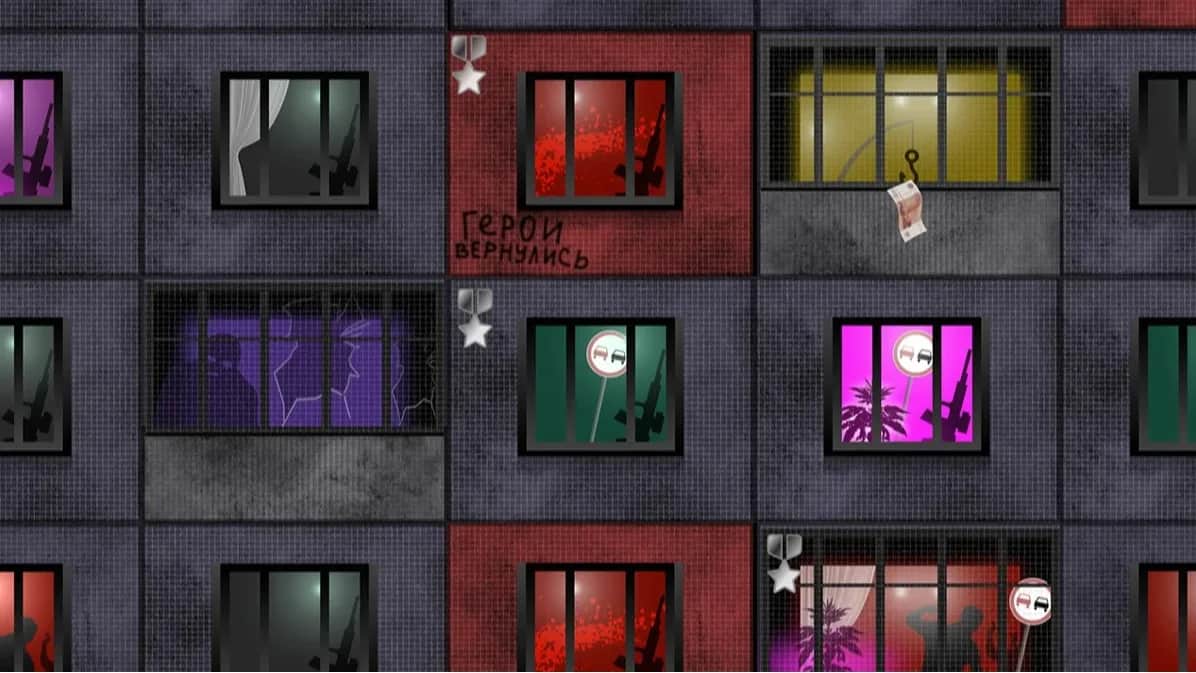
The attempted murder of the Ramazanov family is far from an isolated incident. It is one of thousands.
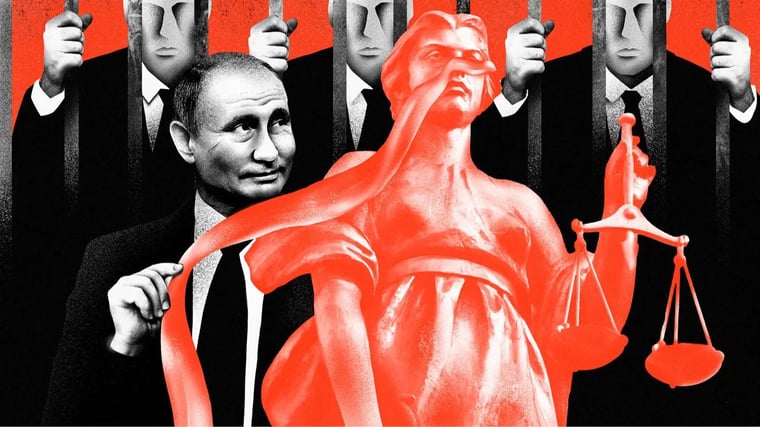
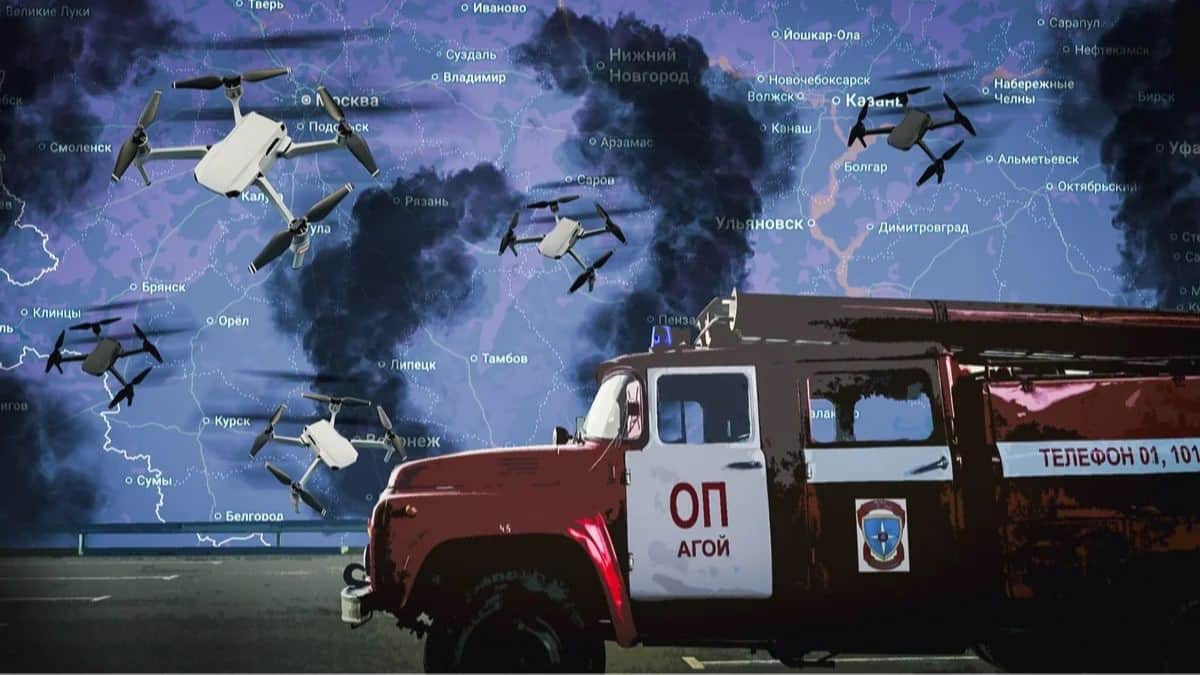
Illustration: Novaya Gazeta Europe
Counting the cost of return
Since Russia launched its full-scale invasion of Ukraine in 2022, hundreds of thousands of men have passed through the front line. By the end of June 2025, the Presidential Administration said that 137,000 soldiers had returned home. What is far less known is what then happens next.
Novaya Gazeta Europe has analysed court rulings published since 2022 and found around 8,000 criminal judgments in which the defendant is explicitly identified as a participant in the “special military operation”. Roughly 7,000 of these were handed down by civilian courts, meaning they concerned veterans who had already returned to civilian life. A further 1,000 verdicts in military courts involved “civilian” crimes — excluding desertion and similar offences — committed by active servicemen.
Set against the official number of demobilised soldiers, this suggests that at least 6% of those who have returned from the front have already been convicted of criminal offences.
The trend is accelerating. In 2022, we identified around 350 such cases. In 2023, there were roughly 2,500 verdicts. In 2024, over 4,700. For 2025, about 1,100 verdicts have so far been published, though statistics for the year are incomplete.
These figures are a lower estimate. Not all court decisions are published, and not all crimes ever reach trial.
‘I’ll cut your head off’
Nikolay and Darya Merzlykh met online in Furmanov, a small town in Russia’s central Ivanovo region. They moved in together and married just two months later. But after the wedding, Nikolay, a veteran of the war in Ukraine, began drinking heavily. Arguments quickly escalated into threats and violence.
Darya went to the police three times, reporting that she and her elder daughter had been beaten and threatened. “I’ll stab you right now — I’ll cut your head off,” Nikolay shouted during one confrontation, waving a knife.
It was only then that investigators revealed the full extent of his past: Nikolay had several previous convictions, including for murder. “Do you even know who you married?” one officer asked. Practical help, however, was minimal.
Fearing for their lives, Darya moved out with her three children from a previous relationship and went to live with her mother. Nikolay continued to pursue her. In May 2024, they encountered each other by chance on the street. He dropped to his knees in front of her. She responded with a string of curses. By that point, he was heavily drunk.
He pulled out a Swiss army knife and began stabbing her. Darya’s mother tried to intervene, but was thrown to the ground. Between them, the two women received around 20 stab wounds. They only survived because the children ran into a nearby shop and called for help.
During the trial, it emerged that instead of serving a 14-year prison sentence, Nikolay had already been planning to return to the front. “I tried to help you,” Darya told her ex-husband after the verdict. “I thought you would change. I wanted to fix you.”
Illustration: Novaya Gazeta Europe
Who are the convicted veterans?
Almost 2,000 convicted veterans — roughly one in four — were wounded, concussed, or left disabled by the war. Around 4% have been formally diagnosed with alcoholism or drug addiction, though such conditions are inconsistently recorded in court documents. In 116 cases, courts explicitly noted post-traumatic stress disorder, personality disorders, or intellectual disabilities.
At least 40% of defendants had received military awards. The most common was the Medal for Courage. Others included medals named after Soviet generals, commendations from the leadership of the Russian-backed Luhansk People’s Republic in eastern Ukraine, and decorations from the Wagner mercenary group, including For the Capture of Soledar and the grimly named Bakhmut Meat Grinder. Some 1,385 defendants are known to have fought with Wagner.
Over 900 veterans were prosecuted for violent crimes, including murder and serious assault. In 423 cases, victims died — sometimes in fatal drink-driving incidents. Among the victims were at least 52 family members: partners, children, mothers, grandmothers, and sisters. Alcohol often played a role. Compared with other men, former soldiers commit an unusually high number of homicides and assaults with serious consequences.
“This is definitely a statistically significant difference in the number of convictions,” said Kirill Titaev, a researcher studying Russia’s law enforcement system and a professor of social sciences in Montenegro. “Either less serious crimes are filtered out and never reach court, or ‘veterans’ really are committing more murders. Or both.”
Both explanations appear plausible. Signs suggest that minor offences committed by veterans often never reach trial. At the same time, a post-war spike in homicide is a well-documented phenomenon in studies of 20th-century conflicts.
Russia’s case has its own specifics. Military recruitment included large-scale enlistment from prisons and courtrooms. Those who went to war were likely already more prone to violence.
Still, violence is not the most common reason veterans end up in court. Like civilian crime more broadly, the most frequent charges involve theft and other property offences (around 3,000 people), traffic violations (1,800), drug offences (1,500), and fraud (nearly 400).
“In our imagination, criminals are terrifying murderers and rapists,” Titaev said. “In reality, the most ‘popular’ charge is drug-related. And when it comes to violence, the typical scenario is a fight that sometimes escalates to a homicide. From that point of view, convicted veterans are not radically different from other defendants, though they may have specific features we do not yet fully understand.”
Overall, veterans are convicted about 1.7 times more often than men of the same age who did not go to war. But if you narrow that comparison to young men with low incomes, without higher education, and those from rural areas or small towns — the social profile of many recruits — the difference shrinks.
“Crime in Russia is extremely unevenly distributed by gender, age, and social status,” Titaev explained. “A person without higher education is about seven times more likely to be convicted than someone with a degree. A low-income man from a rural or small-town background who has been to war commits crimes with roughly the same very high probability as a man with the same background who did not go to war.”
Feeding the front
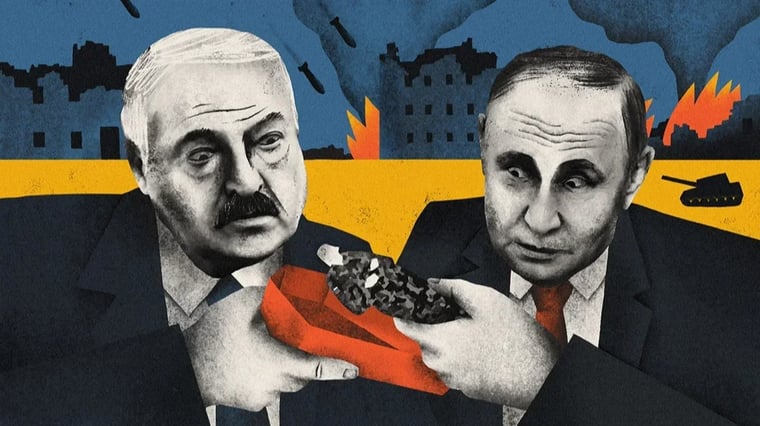
By the summer of 2022, reports emerged of prisoners being granted early release from Russian jails if they enlisted to fight in Ukraine. Initially, this was organised by the Wagner Group and its founder, Yevgeny Prigozhin, who promised inmates a pardon once they completed six months on the front line.
Prigozhin claimed to have halted recruitment in February 2023. He was killed later that year. The state, however, did not abandon the practice, and by that same summer, Vladimir Putin confirmed that he was personally signing presidential pardons for prisoners who had fought in Ukraine. A year later, a law was passed exempting those who signed contracts with the Defence Ministry from criminal liability.
The first group of pardoned ex-prisoners returned in January 2023. Almost immediately, the media reported murders and rapes committed by demobilised Wagner fighters.
Many of the pardoned had previous convictions for violent crime, sometimes more than one. In September 2023, Oleg Grechko from the central Russian town of Zavolzhye, twice convicted of murder, went on trial again. Without completing his previous sentence, he had gone to the front, likely with Wagner. Six months after returning home, he quarrelled with his sister, poured petrol over her as she slept, and burned her alive. As the war drags on, such cases are becoming more frequent.
At least 2,139 convicted veterans had prior convictions. Of these, 656 had been pardoned by Putin after being granted early release from prison in exchange for agreeing to serve at the front. In other words, 27% of convicted veterans already had a criminal record — lower than the national average, which in 2024 was 44%, including spent convictions. The gap may partly reflect the fact that courts do not always list expunged convictions in published decisions.
Some veterans should still have been serving sentences for earlier crimes, but were instead deemed to have “atoned” for them at the front. One was Yevgeny Tverdokhlebov. In January 2022, he burned a man alive after suspecting him of flirting with his partner and was sentenced to 15 years in a high-security penal colony. After six months, he went to fight in Ukraine. He returned with a Medal for Courage and a presidential pardon — and soon began drinking and beating his partner. After another assault left her hospitalised with a ruptured spleen, Tverdokhlebov was back in court.
Over 1,000 veterans have been convicted multiple times for similar offences. In 90 cases, these were violent crimes.
Privileges in court
A contract with the Defence Ministry now brings tangible legal privileges. One of the most important is immunity from prosecution. In 2024, Putin signed a law exempting active participants in the war from criminal liability. For the state, this expands manpower; for defendants, it can mean avoiding punishment altogether. Criminal cases are first suspended and can later be closed entirely — for instance, in cases where the defendant is awarded a medal.
Even after returning from the front, veteran status can influence sentencing. Our statistics show that a third of former participants receive lighter punishments than civilians convicted of comparable offences. Only 15% receive harsher sentences. Courts often impose fines or compulsory labour instead of custodial sentences.
One example is Alexander Kashkaryov, a war veteran who threatened a shop assistant in a discount alcohol store and stole bottles of vodka and wine. Despite at least two prior theft convictions, the court cited his “impeccable service to the fatherland”, his awards and combat injuries, and imposed a fine of just 10,000 rubles (€110).
On the whole, judges are less inclined to imprison veterans for almost any offence — especially drug possession without intent to sell, drink-driving, and robbery without aggravating factors. For violent crimes, however, veterans’ chances of imprisonment are roughly the same as for other defendants.
“We see a softer attitude towards veterans in the courts,” Titaev said. “There are two possible explanations. One is a specific privilege for participants in the war. The other is social structure. The typical defendant in Russia is often unemployed and socially marginalised — some estimates suggest up to 20% do not even have identity papers. A war veteran, by contrast, usually has some income and social ties. In that sense, he is not the same as the average defendant.”
Beyond sentencing, many cases involving former soldiers may never reach court at all. There are no reliable statistics on how often police, prosecutors, witnesses, or victims show leniency toward veterans. What is clear is that the war does not end when soldiers come home. In thousands of Russian households, it arrives quietly — and sometimes violently — through the front door.