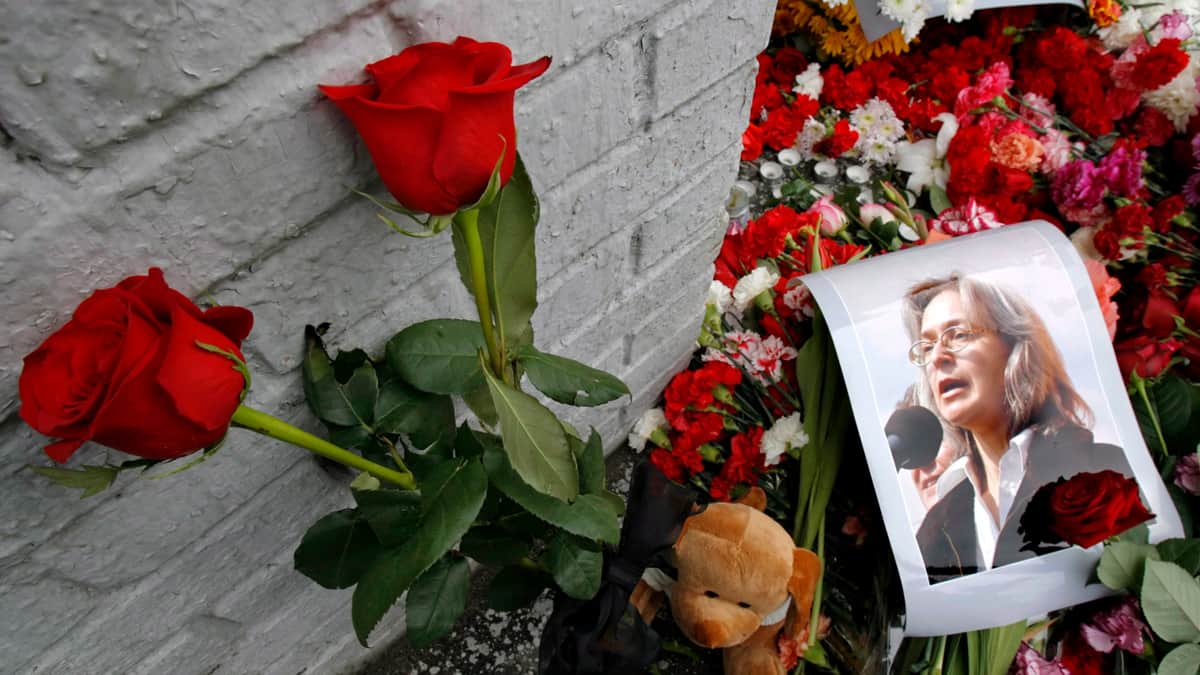
Though it may sound unlikely, cooperation between like-minded activists from Russia and Ukraine has a well-established precedent. The late Boris Nemtsov, a prominent Russian opposition leader who was ultimately murdered in a drive-by shooting in 2015, endorsed Ukraine’s Orange revolution in the early 2000s and the subsequent Revolution of Dignity or Maidan in 2013–14.
Nemtsov was even appointed economic advisor to Ukrainian President Viktor Yushchenko in 2005, and was posthumously awarded the Ukrainian Order of Liberty in recognition of his service to the Ukrainian people.
In the years after Nemtsov’s death, vocal support for Ukraine among Russia’s political opposition diminished. Alexey Navalny, who emerged as Nemtsov’s unofficial successor even expressed his doubts about the need for Russia to return the annexed Crimean Peninsula, though he did change his stance before his own murder in 2024. Following Russia’s full-scale invasion of its neighbour, however, Ukrainians have increasingly found common ground with Indigenous groups within Russia who disagree with Moscow’s political course.
Calls to action
Cooperation between the Ukrainian state and dissident minority groups in Russia pre-date the full-scale invasion in 2022. Chechen volunteers opposed to modern Chechnya’s political course have fought in the Armed Forces of Ukraine since 2014, forming their own military units to defend eastern Ukraine against Russia-backed insurgents. However, it was the full-scale Russian invasion that ushered in an unprecedented level of partnership.
“Several ethnic minority leaders now base their work in Ukraine,” says Yaroslav Yurchyshyn, who represents the liberal, pro-European Holos Party in Ukraine’s parliament, adding that many indigenous campaigners from Russia had been granted asylum in the country over the years, naming ethnic Erzyan, Buryat, and Chechen activists among them.
Chechen fighters from the Dzhokhar Dudayev Battalion pose with the flag of the Chechen Republic of Ichkeria, during military exercises in the Kyiv region, Ukraine, 28 August 2022. Photo: EPA / Oleg Petryasuk
When the war began, national minority leaders condemned Putin’s actions, expressing support for Ukraine and making it clear that they didn’t see their nations as a part of the Russian imperialist state, Yurchyshyn told Novaya Gazeta Europe, adding that it was really then that the idea for Ukrainians and ethnic minorities within Russia to work together against the Kremlin was born.
Yurchyshyn credits the unifying power of shared historical experience in forging such strong bonds between the two groups, noting that both Ukrainians and Russia’s ethnic minorities were subjected to unprecedented Soviet repression during the 20th century, including attacks on national intelligentsias, the suppression of national cultures, and harsh policies of Russification.
Yurchyshyn believes that Russia’s diverse makeup cannot be ignored when conversations about the future of Russia are held.
Yaroslav Yurchyshyn
Ethnic Russians comprise 72% of the current Russian population, a figure that has seen a 5% decline since 2010 alone. As a result of assimilation policies, the share of those identifying as Russian has increased in regions where the indigenous population was already a minority, with a proportional decline in those identifying as ethnically non-Russian. However, fewer people now see themselves as ethnically Russian in regions where Russians themselves are a minority group, such as the North Caucasus, Tyva and Yakutia.
In 2021, when Russia conducted its last census, there were 25 million people who declared an identity other than Russian, as well as 16.6 million people who chose to declare no ethnic identity at all. Nevertheless, Russia is still widely seen as an exclusively Russian state internationally, something Yurchyshyn believes must change.
His belief that in order to successfully foster stability and democracy in the region, a deeper understanding of the Russian Federation’s ethnic diversity is essential is what drove Yurchyshyn to create the Temporary Special Commission for Interaction with the Indigenous Peoples of Russia in the Ukrainian parliament alongside other deputies.
“We understood that these groups need to be represented and that we could be the first to do so. Otherwise, they will continue to go unseen and unheard, as if they don’t exist,” Yurchyshyn said of the decision to found the commission.
Right now, the commission is drafting a law that would define the Ukrainian government’s policy for interacting with Russia’s indigenous nations, which Yurchyshyn says enjoys the backing of deputies from across the political spectrum as well as Ukraine’s Foreign Ministry.
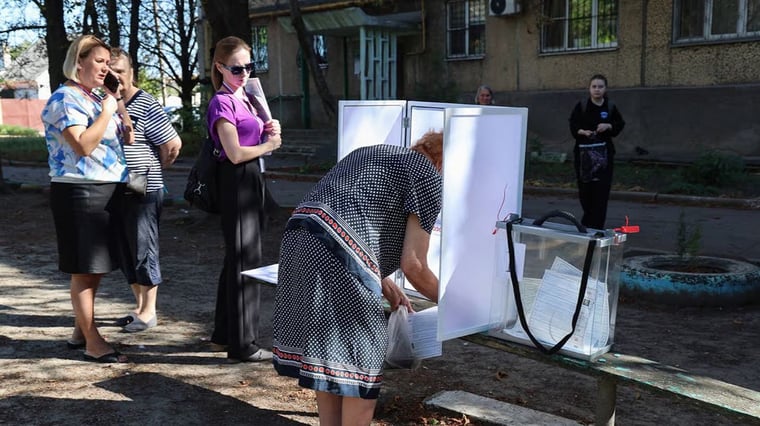
A torn Russian flag flies in the Russian-occupied Ukrainian city of Mariupol during an internationally condemned referendum on joining the Russian Federation, 25 September 2022. Photo: EPA
In addition to legislative efforts within the country, the commission aims to support Russia’s indigenous peoples on the global stage, and successfully campaigned for one third of the places on the Council of Europe’s newly established Platform for Dialogue to be reserved for representatives of Russia’s national minorities.
Yurchyshyn describes Ukraine’s ultimate objective as winning Russia’s national minorities the right to choose their own path, something that’s currently impossible due to strict Russian laws that make calling for regional independence or even autonomy a criminal offence. National republics in Russia in many cases have no rights, Yurchyshyn says, “only obligations to hand over money and resources to Moscow”.
“Our main goal is not separatism or breaking Russia up. Decisions like that can only be made by those who live there,” Yurchyshyn says, adding that forging “a mechanism for preserving national self-determination, identity, language, culture” is a responsibility the commission’s members feel.
While the commission works with the indigenous peoples of Russia specifically, Yurchyshyn does not rule out working with other anti-Putin forces, provided that they are clearly opposed to Russian imperialism and want “to facilitate Russia’s transformation into a more democratic state”.
Echoes of the past
The shared experience of Soviet rule is also behind the re-emergence of the Anti-Imperial Block of Nations (ABN), a civic organisation made up of Ukrainians and ethnic minorities from Russia that was dissolved in 1996, but was then refounded in 2023 in a very different geopolitical landscape.
“Our predecessors understood back in World War II that Moscow’s imperialism, then in the form of Bolshevism, was no less a threat to the civilised world than fascism or Nazism,” says ABN vice president Oleh Vitvitsky, who adds that his impetus to get involved was his understanding that Ukrainians and Russian national minorities had a “common enemy” in Moscow.
The modern-day ABN runs the University of Free Nations, a forum in which experts from around the world train regional and separatist activists from the Russian Federation in topics ranging from economics and communication to international law, to assist them in their struggle against rule from Moscow.
Anti-Imperial Block of Nations vice president Oleh Vitvitsky. Photo: Oleh Vitvitsky
ABN is not shy about its ambitions to equip activists to build their own nation states either. “We are training the future elites of new countries: future deputies, government officials, or even presidents,” says Vitvitsky, adding that communicating the issues faced by ethnic minorities in Russia to the outside world remains a challenge.
“We are constantly trying to communicate the importance of safeguarding the rights of Russia’s indigenous people, but the issues we raise with American or European politicians are mostly unfamiliar and incomprehensible to them. We have to make much more effort to convey our ideas and proposals.”
To remedy the lack of international awareness of Russian indigenous peoples, ABN has curated an exhibition called Putin’s Real Prisoners: Political Prisoners of the Enslaved Nations, which tells the stories of ethnic minority activists imprisoned in Russia for their activism and that has so far been mounted in over 20 countries.
Vitvitsky says flat out that he doesn’t believe Russia would honour any treaty it signed.
Many of the ABN’s awareness-raising events take place in Ukraine, where, despite traditionally close ties to Russia, few people are familiar with the political struggles of non-ethnic Russians.
Despite such difficulties, the organisation maintains a hopeful outlook, believing that both Ukrainian victory in the war and, ultimately, the collapse of the Russian Federation are inevitable.
Though Vitvitsky says flat out that he doesn’t believe Russia would honour any treaty it signed, he is adamant that were a peace deal to be reached, the ABN’s activities would “not be affected at all”, and that it could even strengthen the movement, as so many of its members who are currently at war would be able to return to their regional activism.
One way out
The Free Nations of Post-Russia Forum (FNPRF) is perhaps the best-known platform advocating for the dissolution of the Russian Federation in its current form, and its founder and head Oleg Magaletsky told Novaya Europe that it was the full-scale Russian invasion of Ukraine in 2022 that led him to do so.
Magaletsky says he decided to act having concluded that the only thing that would safeguard the world from Russian imperialism was “the demilitarisation and decolonisation of this empire, which uses its colonies to get people to fight against free nations, and from which they extract resources to finance its imperialist wars”.
Indeed, as the Russian regions with the highest proportion of non-ethnic Russians in them, such as Bashkortostan and Tatarstan, lead the way nationally in terms of confirmed war casualties, it’s no exaggeration to say that Moscow extracts not only natural resources, but also human resources from its national republics.
Oleg Magaletsky
Unsurprisingly, the Russian state keeps close tabs on any group advocating for decolonisation. Two years ago, Russia’s Supreme Court declared the FNPRF to be a terrorist organisation that had “172 anti-Russian chapters”.
Though in reality the FNPRF is little more than a platform bringing together like-minded activists and groups, Magaletsky says that there are frequent attempts by Russian intelligence agencies to infiltrate the organisation. “They try to put the wrong people in the right place, so it’s a part of our job to ensure such people don’t get those opportunities.”
“We need to make it clear for both people inside Moscow’s colonial empire, and also for those who live in the free world … Russia is not a federation,” Magaletsky stresses. “That may be their name, but it’s actually a colonial empire.”
As Putin’s war against Ukraine enters its fifth year and Russian rhetoric towards the West grows ever more aggressive, support for the FNPRF and its ideas is growing, and anti-Kremlin events are now much easier to hold, Magaletsky says.
“People in the West once believed in a democratic Russia, and a lot of them believed in so-called ‘good’ Russians. But after the first, second, third year of war, they began to realise that Russia remains imperialist at its core. They realised it’s insufficient to simply change the name of the tsar, we need to change the whole system too.”
Magaletsky doubts that Russo-Ukrainian negotiations will result in a lasting peace. “I, of course, like all people in Ukraine, dream about a ceasefire. But Moscow doesn’t want peace, and, as a result, there won’t be any,” Magaletsky warns.
“If a ceasefire is agreed, we should use the pause in hostilities to ramp up support for decolonisation. The Russian state will likely use the lull in fighting to prepare its forces for a much bigger war, not only against Ukraine, but against the Baltic states, the Nordic countries, and beyond.”