


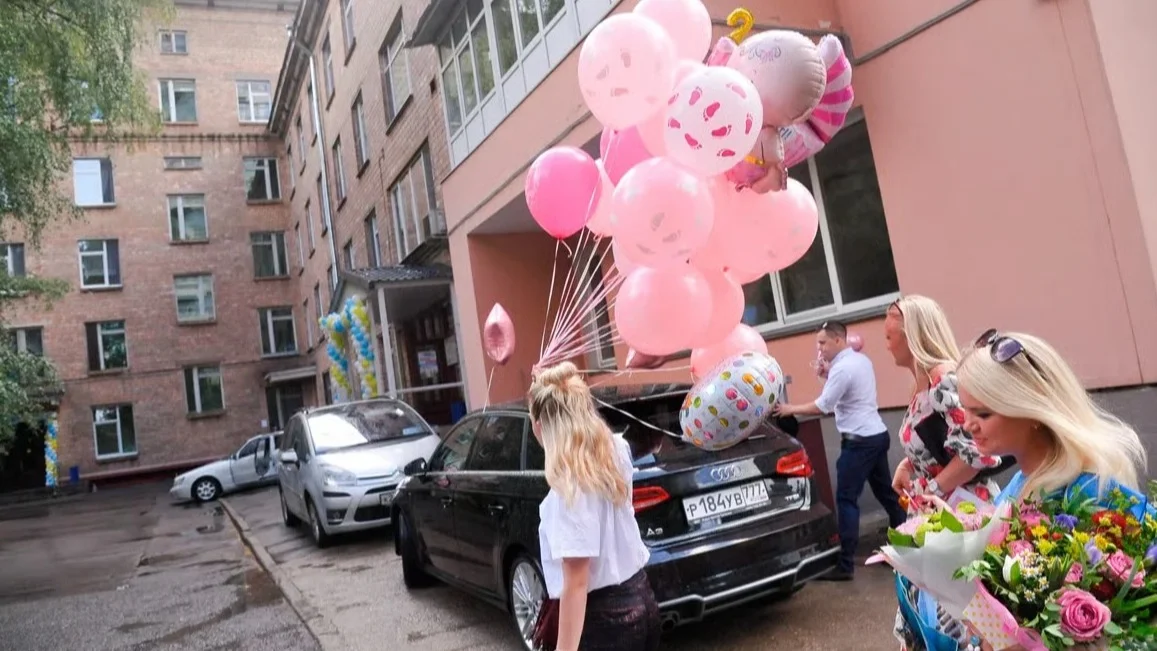
An online community in which women offer free assistance to other women is rapidly being duplicated around the world. Though it originated in Kazakhstan, replica groups in which women offer to pick up young mothers from the hospital after they’ve given birth and help them to get home safely have sprung up all over Russia and beyond.
Baby on board
When Kazakh psychologist Saltanat Muradova wrote a post offering to help new mothers get back home from Almaty’s maternity hospital in October, she had no idea that she’d be creating a social movement that would quickly spread around the globe.
“I read about a woman who was forced to go home alone after giving birth, taking her bags and her baby on a bus,” Muradova says. “I felt terribly sorry for her. And so with that in mind, I wrote a post saying that I lived near the maternity hospital and could help people in difficult situations.”
“I imagined it like this: a woman would write to me, I would come to her, carry her bags to a taxi, pay for it, and help her get home. I don’t have a huge amount of money to spend on support, but I can definitely provide help on that small scale,” Muradova told Novaya.
However, when she checked back a few hours later, she saw that her post had already been liked and shared several thousand times and had accumulated hundreds of comments, in which women from all over Kazakhstan shared their stories of post-natal loneliness.
One of the women who responded related her experience of giving birth to a child with disabilities. “It was unbearably hot outside, and I had to take a bus at rush hour with my new-born. It was awful, my bag was heavy, and I was desperately thirsty. After rummaging through my things, I had to ask the girl sitting next to me to help me find a bottle of water. And then I had a panic attack — I was sobbing uncontrollably and couldn’t stop.”
Another woman from Kazakhstan wrote: “Can you imagine what state I was in? On the one hand, I was overjoyed to meet my daughter; on the other, I felt an emptiness: nobody needed me, not even the father of my child. … I held on as best I could, and at night I quietly cried into my pillow. As I’m writing this, my tears are flowing again: it’s all coming back to me.”
The response was overwhelmingly positive, and as so many people indicated that they would like to help other new mothers as well, Muradova created a WhatsApp group where women could come together to help one another out.

A mother plays with her child in a fountain in Sochi. Photo: EPA / Hannibal Hanschke
“Anyone who wants can join. There are already more than 200 women in the group. Some have been involved in charity work for a long time, others have no such experience but are ready to help in whatever way they can: bringing over a pot of soup, passing on their old baby items, giving away formula their child doesn’t like, and so on. It’s turned into a purely female, motherly community,” Muradova says.
The community’s popularity is quite simple to explain, according to Muradova: small acts of kindness often require relatively little effort, but are hugely appreciated. “Meeting a woman after she’s given birth, carrying her things, paying for a taxi — anyone can do that.”
“Giving birth is like being run over by a truck — that’s how demanding it is on a woman’s body. All sorts of things happen to women during childbirth: some go blind, some suffer strokes. It’s an enormous strain on the body, and today it is very much devalued: it’s as if you gave birth for yourself, so don’t complain and go straight back to work. That’s the wrong attitude, and it needs to change.”
“Recently we met a woman from the maternity hospital who had been sent there urgently from a village in the Almaty region, so no one had come with her. And that meant she would also have had to get back to her settlement on her own after giving birth. We met her and paid for a special taxi so that she could travel home comfortably with her baby,” Muradova says.
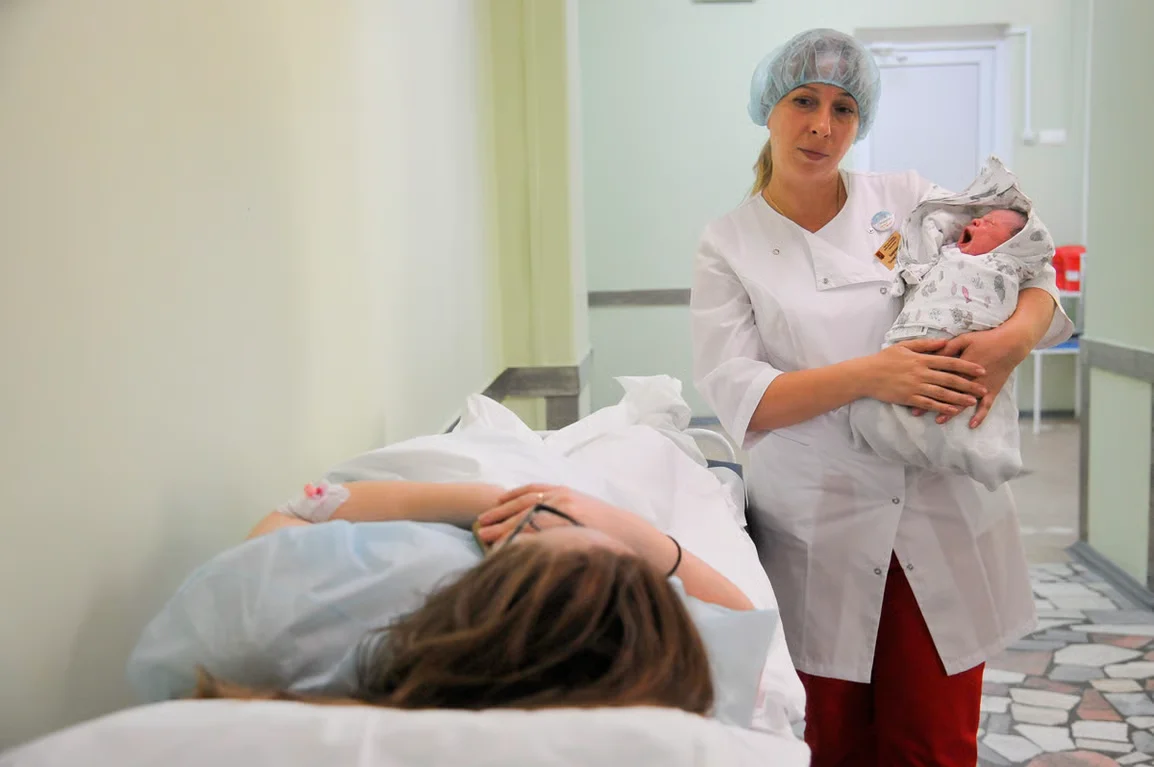
Photo: Alexander Avilov / AGN Moscow
Stepping up
Thanks to Yulia Komar, a baker and jewellery designer from Anapa on Russia’s Black Sea coast, the community took off in Russia in November. An experienced volunteer who has organised fundraisers for rescued animals and to fund medical treatment for children, Komar recounts how she collected and took a young mother home from her local maternity hospital.
“I’m quite open on my blog, and people sometimes just write to me to talk. Several years ago I was corresponding with a woman who had just given birth, and she wrote to me saying she was about to walk home with her baby. I wrote back: ‘What do you mean, walk? How is that possible? I’m coming right now.’”
“As it turned out, she had argued with her husband and he hadn’t come to meet her. She told me that she felt awkward bothering me, but I went to the maternity hospital without making a fuss,” Komar told Novaya.
“Now it’s spread across the whole country, like a chain reaction. I didn’t expect the post to take off like that.”
Having seen Muradova’s now famous social media post, Komar decided to write a similar one herself. “I wrote that post several times and deleted it as I was afraid people would say I was doing something silly. But in the end I posted it one evening, and the next morning I woke up to literally hundreds of comments.”
“Now it’s spread across the whole country, like a chain reaction. I didn’t expect the post to take off like that,” Komar says, adding that although she’s not yet been asked to pick anybody up from the hospital, people have asked her for all kinds of favours — buying medicines, delivering clothes, providing food.
“It’s incredible to read how women support one another: ‘My dear, everything will be fine, we’ll come and pick you up, and buy everything — balloons, a cake, flowers.’ And it’s important that women see a post like this and ask for help.”
Sometimes it’s as simple as helping a vulnerable new mother to get home safely so that she can sleep, spend as much time as possible with her baby, and regain her strength. As Alexandra, a young mother from St. Petersburg who recently contacted the volunteers, puts it: “The hardest thing was overcoming my own embarrassment. Why should anybody help me, when I’m perfectly healthy?”
The shadow of a woman pushing a stroller through Moscow’s Ostafyevo Park. Photo: EPA / MAXIM SHIPENKOV
“My husband works away from home for several months at a time. My son is six months old. Sometimes I can’t even get out to the shop, not even to buy medicine. A friend of mine saw that a woman on Instagram was offering help, and told me to get in touch with her. I thought about it and wrote to her, and got a visit from a girl named Natasha. I gave her some money, and she went to the shop and spent some time with my son. It was a real relief.”
Realising that she needed help getting herself back home after an operation in hospital, Tatyana, from Novgorod in northwestern Russia, also decided to take up an offer of assistance posted on social media by a local resident, Yekaterina.
“My husband died in the summer, and I was left alone with two children. I had to go to hospital for an operation, and my mother was busy looking after the children when I was discharged, and I have no other relatives in Novgorod. Quite by chance I saw an Instagram post by a woman I had known for a long time and so I wrote to her. Yes, I could have used a car-sharing service and driven home myself. But I had bags with me, and I wanted to bring a Christmas tree for the children, so I decided that I needed help.”
Yekaterina picked Tatyana up from the hospital in her own car and took her home. Another woman offered to bake a cake as a gift for the children. “I think this is a great initiative. I suppose most women feel too embarrassed to admit that they need help. … But women do need one another’s support, that’s absolutely certain,” Tatyana says.
Four hats instead of two
Several years ago, while still living in Omsk, Moscow-based entrepreneur Anastasia Vishnyakova gave birth to twins. In the same hospital room with her was a woman who had also given birth to two babies, but she had to be transferred to another hospital later the same day due to health issues.
“And I was left in the room with four babies. I asked my mother to bring not two hats, but four, and twice as many nappies. I remember my husband saying, ‘Why do we need so many nappies?’ I told him, ‘We just do — bring plenty of them, because there are two more babies in our room without their mother.’ A few days later the mother came back for her children,” Anastasia recalls.
Another woman who shared the room with her stayed in the maternity hospital for several months with a premature baby. The women kept in touch from time to time. “I was already at home. And she called me and said she was being discharged. This was in Omsk, in December, and it was minus 35 degrees outside.”
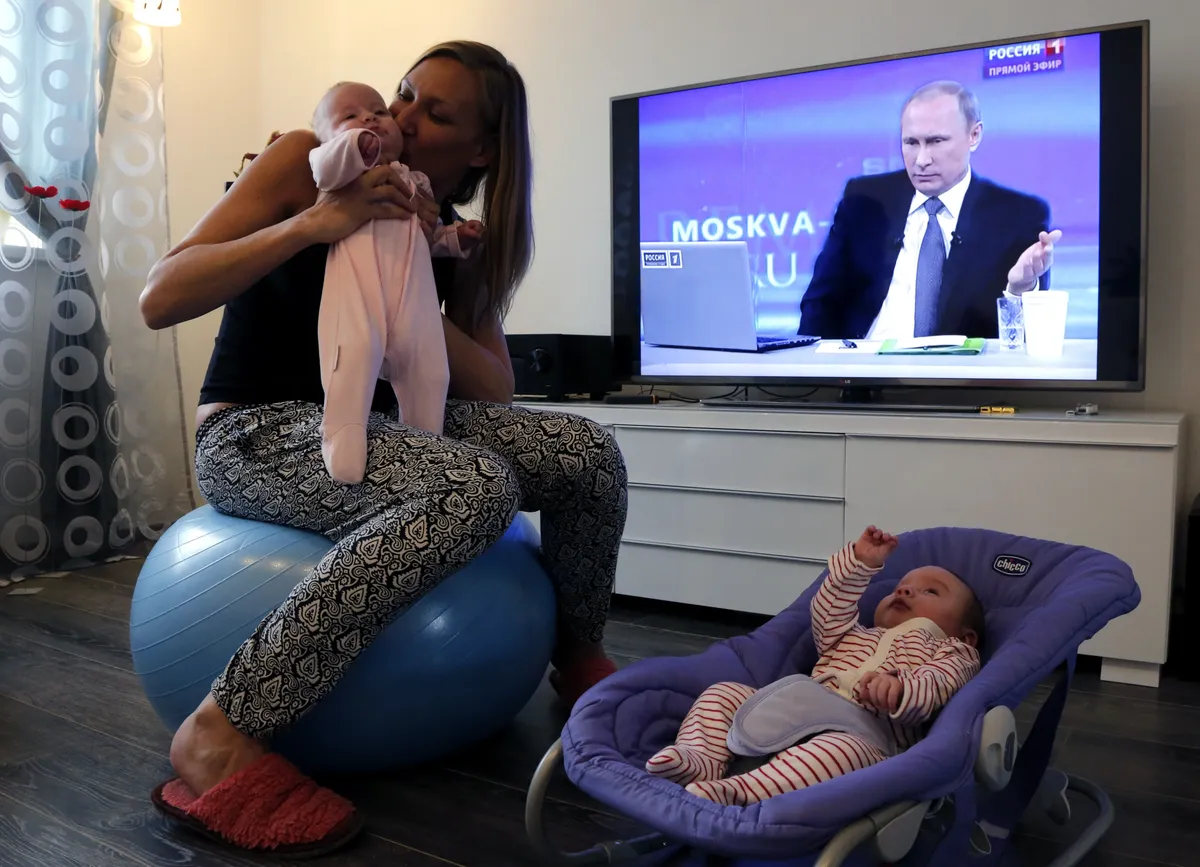
A young mother looks after her children at their home in St. Petersburg, Russia, 16 April 2015. Photo: EPA / Anatoly Maltsev
“She said her father and grandfather probably wouldn’t be able to pick them up. I told her, ‘I’m coming right now’. She tried to argue, saying I had twins to look after. Yes, I said, but I have a nanny and two grandmothers, and you have a premature baby, and it’s minus 35 outside. So I went and met her.”
When Vishnyakova saw Komar’s post, she remembered her own emotions at the time and made the decision to help young mothers herself.
“I posted in the evening, and in the morning I woke up to find the post had really taken off. There were thousands of comments, so many similar stories, and so many emotions women had experienced in situations like that. With my post, I wanted people to pay attention to their close ones, to pregnant neighbours and young mothers.”
Riding this wave, she created a Telegram channel that currently has just under 7,000 members. “Many women write in to say that through this group they’ve made new friends, received useful information, made new connections, and learned that they are not alone, Anastasia says. “Some just need some advice, some just need to talk to other mothers — that’s also a form of support. It’s important for women to know they’re not alone.”


