StoriesSociety

On borrowed time

How Transnistria is coping without the transit of Russian gas via Ukraine

On borrowed time

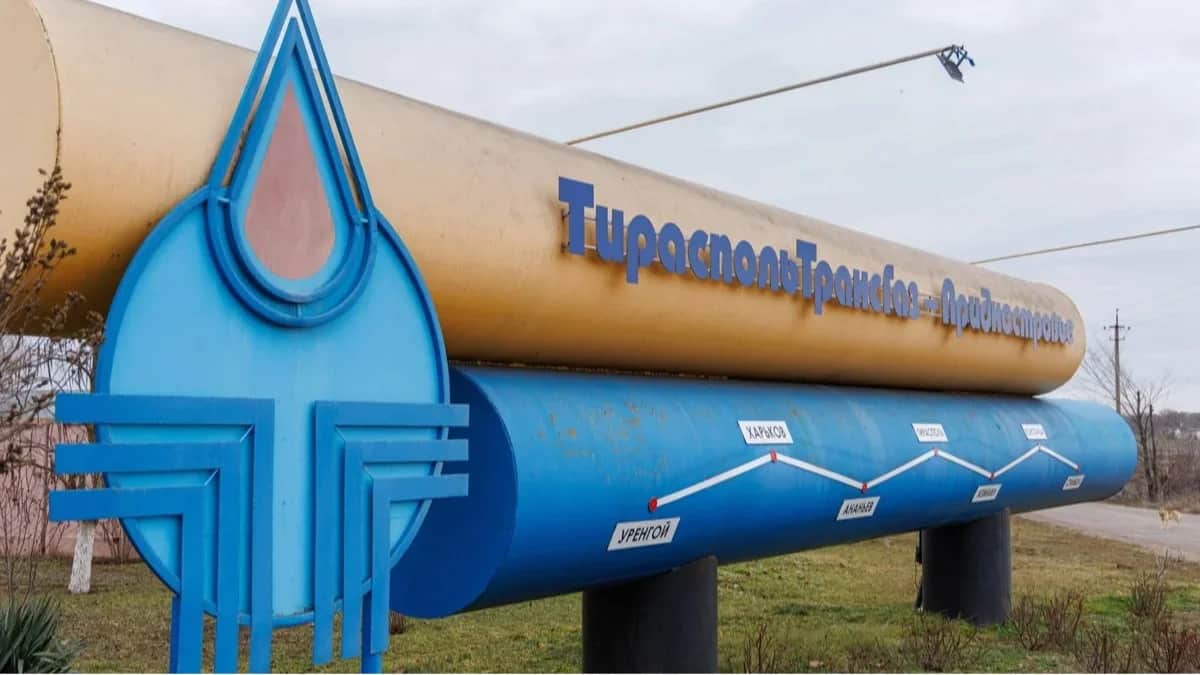
A Tiraspoltransgaz gas distribution station in Transnistria, Moldova, 4 February 2025. Photo: Artyom Kulekin / Sputnik / ImagoImages / Scanpix / LETA

The self-proclaimed republic of Transnistria in eastern Moldova has lived with an energy crisis and strict austerity for almost a year following Ukraine’s decision to halt the transit of Russian gas across its territory — supplies that for three decades flowed into the region free of charge and underpinned both the local economy and the pro-Russian political system.

NewsMaker (NM), an independent news outlet based in Moldova, has examined the state of Tiraspol’s energy sector and economy, and whether the past year has brought Moldova any closer to reintegration.

A fragile gas supply

Transnistria — a self-proclaimed, pro-Russian region of Moldova on the left bank of the Dniester — is heading into another winter with an unstable and unpredictable gas supply. For decades, the region relied on what was effectively free Russian gas, rarely experiencing shortages and with little incentive to conserve energy. Today, it receives around 3 million cubic metres of gas per day — far less than was required in previous winters, a serious shortfall for a region heavily dependent on energy-intensive industry.

The regional economy is living from one gas shipment to the next: any disruption in payments or delay in checks by European banks immediately turns into the risk of a renewed energy crisis for the entire region.

Gas no longer reaches Transnistria directly from Russia’s Gazprom. Instead, it is European gas bought on the EU market through a complex arrangement involving Moldova’s national operator Moldovagaz, in which Gazprom holds a controlling stake, the Transnistrian operator Tiraspoltransgaz and the Hungarian firm MET Gas and Energy Marketing AG. Russia covers the cost, while Transnistria formally receives the gas on credit.

The arrangement remains fragile. Vadim Ceban, acting head of Moldovagaz, has said the instability is driven by fragmented procurement — up to three consignments a month — and compliance checks by European banks on the companies handling payments.

Gas is now bought in short tranches, Ceban said, covering just 10 to 15 days at a time. As a result, the regional economy is living from one gas shipment to the next: any disruption in payments or delay in checks by European banks immediately turns into the risk of a renewed energy crisis for the entire region.

A minibus in the darkness of a scheduled power cut in Varnița, Moldova, 17 January 2025. Photo: Daniel Mihailescu / AFP / Scanpix / LETA

A minibus in the darkness of a scheduled power cut in Varnița, Moldova, 17 January 2025. Photo: Daniel Mihailescu / AFP / Scanpix / LETA

Paradise lost

Before Russia’s full-scale invasion of Ukraine, Transnistria had almost never faced gas shortages: the region received as much as it needed, while households and businesses paid only symbolic prices.

Things first changed in 2022, when Gazprom cut deliveries to Moldova from roughly 8 million to 5.7 million cubic metres a day. Under the contract, the right bank of the Dniester was to receive about 1.2 billion cubic metres a year, while the left bank — Transnistria — was allocated roughly 2 billion.

Chișinău diverted all Russian gas to Transnistria. Some of it was used locally, while the rest was sent to the Moldovan GRES power plant, which supplied electricity to both banks of the Dniester.

Things took a turn for the worse in January, when the gas transit agreement through Ukraine expired. Moscow and Kyiv did not renew it, and Gazprom supplies to the region stopped. Although it was known in advance that the transit would end, neither Chișinău nor Tiraspol prepared for this outcome in time.

Decades of easy access to gas had left the region almost fully gasified, with few alternatives for heating. From 1 January, gas supplies were cut entirely in rural areas and restricted in towns to gas ovens only. All gas-dependent industrial enterprises were forced to shut down.

The EU offered a €60 million aid package, tied to conditions including democratic reforms, improvements in human rights, and gradual tariff increases for households and industry. In Tiraspol, the offer was largely ignored.

After gas supplies were cut off, Chişinău proposed purchasing fuel for the region on the European market, but Transnistria’s de facto authorities refused. On 10 January, Transnistrian leader Vadim Krasnoselsky travelled to Moscow, where he announced that Russia would provide the region with gas as “humanitarian aid”.

Soon afterwards, it emerged that the Moldovan company Natural Gaz DC had signed a contract with Tiraspoltransgaz. Arkady Vikol, a co-owner of Natural Gaz DC, said the company planned to buy two to three million cubic metres of gas per day on European exchanges, generating around 3 million Moldovan lei per day (€150,000) in daily tax revenues for the Moldovan budget.

Chişinău responded that, under the law, only Moldovagaz was authorised to supply gas to the region. A compromise followed: Moldovagaz would deliver the gas, sourced from Hungary’s MET, and payment would be made via a Dubai-based company. Transnistria says the purchases are financed by a Russian loan, though the terms of that loan have not been disclosed.

At the same time, the EU offered a €60 million aid package, tied to conditions including democratic reforms, improvements in human rights, and gradual tariff increases for households and industry.

In Tiraspol, the offer was largely ignored. In November, Krasnoselsky criticised it during a meeting with the Dutch ambassador, Fred Duijn, saying such “aid” could not be accepted under what he described as “onerous conditions”, and suggesting that the money be used instead for wastewater treatment facilities in Chişinău and other cities — “because sewage ends up in the Dniester.”
Economic fallout

After gas supplies resumed, Moldova refused to buy electricity from Transnistria. Although the Moldovan GRES power plant was initially listed to supply electricity to cover technical losses in the national grid, it quickly became clear that the plant would not be able to participate in the tender.

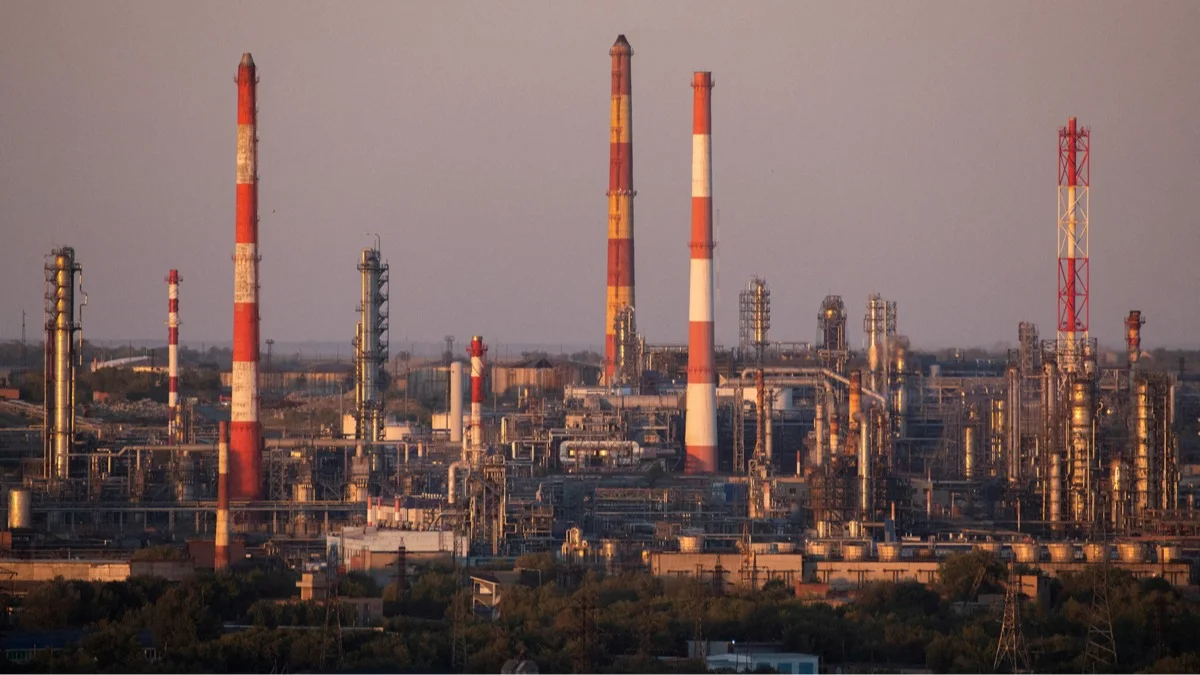
Electricity generation is one of Transnistria’s key export sectors. In the first ten months of the year, exports of fuel and energy products to the right bank of the Dniester totalled €148 million — 28% of the region’s total exports.

Gas restrictions have hit other industries as well. At the start of the year, all industrial production in the region stopped. After supplies resumed, factories operated only partially, with local media reporting repeated shutdowns linked to intermittent payment failures by the Dubai-based intermediary companies.

Gas stations closed for weeks at a time, hot water was cut across towns for “maintenance” over the summer, and factories were periodically idled.

The energy crisis forced repeated austerity measures: gas stations closed for weeks at a time, hot water was cut across towns for “maintenance” over the summer, and factories were periodically idled.

Exports from the region fell by 42% over ten months, down to €306.7 million. Official statistics show GDP down 23.2% in the first half of the year, while industrial output fell 32.8%.

Authorities have already begun cutting costs. In October, they proposed cutting nearly €3 million, or 290 million Transnistrian rubles — the region’s unrecognised currency closely linked to the Russian ruble — from the region’s central and municipal budgets, affecting healthcare and social welfare programmes.

A queue of cars at a customs checkpoint between Moldova proper and Transnistria, Varnița, Moldova, 17 January 2025. Photo: Daniel Mihailescu / AFP / Scanpix / LETA

A queue of cars at a customs checkpoint between Moldova proper and Transnistria, Varnița, Moldova, 17 January 2025. Photo: Daniel Mihailescu / AFP / Scanpix / LETA

What next?

There are few signs of improvement. Next year’s budget mirrors the current one, with revenues of around 3.8 billion rubles (€40 million) against spending of 6.5 billion rubles (€68.8 million), leaving a deficit of about 40%.

Spending on roads, infrastructure, business support and agriculture is likely to be reduced first, says energy expert Sergey Tofilat.

“How long can you sustain infrastructure that doesn’t exist? … A scenario similar to Cuba is possible: the population grows poorer, people leave, financial resources dwindle. And it could happen at any moment that free gas stops — and then you have a humanitarian crisis,” Tofilat told NM.

Transnistria’s reliance on cheap energy had long masked the region’s structural weaknesses, offsetting low wages and inflation.
As long as Tiraspol is unwilling to give up Moscow’s support, Chişinău has little room to act, Tofilat continued. “The best approach is to prepare a reintegration plan, coordinate the budget and partner support, and wait for the moment when Moscow withdraws.”

Vyacheslav Ioniță, an economist from the Moldovan think tank IDIS Viitorul, notes that the region’s energy sector has an impact on three areas at once: the budget, the economy and social stability.

“Almost two-thirds of industry is electricity and metal production. That formed the bulk of their output and the main export. Energy, gas, and metals all rely on gas. So a lack of gas hits the budget first and the economy second. No production means no salaries, no jobs. People are forced to leave,” Ioniță said.

Transnistria’s reliance on cheap energy had long masked the region’s structural weaknesses, offsetting low wages and inflation, Ioniță continued. But with that advantage disappearing, the region’s economic model becomes increasingly unsustainable.

With support from Mediaset

shareprint
Editor in chief — Kirill Martynov. Terms of use. Privacy policy.