Ukrainian military denies Russian claim to have captured Siversk

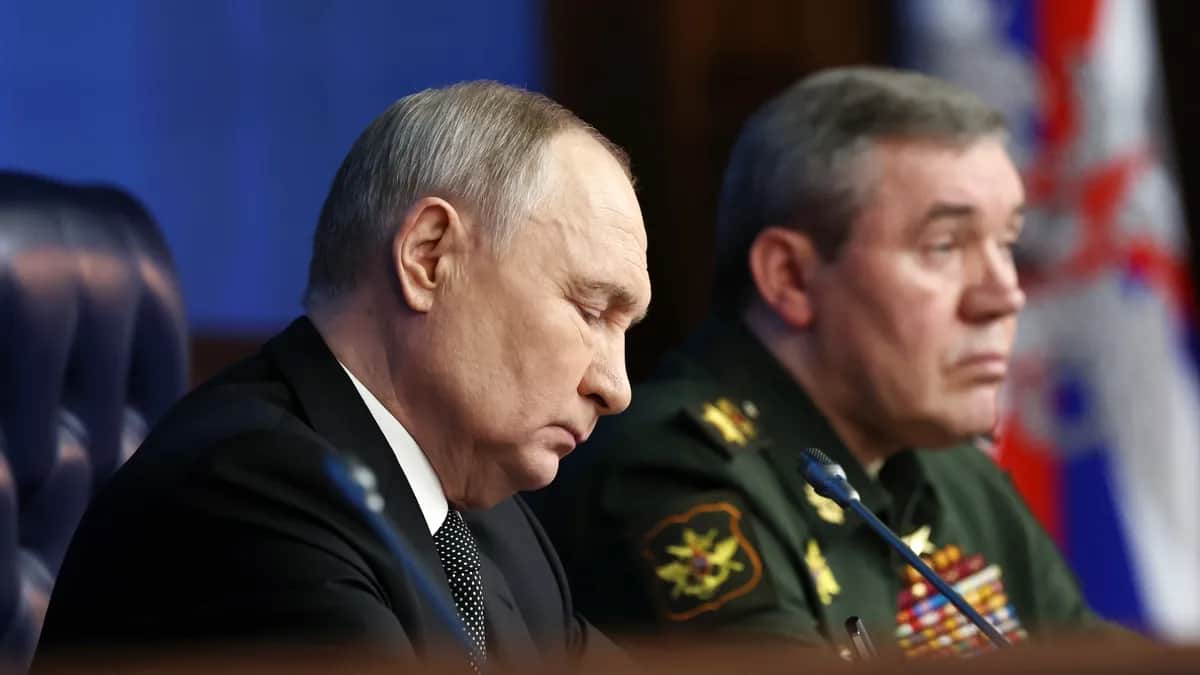
The Chief of the General Staff of the Russian Armed Forces, Valery Gerasimov announced the capture of the key city of Siversk in Ukraine’s eastern Donetsk region during a meeting between army commanders and Vladimir Putin on Thursday, according to the Kremlin.
However, the Russian claim was disputed by the Armed Forces of Ukraine (AFU), whose Operation Task Force East issued a statement on Thursday in which it confirmed that while the enemy was “trying to infiltrate Siversk in small groups, taking advantage of unfavourable weather conditions, … most of these units are being destroyed on the approaches.”
The task force also denied that Russia had taken full control of Pokrovsk, another key city in the Donetsk region that Russia claimed to have captured earlier in December, noting that the AFU continued to hold the northern part of the city and block Russian advances in the city centre.
During the meeting with Gerasimov on Thursday, Putin said that the Russian Armed Forces were “continuing to carry out the tasks of the special military operation”, using the Kremlin’s preferred term for the invasion of Ukraine, and were “advancing confidently across the entire front”.
Andriy Kovalenko, head of Ukraine’s Centre for Countering Disinformation, warned earlier this month that Russia would escalate claims of its territorial gains in Ukraine over the coming weeks “to raise the stakes” in preliminary negotiations with Washington about an eventual peace deal.
Indeed, according to Faridaily, an independent Telegram news channel founded by ex-BBC Russian journalist Farida Rustamova, Putin has scaled up public announcements of Russian territorial gains in Ukraine in recent weeks, having held five highly publicised meetings with the Russian military high command since late October.
Putin’s increased media activity regarding the situation on the frontlines was “clearly aimed at strengthening the Kremlin’s negotiating position and has one main addressee — US President Donald Trump and his administration,” Rustamova wrote.