Russian man fined for Googling Ukraine’s Azov Brigade in first case of its kind

In the first known case of its kind, a court in the city of Kamensk-Uralsky in the Russian Urals fined a former nurse on Wednesday for looking up “extremist” content online, independent news outlet Mediazona has reported.
Sergey Glukhikh, 20, was fined 3,000 rubles (€33) for searching online for information about Ukraine’s Azov Brigade, a formation of the National Guard of Ukraine that has been deemed a terrorist organisation by the Russian government.
The court ruling is the first known use of legislation that introduced fines for citizens “deliberately” searching for material deemed extremist by the Justice Ministry since it was signed into law by Vladimir Putin in July.
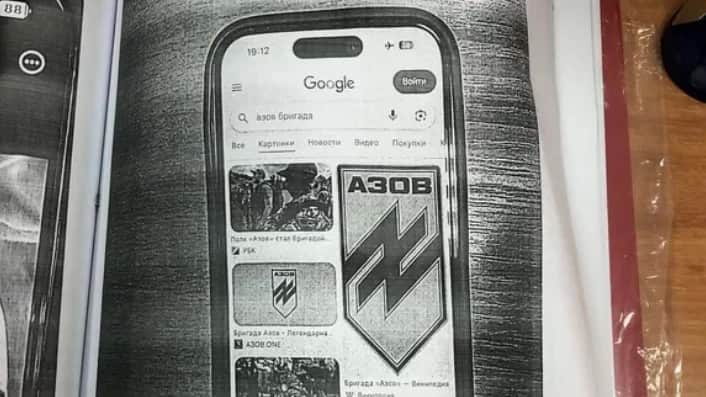
According to the prosecution, Glukhikh searched for pictures of Azov insignia on Google while he was on the bus on the morning of 24 September, though how the security forces had been made aware of the search was not disclosed.
Officers of the Federal Security Service (FSB) detained Glukhikh on the same day and accessed his phone during the interrogation. The case materials include an image of Glukhikh’s phone lying on the table, clearly displaying the search query he is accused of making.
FSB officer Anton Zamaraev admitted in court that Glukhikh was being “monitored” by the FSB before the administrative charge was lodged against him, but refused to answer further questions from Glukhikh’s lawyer Sergey Barsukov.
Glukhikh, who Barsukov says was forced to quit his job at the local hospital amid the FSB investigation, did not appear in court.
The new law has been criticised by a number of pro-Kremlin figures, including Russia’s self-appointed censor Yekaterina Mizulina, who said it would paralyse the work of her Safe Internet League, as its staff would be unable to “look into cases of extremist activities, terrorism or threats of attacks on schools.”
Senator Andrey Klishas, who voted in favour of the law, said in July that it would only be applied to individuals under criminal investigation, rather than to the general public, assuring citizens that nobody would “stop people and check their phones”.