CommentCulture

The man, the officer, the boss, the emperor

Russia’s federal TV almost ignored Vladimir Putin’s 70th birthday

The man, the officer, the boss, the emperor
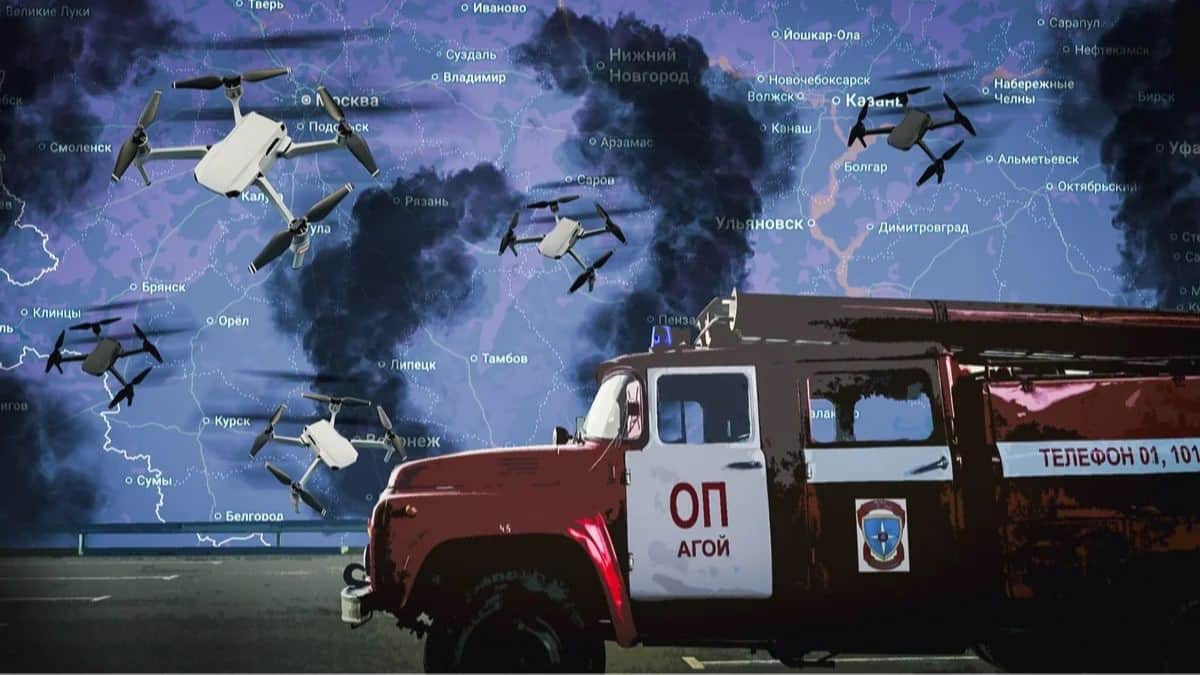
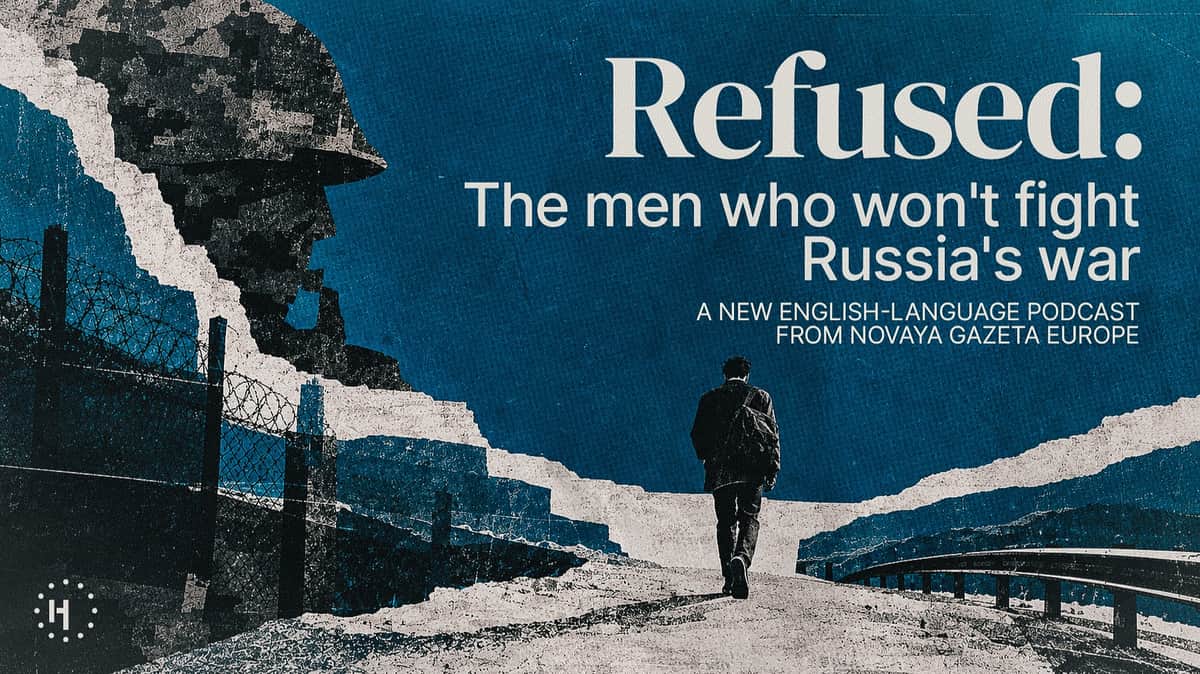
Illustration: Novaya Gazeta. Europe

“Putin will leave in four months. This is a closed subject, and it’s pointless to discuss it. The most important thing to me is that whatever and whoever our President becomes in the future, whatever he’s engaged in, wherever his fate takes him – he’s going to do anything he’s destined for with the dignity of a man and an officer...”

Do not worry. Nobody is leaving anymore. The words above were said by Nikita Mikhalkov (a pro-Putin film director who won the Academy awards in 1995 with his Burnt by the Suntranslator’s note) 15 years ago in a show dedicated to Vladimir Putin’s 55th birthday. Mikhalkov was unaware that the parting with “the man and the officer” would not last long, hence his grief: “A great many people in our country entrusted their lives to this man. Today, they may admit that he indeed changed their lives. We live now in a moment of Russia’s concentration. All the changes in its modern history are related to his name one way or another, and his sequential, progressive and creative movement both in time and space.”

This Mikhalkov’s show that looked more like a fancy toast or a hymn to the glory of a hero seemed pretty bizarre in 2007 and was considered by many to be excessive puffery towards a state official, yet a distinguished one, as Mikhalkov believes, who simply ascended to the Mount Olympus of Russia’s politics by a twist of fate. Later, speaking to Dmitry Gordon, a Ukrainian journalist, Mikhalkov was passionately protecting his right to love Putin unconditionally: “I love this man. He is my comrade. Damn, how can someone bar me from saying what I want about my comrade to other people who sit on the other side of the TV screen?” And he also added something with a touch of aristocratic flair: “I don’t give a shit what liberals think about me.”

By that time Putin was not just the biggest newsmaker for most Russia’s nationwide TV channels, but their lead character, main viewer and, as Mikhail Lesin, the former Minister of Press said, the top piece of good news the audience was always interested in. At that point, the levels of criticism against the highest echelons of power went almost to nought. In 2005, Oleg Poptsov, the head of the TVC TV channel, and film director Igor Shadkhan addressed Putin on air to deliver a wake-up call to him on all the hideousness and wicked villainy of Russia’s daily routine that the corrupt officials and obsequious media were hiding from their Boss.
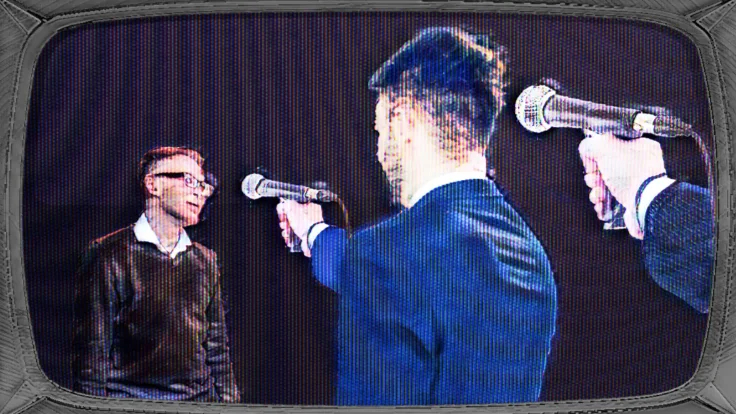
An epic piece loftily titled Your Supreme Ownsome was aired on TVC for three evenings straight. Poptsov, sitting in an empty TV studio, was carrying out a conversation (or should I say monologue) directed into the nothingness, sighing woefully and smiling sarcastically while the camera would show the audience the footage of Vladimir Putin’s face; the president would anxiously listen to the bitter truth, nodding his head every now and then.

At the end of the show, Poptsov, directly addressing to Putin’s face on the screen, explained why he and Shadkhan did this piece: “Did you notice how often the camera would focus on your face? We were trying to observe your face and your attention. Your face was not directed at us, so we borrowed it, so to say. Anyway, what was this all about?

Vladimir, we wanted you to heed our words. If you do, then our film was not in vain.”

Evidently, Vladimir Putin did heed the words. Oleg Poptsov was soon dismissed from TVC: the formal reason was “a transfer to a different job.” He made his point later that this audacious film was the real reason: although stylistically somewhat a quizzical one, it touched upon the sore spots: the heavy burden of the common people, the impudence of the corrupt officials, the lack of political opposition, the servility of the media, and the reluctance of the authorities to communicate with the society. Igor Shadkhan, a documentary film director from Saint Petersburg who was the first person to feature Vladimir Putin on film in the 1992 Power documentary cycle and was often referred to as “the court director” by his adversaries, was rumoured to have fallen out of The Comrade’s favour.

Today this film cannot be found even on the Internet. Yet, a huge TV Putiniana, so to say, has been created over the past years, capable of completely filling up many broadcast days. The people who create those shows know their limits, so they never teach their character how to live his life, but they learn from him instead, hanging on every word of his and not indulging the smallest bit of doubt regarding his absolute and unconditional infallibility. Some renowned foreign directors, such as Oliver Stone, also contributed to the Putiniana, and they weren’t less admired by Putin than the Russian “chroniclers.”

Some costly TV “gifts” were intended for Putin’s 70th birthday, too. Not those of Stalin’s scale, of course, whose 70th birthday turned into a days-long nationwide festivity with tens of thousands of gifts from the common folk despite the lack of widespread television, but those worthy of a glorious birthday of a people’s idol. Nikita Mikhalkov would be happy to endow his “beloved man” with a new afflated ode. This would be a separate project from his Exorcist show, of course, as this would look quite dubious.

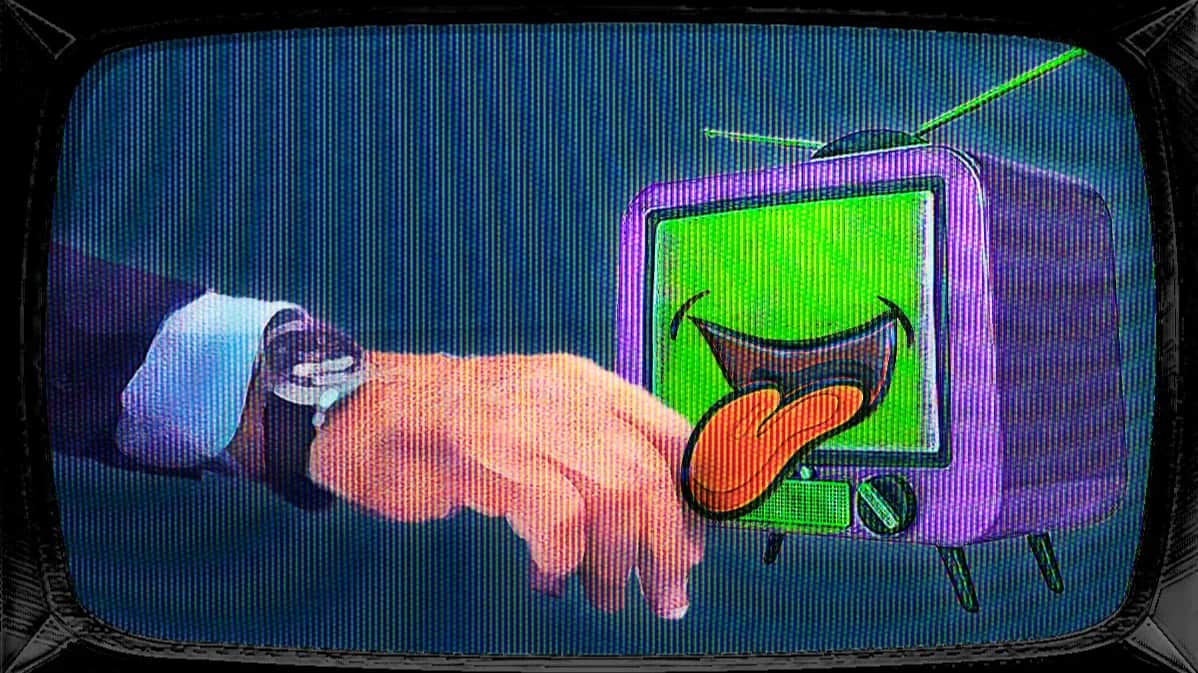
However, the nationwide TV kind of left Putin’s milestone birthday unnoticed, only mentioning it briefly on the news. 
Moreover, the pre-published TV schedule indicated that they were not planning any specific “gifts” for him,

although the OTR channel was going to congratulate Putin anyway. Various TV-related media received a press release from the channel, where the special project section had it written in black and white: “Vladimir Putin. Fulfilling the Duty. Russia’s society has grown sick of most of its politicians over the years Putin has been in the Kremlin. The idols of yesteryears cause nothing but annoyance, criticism, or even ridicule. However, the society’s romance with Putin is still on. The role of a leader who bears the responsibility for the country’s fate for almost a quarter of a century is important as never before. So, what determined Putin’s success as Russia’s president? What goals he thinks are most important for him? What is his vision of the duty before his nation and the people? Watch Leonid Mlechin’s programme on 7 October, 9 p.m. to find out.”

Both Mlechin, a director of numerous educational documentaries on history, and OTR have been keeping aloof from the political agenda before, which makes this announcement truly surprising, style-wise in particular, mainly the “romance” passage.

Nonetheless, a weird thing happened. The announcement disappeared from the OTR website after a couple of days. Instead of the Putin show, OTR presented Mlechin’s programme about Andrey Tarkovsky on 7 October. Fulfilling the Duty vanished from the TV schedule like a Flying Dutchman.

But what was that anyway? Heaven knows. The only thing we can say for sure is that nothing happens on the Russian TV for no reason. It looks like the channel’s initiative did not go unpunished. They had good intentions, but something went wrong, and they were forced to cancel the programme that someone in high position considered ill-timed. Remember one from The Dawns Here Are Quiet, a Soviet war drama: “We’ll sing a song later, Liza. First we complete our mission, and then we sing. We’ll sing a song for sure.” The poor Liza never got to sing the song though, she drowned in a swamp while on a mission.

Zakhar Prilepin. A screenshot

Zakhar Prilepin. A screenshot

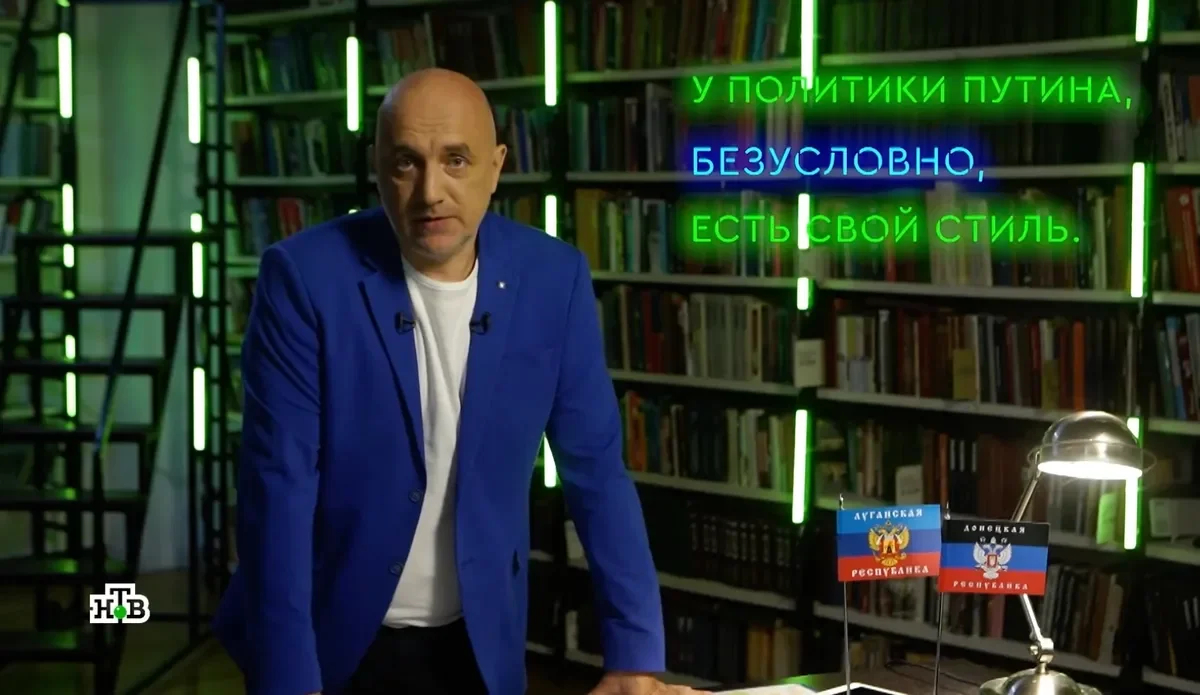
However, Zakhar Prilepin (a pro-Putin authortranslator’s note) who seems to be on a military mission at all times, managed to bypass the restrictions and congratulated Putin in his late-night show on NTV channel. He was brief and described Putin with all his rigid straightforwardness: “The Boss. The Westerner. The Diplomat. The Mobiliser.” Prilepin called Putin the new emperor, too, the one who came to construct a new Empire and reboot Russia. The author also mentioned Putin’s habits: “He is never on social media, but he sometimes watches TV. So, it’s a chance to send him regards, which I do.”

shareprint
Editor in chief — Kirill Martynov. Terms of use. Privacy policy.